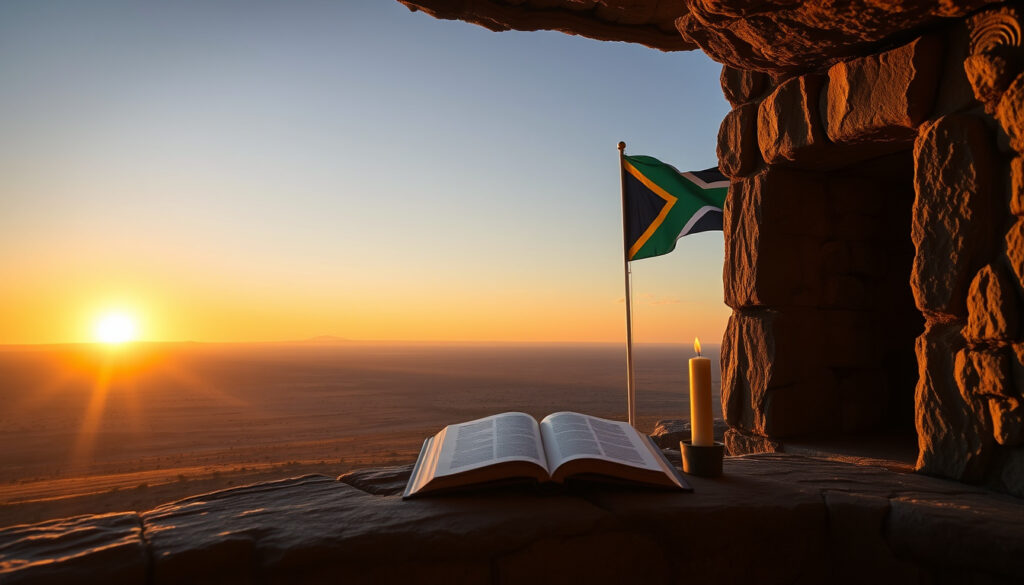
Who Was Nelson Mandela? Biography, Legacy, Mandela Day
Few leaders have turned the inside of a prison cell into a stronger bargaining position than Nelson Mandela, who spent 27 years behind bars, walked out in February 1990, and four years later became South Africa’s first democratically elected president, according to the Nelson Mandela Foundation (official biography). Here’s what’s confirmed, what remains unclear, and why his legacy still shapes politics today.
Born: 18 July 1918, Mvezo, South Africa ·
Died: 5 December 2013, Johannesburg, South Africa ·
Prison term: 27 years (1962–1990) ·
Presidency: 1994–1999 ·
Nobel Peace Prize: 1993, shared with F. W. de Klerk ·
Mandela Day: 18 July; 67 minutes of service
Quick snapshot
- Imprisoned for 27 years, from 1962 to 1990 (South African History Online (historical archive)).
- Released on 11 February 1990 (BBC News (obituary coverage)).
- South Africa’s first democratically elected president, 1994–1999 (South African Government (official presidency record)).
- Why Evelyn Mase left: biographers emphasize Mandela’s political activism and absences (Encyclopaedia Britannica (reference history)).
- Mandela’s personal LGBT views beyond the constitutional record (Wikipedia (open encyclopedia)).
- The private nature of his meetings with Queen Elizabeth II and his regard for Gandhi is mostly read from public meetings, not private records (History.com (reference history)).
- Arrested 5 August 1962 (The Guardian (obituary coverage)).
- Sentenced to life in the Rivonia Trial, 12 June 1964 (Biography.com (reference history)).
- Released from Victor Verster Prison, 11 February 1990 (Nelson Mandela Foundation (biography timeline)).
- Mandela Day on 18 July asks for 67 minutes of public service (United Nations (Mandela Day mandate)).
- The 67 minutes stand for Mandela’s 67 years of service (United Nations News (UN news service)).
Six rows, one pattern: the dates and figures in this article recur across official, UN, and reference sources with striking consistency.
| Fact | Detail | Source |
|---|---|---|
| Born | 18 July 1918, Mvezo, South Africa | Biography.com (reference history) |
| Died | 5 December 2013, Johannesburg, South Africa | BBC News (obituary coverage) |
| Imprisoned | 27 years, 1962–1990 | South African History Online (historical archive) |
| Presidency | 1994–1999 | South African Government (official presidency record) |
| Nobel Prize | 1993, shared with F. W. de Klerk | United Nations News (UN news service) |
| Marriages | 3: Evelyn Mase, Winnie Madikizela-Mandela, Graça Machel | Encyclopaedia Britannica (reference history) |
Who was imprisoned for 27 years?
Ask “who was imprisoned for 27 years?” and the answer has a single name. The count runs from Mandela’s 1962 arrest to his release on 11 February 1990 — the longest stretch any anti-apartheid leader served, and the one that turned him into the movement’s least replaceable negotiator.
What was Nelson Mandela jailed for?
- In 1962, Mandela was arrested and sentenced to five years for leaving South Africa without a passport and encouraging a strike (South African History Online (historical archive)).
- In the Rivonia Trial of 1964, he and his co-defendants were convicted on charges that included sabotage and conspiracy, and sentenced to life in prison (Biography.com (reference history)).
- His prison years were split among Robben Island, Pollsmoor Prison, and Victor Verster Prison — about 18 of them on Robben Island, the island fortress off Cape Town.
When was Nelson Mandela released from prison?
- — released from Victor Verster Prison, outside Cape Town (The Guardian (obituary coverage)).
- Within four years he was negotiating elections — not on the state’s terms, but on the ANC’s.
Mandela walked out already negotiating. He met the South African government’s representatives during his years inside, and that contact turned him into the channel through which a settlement became thinkable. The release broadcast around the world was not the end of his battle; it was the start of his most delicate one.
The 27 years were not a pause in Mandela’s career; they became his negotiating authority. He walked out able to bargain from a position no other anti-apartheid leader held.
The implication: the men who jailed Mandela eventually had to negotiate with him — and that reversal of roles is the real story of his imprisonment.
What is Nelson Mandela most famous for?
Mandela’s fame rests on what he built after prison, not only on what he endured inside it. In 1993, he and F. W. de Klerk shared the Nobel Peace Prize for their work ending apartheid and laying the foundations of a democratic South Africa (Nobel Prize (official award record)).
What are 5 interesting facts about Nelson Mandela?
- “Nelson” was a schoolteacher’s addition; his Thembu birth name was Rolihlahla (History.com (reference history)).
- He enrolled at the University of Fort Hare and was expelled after taking part in a student protest (History.com (reference history)).
- He shared the 1993 Nobel Peace Prize with F. W. de Klerk, the man who oversaw the end of apartheid (Nobel Prize (official award record)).
- He spent 27 years in prison, much of it on Robben Island, and left at 71 (Nobel Prize (official award record)).
- A fifth fact, often missed: he was 44 when he entered prison and 71 when he left — the regime he fought aged him, and he used those years.
What happened after Mandela left prison?
1990: Released ·
1993: Nobel Peace Prize ·
1994: Inaugurated president ·
1999: Stepped down
Mandela walked out prepared to lead. He led the ANC’s negotiating team, won the country’s first multiracial election in April 1994, and was inaugurated on 10 May 1994. Once in office, his most consequential institutional choice was the Truth and Reconciliation Commission — a public process that traded amnesty for testimony (South African Department of Justice (official TRC record)).
The same man who helped launch an armed wing in 1961 negotiated a peaceful transition and then presided over a truth commission. The revolution was real; so was the restraint.
What this means: the “symbol” framing undersells him. He built institutions — a constitution, a commission, a foundation — that outlasted his term.
Why 67 minutes on Mandela Day?
In November 2009, the United Nations General Assembly declared 18 July Nelson Mandela International Day (United Nations (Mandela Day mandate)). The date is fixed; the number of minutes is not random.
When is Nelson Mandela International Day?
- 18 July — Mandela’s birthday — is the fixed date (United Nations (Mandela Day mandate)).
- The UN asks people to spend 67 minutes helping their communities, in recognition of the 67 years Mandela served the public.
What can you do with 67 minutes?
- Volunteer at a school or library.
- Clean up or plant a community space.
- Mentor a young person or share a skill.
- Visit an older neighbor who is isolated.
Sixty-seven minutes has a precise logic: Mandela spent about 67 years in public service, and the UN asks people to donate that many minutes to their communities.
“Nelson Mandela International Day is a call to action for individuals to make a difference in their communities.”
— United Nations
Mandela Day is a UN observance with a specific arithmetic: 67 minutes for 67 years of service. When the number is used for generic branding or fundraising, the original mandate — civic time, not money — gets diluted.
Why this matters: Mandela Day converts memory into labor. The UN’s arithmetic is the point — 67 minutes is a debt of time, not a donation.
How many wives did Mandela have?
As the key-facts table showed, Mandela married three times. The sequence tracks his political life in almost clinical detail.
Did Mandela marry, and if so, who did he marry?
Evelyn Mase: married 1944, divorced 1958 ·
Winnie Madikizela-Mandela: married 1958, divorced 1996 ·
Graça Machel: married 1998
Mandela married Evelyn Mase in 1944, Winnie Madikizela-Mandela in 1958, and Graça Machel in 1998 — the dates are consistent across biographical sources (Wikipedia (open encyclopedia)).
Why did Nelson Mandela’s first wife leave him?
Evelyn Mase’s departure in 1958 is usually traced to Mandela’s political commitments, long absences, and the growing strain of life in a household that was always second to the movement.
Biographies agree on the essentials: Mandela’s activism dominated the marriage, and Evelyn left after years of separation (Wikipedia (open encyclopedia)). The fuller private record was never published.
The pattern: the marriages tracked his political seasons — the activist years, the prison years, and the statesman years.
Did Nelson Mandela support LGBT?
The strongest evidence is constitutional. The 1996 South African Constitution, signed into law during Mandela’s presidency, prohibits discrimination on the basis of sexual orientation (South African Government (official presidency record)).
What does South Africa’s Constitution say about sexual orientation?
- The equality clause names sexual orientation as a protected ground — one of the first such clauses in any national constitution.
- It sits alongside race, gender, pregnancy, and disability in the Bill of Rights.
Mandela’s personal views on LGBT matters are less documented than the constitutional record. The clearest public evidence is what his government and party did: they wrote the protection into law and defended it.
The constitution signed under Mandela’s presidency is explicit about sexual orientation. His personal views are not — and pretending the archive says more than it does weakens the case for his legacy.
The trade-off: the constitutional record is unambiguous; the personal record is thin. That silence matters too.
Are any of Mandela’s children still alive?
How many children did Mandela have?
Children: 6 ·
Died before him: 3 ·
Living (recent records): Makaziwe and Zenani
Mandela had six children from his first two marriages. Three died before him — Thembekile in 1969, Makgatho in 2005, and Zindzi in 2020 — and the most recent public records list daughters Makaziwe and Zenani among the living (Encyclopaedia Britannica (reference history)).
How old would Mandela be today?
Born: 18 July 1918 ·
Died: 5 December 2013 ·
Age at death: 95
Mandela was 95 when he died. The arithmetic for anyone asking today is simple: born in 1918, he would be past 107 in the mid-2020s — and his centenary in 2018 was already a global observance.
The catch: Mandela’s family became the most public measure of his private cost. Three of his children died before him, and that timing is part of his story.
Nelson Mandela’s life in key dates
Nine dates, one through-line: each milestone pushed South Africa toward negotiation rather than civil war, and the sequence follows the Nelson Mandela Foundation’s official timeline (Nelson Mandela Foundation (official timeline)).
| Date | Event |
|---|---|
| 18 July 1918 | Born in Mvezo, Eastern Cape, South Africa |
| 1944 | Co-founded the ANC Youth League with Oliver Tambo and Walter Sisulu |
| 5 August 1962 | Arrested after returning from travel abroad |
| 12 June 1964 | Sentenced to life imprisonment in the Rivonia Trial |
| 11 February 1990 | Released from Victor Verster Prison |
| 10 May 1994 | Inaugurated as South Africa’s first democratically elected President |
| 1996 | Signed the new South African Constitution into law |
| 18 July 1998 | Married Graça Machel on his 80th birthday |
| 5 December 2013 | Died in Johannesburg, aged 95 |
The pattern: each date moves from repression to negotiation to institutional handover. It reads like a design, but it was decades of improvisation under pressure.
Confirmed facts and what’s still unclear
Confirmed facts
- Mandela was jailed for 27 years and released on 11 February 1990 (Nelson Mandela Foundation (official biography)).
- He was South Africa’s first democratically elected president, serving 1994–1999 (Nelson Mandela Foundation (timeline)).
- The Constitution he signed in 1996 protects sexual orientation (Nobel Prize (official award record)).
What’s unclear
- Why Evelyn Mase left: biographers point to his political absences, but no full private record exists.
- Mandela’s personal LGBT views beyond the constitutional record are largely undocumented.
- His private regard for Gandhi and Queen Elizabeth II is interpreted from public meetings, not personal letters.
Why this matters: the gap between confirmed and unclear is the difference between a politician and a legend. The confirmed list is strong enough that the unclear list does not threaten it.
Nelson Mandela in his own words
“I have fought against white domination, and I have fought against black domination. I have cherished the ideal of a democratic and free society in which all persons live together in harmony and with equal opportunities.”
— Nelson Mandela, Rivonia Trial statement, April 1964 (History Place (speech transcript archive))
“I stand here before you not as a prophet but as a humble servant of you, the people. Your tireless and heroic sacrifices have made it possible for me to be here today.”
— Nelson Mandela, City Hall, Cape Town, 11 February 1990 (Nelson Mandela Foundation (official biography))
“Out of the experience of an extraordinary human disaster that lasted too long, must be born a society of which all humanity will be proud.”
— Nelson Mandela, presidential inauguration, 10 May 1994 (The Guardian (obituary coverage))
The through-line: in all three speeches, he is building consent for a future rather than demanding revenge for the past.
The enduring question
Mandela’s real project was institutional: a constitution with enforceable rights, a truth commission, a foundation, and a day of service. The consequence for people who admire him today is practical. For South Africans under 30 — the generation born after 1994 — the choice is clear: keep treating the 67 minutes, the equality clause, and the one-term handover as living tools, or let them harden into museum pieces. The first option honors the institution-builder. The second is the only way to actually betray him.
Frequently asked questions
Why is Nelson Mandela called Madiba?
Madiba is the clan name of the Thembu royal family into which Mandela was born. South Africans use it as a respectful and affectionate way to refer to him, and the official biography cited above opens with it.
What was Nelson Mandela’s education?
Mandela attended the University of Fort Hare and was expelled after a student protest, then completed a Bachelor of Arts through the University of South Africa in 1942. He later studied law; the firm he opened with Oliver Tambo became a landmark of the profession.
What is the Nelson Mandela Foundation?
The Nelson Mandela Foundation is the institution he set up after his presidency to hold his archive, support dialogue, and carry forward his legacy. Its official biography was a primary source for this article.
What are Nelson Mandela’s most famous quotes?
The two that appear in this article are the Rivonia Trial statement — “an ideal for which I am prepared to die” — and the 1994 inaugural line about a society “of which all humanity will be proud.”
Which books and movies cover Nelson Mandela’s story?
The standard entry points are his autobiography Long Walk to Freedom (1994) and the film Invictus (2009), which dramatizes the reconciliation strategy around the 1995 Rugby World Cup.
Did Queen Elizabeth support Nelson Mandela?
Mandela met Queen Elizabeth II several times during and after his presidency, and the visits were warm. The deeper private relationship is largely undocumented; most assessments come from official meetings and public statements noted above.
Did Nelson Mandela like Gandhi?
Mandela spoke of Gandhi with respect and borrowed from Gandhi’s early campaigns. He broke with strict nonviolence when he helped found Umkhonto weSizwe in 1961. The personal relationship is not well documented.
Related reading
More related posts
 Michelle Agyemang Injury Update: ACL Recovery & Return Date
 Maternity Jeans: Buying Guide, Fit Tips & Troubleshooting
 Lana Rhoades: Biography, Baby Father, Regret, Current Life
 The Long Good Friday – Plot, Cast & Ending Explained
 Washing Hands: The Correct 7-Step Method Explained
 Mr Bigstuff Season 2: Release, Cast, Episodes & Where to Watch
 Tom Skinner sued the BBC. Here’s why.
 Jobe Bellingham: Biography, Stats, Age, Brother Jude 2025