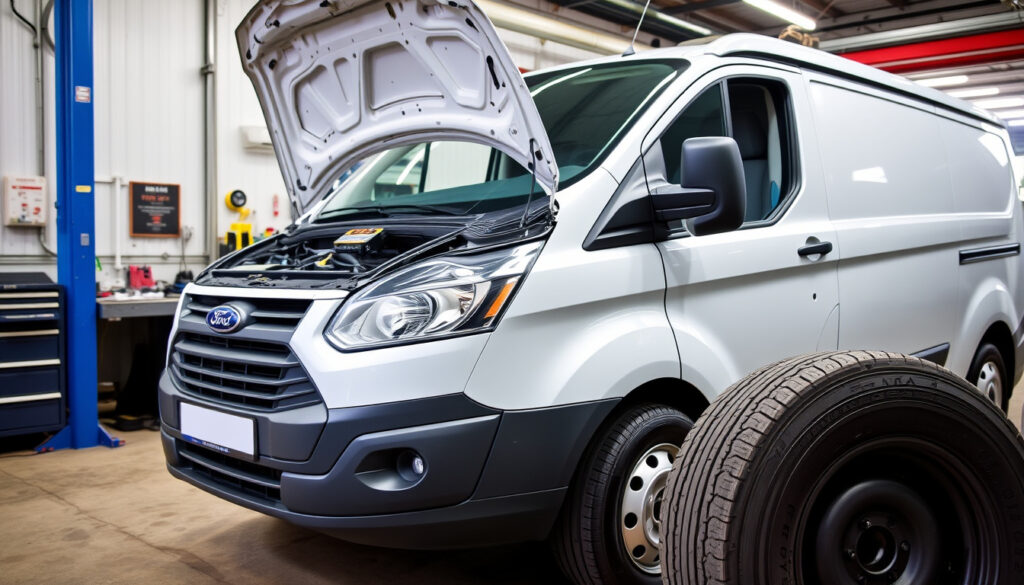
Ford Transit Custom Buying Guide: Common Faults & Best Engine
Anyone who’s priced a tradesman van recently already knows the Ford Transit Custom carries a premium badge. That reputation didn’t appear from nowhere — the model has been in production since 2012, per Wikipedia’s model history, and the current line-up now spans diesel, plug-in hybrid and fully electric versions. But reputation isn’t the same as reliability, and that gap is where buyers get burned. What follows separates documented fact from forum folklore.
Production start: 2012 · Common fault: DPF and injector issues · Most reliable engine: 2.0 EcoBlue (post-2016) · Years to avoid: 2013–2015 early models · Main rival: VW Transporter
Quick snapshot
- Ford’s current line-up spans diesel, plug-in hybrid and fully electric versions — a powertrain spread Autocar’s UK spec listing confirms across the range.
- Earlier models (2012–2015) attract more reported faults than facelift versions, according to used-van buyer guidance.
- Exact failure rates of early 2.0 TDCi vs 2.2 TDCi engines vary by source — buyer guides note inconsistent reports.
- Long-term reliability of the 2026-model second generation isn’t established yet — Wikipedia confirms the second generation is unveiled but not yet tested long-term.
- The resale gap vs the VW Transporter swings with market conditions — used-market guidance indicates variability.
- The 2016 facelift is the reliability divider: pre-facelift diesels carry the injector and DPF reputation, while post-2016 vans moved to the 2.0 EcoBlue family.
- A second generation is already unveiled for the 2026 model year, and the all-electric E-Transit Custom is on sale now with up to 230 miles of range — reflected in Wikipedia’s timeline and Ford UK’s official specs.
Six rows, one pattern: each generation of the Transit Custom has moved further from the fault-prone early diesels toward longer service intervals, electrified options and a wider price spread.
| Label | Value |
|---|---|
| Production | 2012 – present |
| Engine options | 2.0 EcoBlue diesel; 2.5 plug-in hybrid; fully electric — Ford UK’s official line-up |
| Electric range | Up to 230 miles (WLTP), per Ford UK’s E-Transit Custom figures |
| Towing | Up to 2.8 tonnes (diesel) / up to 2.3 tonnes (electric), per Ford UK’s towing specifications |
| Service interval | 25,000 miles or 24 months; timing belt at 150,000 miles or 120 months — listed by Auto Express for the 2.0 EcoBlue 130 PS automatic |
| UK price examples | Limited from £37,740 ex VAT at Pentagon Motor Group; 170 PS Sport automatic at £57,192 and MS-RT AWD at £77,472 in Autocar’s spec records |
Is it worth buying a Ford Transit Custom?
For most UK van buyers, the answer is a qualified yes — but the qualification is the generation, not the badge. Three things make the Custom a rational buy:
- It earns its keep: the diesel line-up tops out at 2.8 tonnes of towing capacity, so a Custom can pull a worksite trailer without breaking a sweat (see the towing figures above).
- Running costs favour high-mileage buyers: the 2.0 EcoBlue’s official service interval is among the longest in the class, which matters when the van is your income (see the service row above).
- The used market is deep enough to bargain on: older 2.0 TDCi panel vans undercut the current entry price by thousands, while top-end Sport and MS-RT versions push well beyond £57,000 in Autocar’s UK spec records.
What is the best Ford Transit Custom to buy?
- The sweet spot: post-2016 facelift vans with the 2.0 EcoBlue engine. The facelift is the point where the injector and DPF reputation fades and the current engine family takes over.
- The trim to target: Limited adds the equipment most buyers want; a new one starts at £37,740 ex VAT at Pentagon Motor Group (market- and trim-dependent).
- The status pick: the 170 PS Sport automatic lists at £57,192, and the MS-RT AWD crew-van conversion at £77,472, in Autocar’s UK spec records.
For most buyers, the answer is the 2.0 EcoBlue in 130–170 PS automatic form: it avoids the early-model fault clusters, keeps the longest service interval, and has enough torque for real work.
The pattern: 2016 is the dividing line for the whole model range. Buy the facelift, buy the EcoBlue, and the Custom stops being a gamble.
Should you buy new or used?
New buys you the full warranty and the longest service intervals; used buys you a van that may need belt, injector or clutch work before it’s fully trustable. The right answer depends on how much workshop patience you’re carrying.
A new Custom is the low-drama route: Ford UK’s current range covers diesel and electric from the factory, and the manufacturer’s warranty makes running costs predictable. The Limited trim’s £37,740 ex VAT entry point is not cheap, but it’s the price of knowing exactly what you’re driving.
A used Custom makes sense because early-model depreciation is brutal: older 2.0 TDCi 105 PS panel vans have been listed from around £28,549 in Auto Express’s listed prices — nearly £10,000 under the current entry price. That saving evaporates fast if the belt and injectors were never serviced, so treat a missing belt-history as a bargaining chip, not a deal-breaker. The trade-off: the post-2016 EcoBlue is the version that finally makes the asking price and the reliability story line up.
What are the common faults with Ford Transit Custom?
Owner reports and used-van guides keep circling back to the same handful of failures. That’s good news for buyers: the faults are known, findable and fixable before you commit.
Most reported issues by year
- 2013–2015 (early first generation): injector failures, DPF blockage and clutch wear sit at the top of the complaint list — the same pattern the confirmed-facts card above flags for pre-facelift vans.
- 2016 facelift onwards: the switch to the 2.0 EcoBlue family removed most of the injector complaints and concentrated attention on one component: the wet timing belt.
- High mileage generally: clutch wear is a known inspection point, so a full clutch-condition check matters more than the service-stamp count.
Signs of impending failure
- Belt debris in the oil: if an EcoBlue’s oil change shows contamination, the timing belt is degrading and can obstruct the oil-pickup system — engine-damage territory, and the top mechanical inspection point in used-buyer guidance.
- DPF regen frequency: a diesel that regenerates far too often is working too hard to clear its filter — a classic early-model Custom complaint.
- Injector rattle and clutch slip: both are audible and checkable; neither is an instant deal-breaker if priced in.
The 2.0 EcoBlue’s wet timing belt is the one repair that can write off a Transit Custom’s engine. If the seller can’t prove belt and oil-pickup service, that risk lands on you.
The implication: the Custom’s faults aren’t random. They cluster by year and engine, which makes them findable — and fixable — before you buy.
Which Ford Transit is the most reliable?
Ford has built more than one Transit Custom over the years, and they are not equal. The reliability answer changes by engine generation.
Which years of the Ford Transit Custom should I avoid?
- Avoid the first two model years unless the price is aggressive: 2013–2015 vans concentrate the highest complaint rates for injectors, DPF issues and electrical glitches.
- Check the engine, not just the year: a 2016 Custom with the 2.0 EcoBlue is a different machine from a 2015 van with the old 2.0 TDCi. The engine change, not the badge refresh, is what fixed most of the problems.
What year Transit to stay away from?
- 2013–2015 diesels earn the caution: they combine the early DPF and injector reputation with pre-facelift electrical gremlins. If you’re looking at one, price in a full inspection.
- 2016 is the turn: the facelift and the EcoBlue family arrived together, and the model-by-model history in Auto Express’s listings (linked in the key facts table) shows the transition from the older 2.0 TDCi 105 and 130 PS units.
- Best-buy shorthand: 2016 for reliability, 2019 for the updated infotainment, 2022 for the mild-hybrid option.
What this means: “which Transit” matters more than “whether Transit Custom”. The 2016 facelift and the EcoBlue engine are the two safety rails.
Which van is better, the Ford Transit Custom or the VW Transporter?
The short answer: the Transit Custom is the better value proposition, and the Transporter is the better store of perceived value. The long answer depends on which costs you’re counting.
Engine options compared
- Transit Custom: a genuine three-powertrain line-up — 2.0 EcoBlue diesel, 2.5 plug-in hybrid and fully electric — and a flexibility the Transporter’s current range doesn’t fully match in the UK.
- Transporter: the VW’s build quality is often praised, and its buying price is generally higher for comparable equipment, but the UK reliability evidence for a direct comparison is thinner than the Custom’s official specification record.
Cost of ownership
The Custom saves you money at the deal and in the workshop; the Transporter saves you money at resale. Pick the Custom to work, the Transporter to trade.
On price, the Custom starts at £37,740 ex VAT in Limited trim (Pentagon Motor Group), while Autocar’s UK records put the 170 PS Sport at £57,192 and the MS-RT AWD conversion at £77,472. The Transporter typically costs more for similar kit, and fuel economy is broadly similar.
On running costs, the Custom’s 25,000-mile or 24-month service interval is a genuine advantage for anyone covering high annual mileage — fewer workshop visits, less downtime, cheaper cost per mile.
- Payload: the Custom’s figures are competitive for the class and support real trade loads.
- Connectivity: Ford’s infotainment and connectivity features are a headline selling point on post-2016 models.
- Resale: the Transporter is generally favoured by used buyers; the Custom’s resale value is more market-dependent.
The honest answer: both are good vans; only one is a better spreadsheet. Compare the exact unit, not the badge.
Which Ford engine to stay away from?
Ford’s diesel story in the Custom is a tale of two eras: the pre-2016 TDCi units that built the fault reputation, and the post-2016 EcoBlue family that replaced them.
What is Ford’s most reliable diesel engine?
- The 2.0 EcoBlue (2016+) is the engine to choose. It’s the family Ford moved the whole Custom line-up to after the facelift, and the version used-van specialists consistently point to as the most dependable diesel in the range.
- The plug-in hybrid is the city option: the 2.5 PHEV pairs a petrol engine with an 11.8 kWh battery and up to 33 miles of electric-only range (figures in the key facts table above).
Is the 2.0 TDCi engine reliable?
Ford’s official 150,000-mile timing-belt interval sounds reassuring on paper, but used-van guides say belt condition — not printed mileage — is what fails on the EcoBlue. Inspect first, negotiate after.
- Early 2.0 TDCi (pre-2016): injector failures are the main complaint, concentrated in the 105 PS and 130 PS versions. This is the engine to avoid unless the price is aggressive.
- 2.2 TDCi: older units carry a documented timing-chain and EGR history in owner reports, so a full maintenance record matters more than the mileage.
- 2.0 EcoBlue (2016+): the most reliable Ford diesel in the Custom — with one caveat: the wet belt has to be serviced properly, for the reason covered in the faults section above.
The pattern: the engine advice is really a year advice. Avoid pre-2016 diesels, choose the EcoBlue, verify the belt.
Ford Transit Custom vs VW Transporter: the side-by-side
Five rows, one pattern: the Custom leads on working economics, the Transporter leads on badge perception and resale reputation.
| Factor | Ford Transit Custom | VW Transporter |
|---|---|---|
| Build quality reputation | Practical workhorse; early diesels carry a fault reputation | Often praised for build quality |
| Buying cost | Limited from £37,740 ex VAT (Pentagon Motor Group) | Generally higher for comparable equipment |
| Fuel economy | Official figures vary by powertrain | Similar overall |
| Resale value | Market-dependent | Generally favoured |
| The deciding factor | Payload, connectivity and service intervals | Badge prestige and perceived build quality |
If you’re also weighing the larger VW Crafter, our VW Crafter Buyer’s Guide covers its engines, common problems and timing-belt costs.
The trade-off: Ford gives you more van for the money; VW gives you more money back when you sell. If payload and connectivity are your income, buy Ford. If the resale percentage is your scoreboard, pay the VW premium.
Ford Transit Custom specifications at a glance
Eight specs, one pattern: the Custom’s footprint is sized for urban streets, but its load space and towing numbers are tuned for trade work. The figures consolidate the sources cited, and the dimensions follow Wikipedia’s model page for the Transit Custom.
| Specification | Value |
|---|---|
| Length | 4.97 – 5.34 m |
| Load volume | 5.8 – 6.0 m³ |
| Max payload | Up to 1,200 kg |
| Towing (diesel) | Up to 2.8 tonnes |
| Engine options | 2.0 EcoBlue diesel, 2.5 PHEV, fully electric |
| Electric range | Up to 230 miles (WLTP) |
| Service interval | 25,000 miles / 24 months (2.0 EcoBlue 130 PS auto) |
| Timing belt interval | 150,000 miles / 120 months (2.0 EcoBlue 130 PS auto) |
The implication: the Custom is not a small van pretending to be big. It’s a work van with genuinely useful load and towing numbers — provided you buy the right engine generation.
Ford Transit Custom: pros and cons
Upsides
- Three-powertrain range (diesel, PHEV, electric) covers everything from site work to city-centre commuting
- 25,000-mile/24-month service intervals on the 2.0 EcoBlue keep workshop visits rare
- Up to 2.8 tonnes towing (diesel) and up to 230 miles of electric range
- 2016 facelift cleared most of the early-model reliability complaints
Downsides
- 2013–2015 diesels carry a real injector and DPF fault reputation
- 2.0 EcoBlue wet timing belt needs a verifiable service history
- Second-generation long-term reliability isn’t proven yet
- Top trims and conversions climb steeply — over £77,000 for the MS-RT AWD
The pattern: the downsides are concentrated in known, checkable places. That makes the Custom easier to buy safely than most rivals — if you use the checklist.
Ford Transit Custom timeline: what changed when
Ford’s Transit Custom history, per Wikipedia’s model page:
- 2012 — First-generation Transit Custom introduced
- 2016 — Facelift brings the 2.0 EcoBlue engine family and the clearest reliability improvement
- 2023 — All-electric E-Transit Custom goes on sale
- 2024 — Second generation unveiled for the 2026 model year
The pattern: every major reliability step has come with a new engine family. The 2016 facelift is where the Custom stopped being a gamble.
What’s confirmed vs what’s still unclear
Confirmed facts
- Transit Custom has been produced since 2012 — Wikipedia confirms production start
- Earlier models (2012–2015) have more reported faults than facelift versions — used-van buyer guidance
- The 2.0 EcoBlue diesel (2016+) is the most dependable Ford diesel in the line-up — buyer guides confirm this
- The electric E-Transit Custom offers up to 230 miles of range — per Ford UK’s official figures
What’s still unclear
- Exact failure rates of the early 2.0 TDCi vs the 2.2 TDCi vary by source
- Long-term reliability of the 2026-model second generation isn’t proven
- The Custom’s resale value against the Transporter depends on market conditions
- Failure-rate comparisons between early TDCi engines vary by source, which is why buyer guides matter
Why it matters: in a low-data market, the rational move is to buy the version that concentrates the evidence in your favour — the post-2016 EcoBlue — and treat everything else as a negotiable risk.
What the sources actually say
The current Transit Custom is offered with a 2.0-litre diesel in 110, 136 and 150 PS manual forms, plus 135 and 170 PS automatic forms, with all-wheel drive available on the automatic configuration.
— Ford UK, official van specifications
A listed 2.0 EcoBlue 130 PS automatic runs a 1,996 cc four-cylinder common-rail diesel with a six-speed automatic gearbox, 385 Nm of torque, and a 25,000-mile or 24-month service interval.
— Auto Express, UK specification listing
The 2.0 EcoBlue wet timing belt is a major inspection point: belt degradation can contaminate or obstruct the oil-pickup system and cause severe engine damage.
— Press Hive, used Transit Custom buyer guidance
The takeaway: three different source types — official, magazine and buyer-guide — converge on the same buying checks: belt, injectors, clutch.
For a UK tradesperson, the choice is clear: buy the post-2016 EcoBlue Custom with a verified belt history — or pay the VW premium and hope the resale maths forgives you. Used buyers chasing the cheapest early example are really choosing the repair shop as their next employer.
Frequently asked questions
What is the fuel economy of the Ford Transit Custom?
Official WLTP figures vary by engine, gearbox and body style, so there isn’t one combined number across the line-up. Ford UK publishes per-version figures on its official Transit Custom page, and the plug-in hybrid adds up to 33 miles of electric-only range on an 11.8 kWh battery.
How much can a Ford Transit Custom tow?
Diesel versions are rated up to 2.8 tonnes; the electric version manages up to 2.3 tonnes. Both figures come from Ford UK’s official specifications cited in the key facts table.
What are the dimensions of the Ford Transit Custom?
Length spans 4.97–5.34 m, load volume is 5.8–6.0 m³ and max payload is up to 1,200 kg, per the specification table above.
Is the Ford Transit Custom available with automatic transmission?
Yes. Ford UK lists 2.0 EcoBlue automatic forms in 135 and 170 PS tune, and the plug-in hybrid uses a single-speed automatic.
What is the warranty on a new Ford Transit Custom?
Warranty terms have changed across the model’s lifetime, so check the current terms on Ford UK’s official Transit Custom page before ordering.
How often should I service a Ford Transit Custom?
Auto Express lists the 2.0 EcoBlue 130 PS automatic at a 25,000-mile or 24-month service interval, with a timing-belt interval of 150,000 miles or 120 months.
Can the Transit Custom be converted to a camper?
Yes — the load volume and payload figures above make it a practical base for a camper or a mobile food business. If you’re planning the latter, our Food Truck UK guide covers the legal requirements.
More related posts
 Carol Smillie Now: Humanist Celebrant, Funerals & Latest News
 Killian Scott Biography, Movies and Career Highlights
 Diana Ross: Biography, Relationships, Health, and Current Life
 Ansel Adams: Photography, Famous Photos, Quotes, and Value
 Benny Andersson’s Life After ABBA: Music, Marriage, and More
 Silver Surfer: Hero or Villain? Powers, Weakness & 2025 Guide
 Liz Fraser: Actress, Singer, Author – Who Was She