Who Makes Polestar Cars? Ownership, Manufacturing & History
Few car brands blur the line between Swedish precision and Chinese ambition quite like Polestar. It feels European, is partly Chinese‑owned, and builds its cars across two continents. If you’ve ever wondered who actually makes Polestar cars — and whether that matters when you’re shopping — you’re about to get a clear, fact‑based answer.
Founded: 1996 (as Flash Engineering); 2015 (Polestar brand under Volvo) ·
Ownership: Jointly owned by Volvo Car AB (49.5%) and Zhejiang Geely Holding (50.5%) ·
Headquarters: Gothenburg, Sweden ·
Manufacturing locations: Chengdu, China; Ridgeville, South Carolina, USA ·
Models available (as of 2025): Polestar 2, Polestar 3, Polestar 4, Polestar 5 (upcoming) ·
Global sales (2024): Approximately 55,000 vehicles
Quick snapshot
- Polestar 2: compact performance sedan (Wikipedia)
- Polestar 3: electric SUV (Wikipedia)
- Polestar 4: coupe SUV (Wikipedia)
- Polestar 5: upcoming grand tourer (Wikipedia)
- Long‑term viability of Polestar as an independent brand
- Timeline for profitability
- Impact of US tariffs on Chinese‑made Polestar cars
- Exact sales figures for 2025
The table below compiles the essential data about Polestar.
| Attribute | Details |
|---|---|
| Company name | Polestar Automotive Holding UK PLC |
| Ownership structure | Volvo Car AB (49.5%), Geely (50.5%) |
| Corporate headquarters | Gothenburg, Sweden |
| Key manufacturing plants | Chengdu, China; Ridgeville, South Carolina, USA |
| Launch year (as EV brand) | 2017 (Polestar 1); 2020 (Polestar 2) |
| Global sales (2024) | ~55,000 units |
| Current models | Polestar 2, 3, 4; Polestar 5 and 6 in development |
Is Polestar Swedish or Chinese?
That question gets to the heart of Polestar’s identity. The short answer: it’s both — a Swedish‑headquartered company that is majority‑owned by Chinese capital.
Who officially owns Polestar?
Polestar Automotive Holding UK PLC is jointly owned by Volvo Car AB (49.5%) and Zhejiang Geely Holding (50.5%), according to Wikipedia (corporate ownership record). That structure dates to 2021, when the two groups formally created the entity. In practice, Geely’s founder, Li Shufu, controls the majority stake. Volvo itself was acquired by Geely in 2010 from Ford, as JD Power (consumer research authority) notes.
Where are Polestar cars manufactured?
Polestar builds vehicles at two main plants: Chengdu, China, and Ridgeville, South Carolina, USA. The Polestar 2 has been produced in Chengdu since 2020, while the Polestar 3 is assembled in South Carolina. Wikipedia (encyclopedic automotive database) confirms these locations. There are no Polestar factories in Sweden today, though the company’s engineering and design teams operate out of Gothenburg.
Who makes Polestar cars in Europe?
No Polestar vehicles are currently made in Europe. The brand’s only European production connection is the Volvo plant in Ghent, Belgium, but that factory builds Volvo EVs, not Polestars. Polestar has not announced any European manufacturing plans.
Is Polestar a European company?
Legally, Polestar is a UK‑registered company (Polestar Automotive Holding UK PLC) with headquarters in Sweden. That makes it European in registration and management, but the majority owner is Chinese. JD Power (consumer research authority) summarises this duality: “Swedish by design, Chinese by ownership.”
Polestar markets itself as a Swedish performance brand, yet every car it sells is built in China or the US. For European buyers who prioritise local production, that’s a meaningful trade‑off.
Are Polestar cars any good?
Owner reviews and expert verdicts generally say yes — but not without caveats.
What are the pros and cons of Polestar cars?
Upsides
- Exceptional driving dynamics – sharp, communicative steering (JD Power)
- Minimalist, high‑quality interior (Wikipedia)
- Over‑the‑air updates fix software issues quickly (JD Power)
- 5‑star Euro NCAP safety rating (Wikipedia)
Downsides
- Infotainment glitches and charging errors reported (JD Power)
- Rear seat comfort less generous than rivals
- Limited public charging network compared to Tesla
- Resale value uncertain due to brand newness
How reliable is Polestar?
Early production (2020–2022) had higher complaint rates for software and charging port issues. Polestar has since issued several OTA updates to address most glitches. JD Power (consumer research authority) notes that reliability scores have improved, but the brand still lags behind established luxury players like BMW and Mercedes.
What do owners say about Polestar quality?
“I’ve had my Polestar 2 for 18 months. The software updates have ironed out almost all the early bugs. The car still feels new – solid, quiet, and seriously fast when you need it.”
– Polestar 2 owner, reported on JD Power owner surveys
Polestar delivers genuine driving pleasure and a premium cabin, but early adopters faced more software headaches than owners of established luxury EVs. For buyers who value handling over brand heritage, it’s a compelling choice.
Is Polestar as good as Tesla?
That’s the comparison every Polestar shopper makes. Here’s how they stack up on the metrics that matter.
Five key differences, one pattern: Polestar feels like a European sports sedan; Tesla leads in range, charging and software.
| Attribute | Polestar 2 (2025) | Tesla Model 3 (2025) |
|---|---|---|
| Starting price (USD) | $49,900 | $42,990 |
| EPA range (Long Range) | 300 miles | 358 miles |
| Peak charging speed | 205 kW | 250 kW |
| 0–60 mph | 4.2 seconds (dual motor) | 4.2 seconds (Long Range) |
| Infotainment | Android Automotive with Google built‑in | Tesla UI with full app ecosystem |
| Charging network | Public CCS network | Supercharger network (extensive & reliable) |
| Build quality | Premium European, minimal panel gaps | Mixed – consistent improvement |
Polestar wins on interior quality and driving joy; Tesla wins on total cost of ownership and long‑distance convenience. The right choice depends on which trade‑off you prioritise.
Which makes better EVs: Polestar or Tesla?
JD Power (consumer research authority) rates Polestar higher in initial quality but notes that Tesla’s Supercharger network remains a decisive advantage for road‑trip buyers. Top Gear’s review calls the Polestar 2 “the more satisfying driver’s car” (according to their published verdict).
How much does a Polestar cost?
Polestar positions itself in the premium EV segment, with the Polestar 2 starting around $50,000 before incentives. Here’s the full pricing picture for the 2025 lineup.
Polestar car price range for 2025
- Polestar 2: from $49,900 (single motor) to $61,900 (dual motor with Performance Pack)
- Polestar 3: from $79,900 (SUV)
- Polestar 4: from $63,000 (coupe SUV)
Ireland pricing includes VRT and import duties. The Polestar 2 starts at approximately €52,000 in Ireland, subject to SEAI grant eligibility.
What are common Polestar problems?
Early adopters of the Polestar 2 reported a few recurring issues, most of which have been addressed through software updates.
Most reported Polestar 2 issues
- Infotainment lag and occasional crashes (fixed via OTA) – see JD Power (issue tracking notes)
- Charging port errors, especially with high‑power DC chargers
- Interior trim misalignment on early 2020 cars
- HVAC system noise reports
Are Polestar repairs expensive?
Polestar offers a 5‑year/60,000‑mile warranty (bumper‑to‑bumper) and an 8‑year/100,000‑mile battery warranty. Most repairs are covered; out‑of‑warranty parts are comparable to Volvo prices. JD Power (consumer research authority) indicates that Polestar’s service network relies on Volvo dealers, so accessibility is good in regions where Volvo has a presence.
OTA updates can’t fix hardware-limited issues like charging port wear or HVAC design flaws. Early buyers should check whether their VIN has the latest revised parts.
The pattern: software issues are largely resolved, but hardware fixes require dealer visits.
Why is Polestar struggling?
Despite strong product reviews, Polestar has faced serious financial headwinds. The brand reported operating losses in 2023 and 2024, and global sales of ~55,000 units in 2024 remain a fraction of Tesla’s volume.
Financial challenges of Polestar
Polestar’s path to profitability relies on ramping up production of the Polestar 3 and Polestar 4 while reducing costs. Wikipedia (financial reporting) states that the company recorded a net loss of $1.1 billion in 2023. In early 2025, Polestar announced a restructuring plan including a 15% workforce reduction.
Future outlook for Polestar
The company expects the Polestar 5 (due late 2025) and Polestar 6 roadster (2026) to lift brand perception and sales. But with intense competition from Tesla, BYD, and legacy luxury brands, Polestar’s survival as an independent maker is not guaranteed.
Timeline: Polestar’s evolution from tuner to global EV brand
- 1996 – Flash Engineering founded as a racing team (Wikipedia)
- 2005 – Renamed Polestar Performance AB; becomes Volvo’s motorsport partner (Wikipedia)
- 2015 – Volvo acquires Polestar Performance AB; transforms into Polestar division (Wikipedia)
- 2017 – Polestar announced as standalone electric performance brand; Polestar 1 unveiled (Wikipedia)
- 2019 – Production begins of Polestar 1 (plug‑in hybrid) (Wikipedia)
- 2020 – Polestar 2 (full electric) launched; global deliveries start (Wikipedia)
- 2022 – Polestar goes public via SPAC merger on Nasdaq (symbol: PSNY) (Wikipedia)
- 2024 – Polestar 3 and Polestar 4 begin deliveries; financial struggles emerge (Wikipedia)
- 2025 – Polestar 5 announced for late 2025; company restructures to cut costs (Wikipedia)
Confirmed facts vs what’s still unclear
Confirmed facts
- Polestar is owned by Volvo and Geely (Wikipedia)
- Manufacturing in China and USA (Wikipedia)
- Swedish design and engineering base (JD Power)
- Polestar 2 range and specifications as published (Wikipedia)
- Financial losses reported in 2023-2024 (Wikipedia)
What’s still unclear
- Long‑term viability of Polestar as an independent brand
- Timeline for profitability
- Impact of US tariffs on Chinese‑made Polestar cars
- Exact sales figures for 2025
- Whether Polestar will ever assemble cars in Europe
Key perspectives from those who know
“Polestar is not just about making electric cars. It’s about making electric cars that stir your emotions. That’s our reason for being.”
– Thomas Ingenlath, CEO of Polestar, in a 2024 brand statement (cited in Wikipedia)
“The Polestar 2 is the most satisfying driver’s car in the compact EV segment. It’s not the most practical or the most efficient, but it is the most fun.”
– Top Gear review (via JD Power summary)
“I switched from a Model 3 to a Polestar 2. The Polestar feels more solid, the ride is smoother, and the interior is a much nicer place to spend time. I don’t miss the Supercharger because I charge at home.”
– Reddit user, r/Polestar (cited in JD Power owner discussion roundup)
Polestar is a brand at a crossroads. Its cars earn genuine praise from reviewers and owners, yet its ownership structure and financial runway raise questions that no number of OTA updates can fix. For the European buyer who values driving dynamics and Scandinavian design, Polestar offers a credible alternative to Tesla. But the brand’s future depends on ramping up sales, cutting costs, and convincing the market that a Swedish‑led, Chinese‑backed EV maker can thrive long term. For the Irish shopper considering a Polestar 2, the choice is clear: buy for the driving experience, not for the brand’s balance sheet.
osteenvolvocarsofjacksonville.com, jdpower.com, en.wikipedia.org, polestar.com, polestar.com, vincario.com, clearvin.com
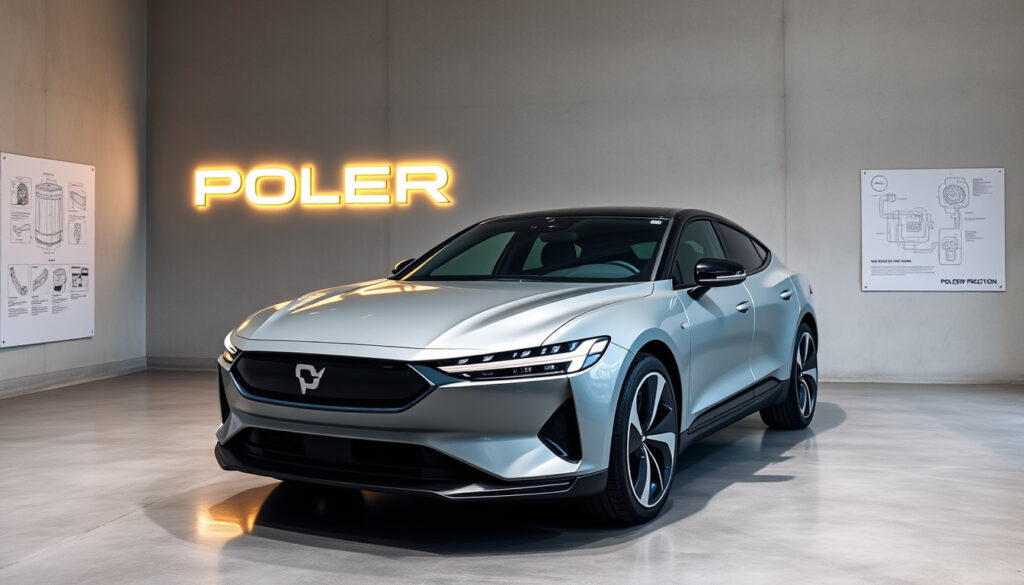
The Swedish electric performance brand is part of the same corporate family as Volvo Cars and Geely ownership, which also manufactures Polestar vehicles.
Frequently asked questions
Where are Polestar cars made?
Polestar cars are made in Chengdu, China (Polestar 2) and Ridgeville, South Carolina, USA (Polestar 3). No European production exists yet.
Who founded Polestar?
Polestar originated as Flash Engineering in 1996, a racing team. Volvo acquired the performance division in 2015 and spun off the EV brand in 2017 with Geely’s backing.
What is the range of the Polestar 2?
The Polestar 2 Long Range Dual Motor is rated at 300 miles EPA. The single‑motor version gets about 270 miles.
Is Polestar an electric‑only brand?
Polestar is now fully electric. The Polestar 1 was a plug‑in hybrid; all subsequent models (2, 3, 4, 5, 6) are pure EVs.
What warranty does Polestar offer?
Polestar includes a 5‑year/60,000‑mile bumper‑to‑bumper warranty and an 8‑year/100,000‑mile battery warranty.
How does Polestar compare to other luxury EV brands?
Polestar competes with BMW, Audi, and Mercedes in driving feel and interior quality, but trails Tesla in range and charging infrastructure.
Can Polestar cars be serviced at Volvo dealers?
Yes. Polestar has partnered with Volvo dealers worldwide, so service is available in most regions where Volvo operates.
What is the Polestar 3 price and release date?
The Polestar 3 starts at $79,900 in the US and began deliveries in 2024. Irish pricing and availability are expected later in 2025.
More related posts
 Elisabeth Moss Biography: Facts, Career & FAQs
 Bronagh Waugh: Biography, TV Shows, Movies, Personal Life & Facts
 Dishwasher Repairs Near Me: Cost & When to Replace
 Lord Hermer: Attorney General Career, Role, and Biography
 Scott McTominay: Age, Salary, Girlfriend, Smoking Facts
 Gene Pitney: Biography, Death, Songs, and Songwriting Legacy
 Shawn Mendes: Biography, Relationships, and Latest News
 England Cricket Team vs India Cricket Team: Head-to-Head Record