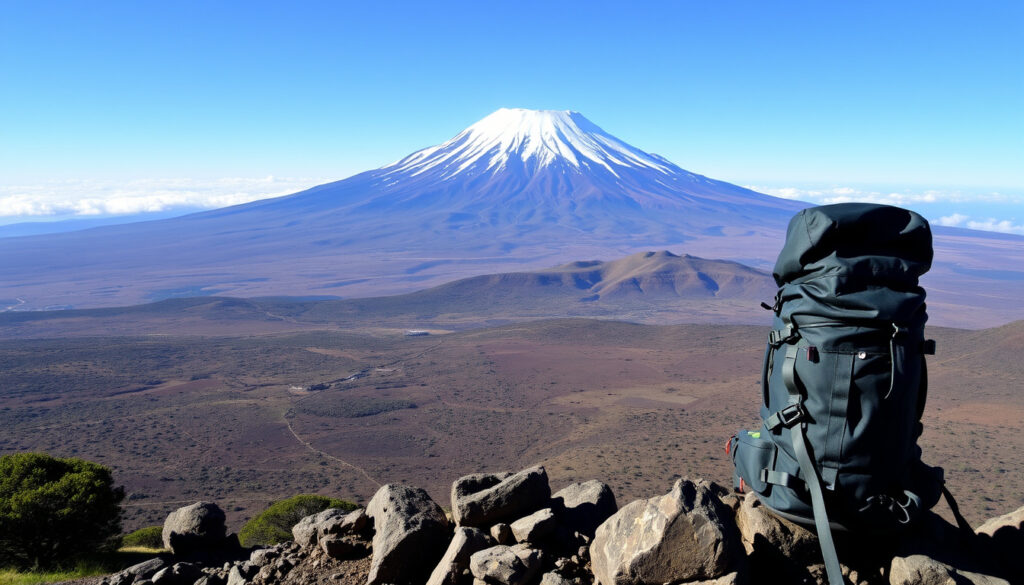
Mount Kilimanjaro: Cost, Routes, Safety & Tips for Beginners
Anyone who’s watched a friend post a summit photo has probably wondered whether they could do it, too – and the honest answer is more attainable than most people think: Mount Kilimanjaro is a long, high walk rather than a technical climb, with roughly $1,210 in park fees before operator services, according to the African Tour Operators Association. The real challenge isn’t ropes or ice — it’s altitude, preparation, and a summit-success rate most guides put between 45% and 65%.
Height: 5,895 m (19,341 ft) · Country: Tanzania · First Ascent: 1889 (Meyer & Purtscheller) · Average Cost: $2,000–$6,000 · Success Rate: 45–65% · Best Months: January–March, June–October
Quick snapshot
- The summit stands at 5,895 m (19,341 ft) (Tanzania National Parks Authority (government park agency))
- Seven official routes lead to the top (Tanzania National Parks Authority (government park agency))
- Marangu is the only hut-based route; the other main routes use tents (Wild Boar Safaris (Tanzanian trek operator))
- Annual death toll: estimates span 10–15, but no single official registry exists
- Summit success rate: reported between 45% and 65%, depending on route and season
- Glacier count and melt rate: published studies give varying figures
- Volcanic activity built the massif roughly 2–3 million years ago
- First successful summit: 1889, by Hans Meyer and Ludwig Purtscheller
- UNESCO World Heritage designation followed in 1987
- Roughly 35,000 climbers attempt the mountain each year
- Longer acclimatization routes are gaining ground with first-timers and seniors
- Glacier retreat remains a visible climate story at the summit
Eight numbers, one theme: Kilimanjaro is measured in larger figures than a casual reader expects — higher, longer, busier, and more regulated than the summit photo suggests.
| Attribute | Value |
|---|---|
| Height (meters) | 5,895 m |
| Height (feet) | 19,341 ft |
| Country | Tanzania |
| Coordinates | 3°04′33″S 37°21′12″E |
| First Ascent | 1889 (Hans Meyer, Ludwig Purtscheller) |
| Number of Routes | 7 (Marangu, Machame, Lemosho, Rongai, Umbwe, Shira, Northern Circuit) |
| Average Climbing Duration | 5–9 days |
| Approximate Annual Climbers | 35,000 |
What is the history of Kilimanjaro?
Kilimanjaro is not one mountain but a volcanic massif with three distinct cones — a geological story that long predates the tourism industry around it. The mountain was built by volcanic activity roughly 2–3 million years ago, and those three peaks still shape every route description you read.
- Kibo — the highest cone; every summit route ends on its crater rim
- Mawenzi — the jagged eastern cone, technically challenging and rarely summited by tourists
- Shira — the eroded western cone, now a high-altitude plateau
The summit record gets rewritten far less often than you’d think. In 1889, German geographer Hans Meyer and Austrian climber Ludwig Purtscheller became the first people to stand on the highest point, after several failed attempts by earlier explorers. That achievement opened a path that today’s trekkers follow with permits, porters, and a rulebook.
From National Park to World Heritage Site
- — Kilimanjaro National Park established, giving Tanzania direct management authority
- — UNESCO listed the park as a World Heritage Site
The protected status matters for climbers because it’s what turns the mountain into a licensed-permit system: every visitor pays park fees, and every route operates under park supervision. The glaciers on Kibo have been retreating for decades too, and the change is visible in satellite imagery and summit photographs — researchers track the rate, but the exact figures vary from study to study.
The mountain took millions of years to build, but its legal protection is only half a century old — and that protection is exactly what converts Kilimanjaro into a licensed, fee-funded system that roughly 35,000 people move through each year.
The implication: the mountain’s protected status is the reason every climber must go through a licensed operator.
How much does it cost to climb Kilimanjaro?
Cost is where Kilimanjaro separates careful planners from impulse bookers. The park system charges by the day, operators charge by the route, and the gap between the advertised price and the final total catches people who compare quotes without reading the fine print.
The “all-inclusive” sticker usually excludes park fees, tips, equipment rental, and flights — a layer that can add more than a thousand dollars to a week-long climb.
Park fees are the least negotiable part of the budget — the tariff documentation from the Tanzania National Parks Authority (government park agency) sets the baseline, and every operator passes it straight through.
| Fee component | Typical cost (non-resident) | Estimate basis |
|---|---|---|
| Conservation fee | ≈ $70 per adult per day | TANAPA tariff documentation |
| Hut fee (Marangu route) | ≈ $60 per person per night | TANAPA tariff documentation |
| Camping + rescue fee | ≈ $50 per night + $20 once | African Tour Operators Association (regional industry body) |
Stack those figures across a seven-day itinerary and park fees alone reach roughly $1,210 — the estimate the African Tour Operators Association uses in its Kilimanjaro cost summary. That total comes before a single guide, porter, meal, or tent is paid for.
- Complete guided-trip prices normally include guides, porters, meals, camping equipment, transport, and hotel nights before and after the climb
- A 2026 market guide places guided trips broadly around $2,200 to $6,000+ per climber (Global Summit Guide (market price analyst))
- Tips ($150–$300), equipment rental ($100–$500), flights, and insurance sit on top
The pattern: operators pass through park fees, so comparing quotes requires asking what’s included.
How many climbers died in Kilimanjaro?
There is no single official registry for climbing deaths on Kilimanjaro, and the figure most often repeated is an estimate, not a statistic: roughly 10–15 deaths per year. The absence of one authoritative database means every number in this debate carries a warning label.
- Altitude sickness — the leading cause, often complicated by delayed descents
- Falls — most frequent on the descent, when fatigue and inattention combine
- Hypothermia and exposure — a real risk during the freezing summit night
Set against roughly 35,000 annual attempts, the overall fatality rate is very low. The incidents that do happen share a pattern: altitude sickness recognized too late — the scenario every safety briefing targets, and the reason responsible operators reserve the right to turn climbers around.
The death toll gets headlines, but the real risk story is altitude illness, not falls. A conservative route and a guide with the authority to say “no” are the two most effective safety upgrades on the mountain.
What this means: altitude illness is the real risk, and a guide’s authority to turn back is the best safety measure.
Which is bigger, Everest or Kilimanjaro?
Everest wins on altitude alone: its summit at 8,848 m (29,029 ft) towers above Kilimanjaro’s 5,895 m (19,341 ft). But “bigger” is a trickier word than it looks. Kilimanjaro is the tallest free-standing mountain on Earth, rising alone from the surrounding plains, while Everest is part of the densely packed Himalayan range and gets a head start from its high base.
- Everest — 8,848 m (29,029 ft), technical expedition, bottled oxygen commonly used, months-long commitment
- Kilimanjaro — 5,895 m (19,341 ft), high-altitude trek, no technical gear, 5–9 days
That distinction explains the difficulty gap. Everest demands ropes, crampons, and months of expedition logistics; Kilimanjaro demands a permit, a guide, and the patience to walk slowly enough that your body keeps up.
Which is harder, Machu Picchu or Kilimanjaro?
- Altitude: Kilimanjaro’s summit is 5,895 m; the classic Inca Trail crosses high Andean passes
- Duration: Kilimanjaro runs 5–9 days; the classic Inca Trail is typically 4 days
- Terrain: Kilimanjaro mixes scree, rock, and glacial ice; the Inca Trail is steep stone paths and staircases
- Technical difficulty: neither requires technical climbing, but both punish under-prepared legs
The practical answer: Kilimanjaro is harder because it demands more days at higher altitude, and altitude exposure is the variable that ends treks. Machu Picchu’s Inca Trail is a shorter, easier-to-recover-from challenge for most fit trekkers.
If you’re choosing between Kilimanjaro and Machu Picchu, the real variable isn’t the number on the sign — it’s how many consecutive high-altitude nights your body has to survive. Kilimanjaro demands far more of them.
The trade-off: higher altitude demands more technical skill, while Kilimanjaro’s challenge is endurance at moderate altitude.
Can a beginner climb Kilimanjaro?
Yes, but “beginner” should mean well-prepared, not untested. Reported summit success rates fall between 45% and 65%, and the difference between those two numbers is usually route choice and itinerary length, not natural athletic ability.
- No technical climbing skills required — if you can walk for days, you can train for this
- The minimum age for most operators is 10, with restrictions
- The oldest documented climber to summit was 89
What beginners underestimate is the acclimatization equation. Routes that add days — like Lemosho and the Northern Circuit — give your body more time to adapt, and that matters more than gym strength.
Is 50 too old to climb Kilimanjaro?
- Fit climbers in their 50s summit every season; age is not the primary risk factor — altitude is
- Training that builds cardio and leg endurance matters more than how old you are
- Medical clearance before travel is the sensible pre-check, especially with any heart or respiratory condition
The dividing line isn’t a year on your passport — it’s the quality of your preparation. A 50-year-old who trained and packed sensibly has a stronger start than a 25-year-old who booked on a whim.
Can a 70 year old climb Mount Kilimanjaro?
- Yes — climbers in their 70s reach the summit every season, and the documented record is an 89-year-old
- The margin for error narrows at 70: choose longer routes with more acclimatization days, not cheaper or shorter ones
- A full medical check and an honest conversation with your operator about fitness history are non-negotiable
The best advice for older climbers is also the best advice for everyone: Kilimanjaro rewards the patient and punishes the rushed.
10 things I wish I knew before climbing Kilimanjaro
- It’s a walk, not a climb — no ropes, no technical gear, no climbing experience needed
- Plan 5–9 days on the mountain; shorter is cheaper but statistically weaker for acclimatization
- Park fees alone run roughly $1,200 for a seven-day itinerary, before guides, porters, meals, and tents
- Marangu is the only route with hut beds — every other main route is tent camping (Wild Boar Safaris (Tanzanian trek operator))
- The Northern Circuit offers the longest acclimatization curve (Mount Kilimanjaro Guide (route comparison specialist))
- You don’t need bottled oxygen, but you need to breathe slowly and pace relentlessly
- A pee bottle saves you from cold, dark, middle-of-the-night trips outside the tent
- Tips, equipment rental, flights, and insurance sit outside the quoted tour price
- Summit success is around 45–65%, so plan emotionally for the possibility of turning around
- A licensed guide is mandatory — solo climbing isn’t permitted
The verdict: route length and preparation, not age, determine success.
Do you need oxygen to climb Kilimanjaro?
No — supplemental oxygen is not required on Kilimanjaro. The summit at 5,895 m (19,341 ft) sits well below the extreme altitudes around 8,000 m where bottled oxygen becomes a practical necessity.
- Acclimatization replaces oxygen tanks: more days at altitude mean better adaptation
- Most commercial operators do not supply portable oxygen as a standard item
- Headache, nausea, and loss of appetite are early altitude warnings — not weakness
What climbers do need is a sensible itinerary and honest pacing. The oxygen question is really an acclimatization question in disguise.
The surest way to buy “oxygen” on Kilimanjaro is to buy more days — each extra night at altitude is a physiological installment toward acclimatization.
Do you need a pee bottle for Kilimanjaro?
- Yes — a pee bottle is standard practice for summit night, when temperatures drop and tents sit far from facilities
- Guides and experienced trekkers treat it as essential gear, not a novelty
Beyond the bottle, the gear list that matters is short and specific:
- Sleeping bag rated for freezing nights
- Headlamp with spare batteries
- Trekking poles
- Pee bottle (yes, really)
The pattern: Kilimanjaro’s gear list is short, but the difference between a good trip and a miserable one is usually the boring items — warmth, light, water, and a bottle.
What month is best to climb Kilimanjaro?
Kilimanjaro sits close enough to the equator that seasons are marked by rain, not temperature swings. The climbing year splits into two dry windows and two wet ones.
- January–March — dry and warm; good views and lighter crowds than peak season
- June–October — the most popular window; clear skies and more climbers on every route
- April–May — the long rains; muddy trails and the least reliable window
- November–December — short rains; quieter trails but wetter afternoons
If you can pick your window, June to October is the classic choice for certainty; January to March suits climbers who want similar conditions with fewer crowds. Either way, summit morning can still be brutally cold — the weather at the top answers to nobody.
Rainy-season discounts exist for a reason: trail conditions and summit visibility degrade sharply. The cheap months are cheap because the odds move against you.
The catch: rainy season discounts reflect poor odds.
Everest vs Kilimanjaro vs Machu Picchu: The Side-by-Side Data
Three iconic trails, one pattern: altitude and time are the real gatekeepers, not technical skill.
| Aspect | Kilimanjaro | Everest | Machu Picchu (Inca Trail) |
|---|---|---|---|
| Maximum altitude | 5,895 m (19,341 ft) | 8,848 m (29,029 ft) | Crosses high Andean passes |
| Climbing style | High-altitude trek | Technical mountaineering | High-altitude trek |
| Typical duration | 5–9 days | Roughly 2-month expedition | 4 days (classic route) |
| Technical gear | None required | Ropes, crampons, bottled O2 | None required |
| Main challenge | Altitude + endurance | Extreme altitude + technical sections | Altitude + steep terrain |
| Acclimatization profile | Improves with longer routes | Expedition rotation + O2 | Gradual but short |
The table makes the hierarchy clear: Kilimanjaro is the most achievable of the three for a non-climber, but it’s also the one most likely to be underestimated because “just walking” hides a 5,895 m summit night.
Kilimanjaro Routes Spec Sheet: Which Path Fits Your Profile?
Seven routes, seven personalities — and the pattern that matters: routes that add days improve your odds more than routes that save money.
| Route | Accommodation | Acclimatization profile | Character | Best for |
|---|---|---|---|---|
| Marangu | Huts | Moderate; rapid ascent is the risk | Easier underfoot; the only hut route (Wild Boar Safaris (Tanzanian trek operator)) | Trekkers who want beds |
| Machame | Tents | Good, but the climbing is steep | Scenic and physically tough (Climbing Kilimanjaro (trek operator route guide)) | Fit hikers who want views |
| Lemosho | Tents | Stronger — longer itinerary | Scenic, remote, better acclimatization (Climbing Kilimanjaro (trek operator route guide)) | Trekkers optimizing summit odds |
| Rongai | Tents | Good | Northern side; drier and more remote | Dry-season trekkers |
| Umbwe | Tents | Limited — steep and fast | Short and unforgiving (Climbing Kilimanjaro (trek operator route guide)) | Experienced trekkers only |
| Shira | Tents | Moderate — starts high | Less gradual because of the high start | High-altitude hikers |
| Northern Circuit | Tents | Strongest among mainstream routes | Longest route (Mount Kilimanjaro Guide (route comparison specialist)) | Trekkers who want maximum acclimatization days |
The pattern: the cheaper and shorter the route, the more it relies on luck; the longer routes are effectively an insurance policy bought with extra days.
Should You Climb Kilimanjaro? The Pros and Cons
Upsides
- No technical skills or climbing gear — just preparation and persistence
- Achievable for fit beginners and active seniors alike
- Marangu offers real beds on the only hut-based route
- Longer routes deliver scenery and stronger acclimatization in one package
- A summit at 5,895 m without expedition complexity — rare on a global scale
Downsides
- Altitude sickness can stop any climber, regardless of fitness
- Costs run $2,000–$6,000+ per person before tips and extras
- Peak-season trails are crowded
- Rain and cold can turn a “walk” into a genuinely tough week
- Between 35% and 55% of climbers will not reach the summit
That balance is why Kilimanjaro fits some people perfectly and frustrates others: the experience is one part adventure, one part endurance test, and one part logistics puzzle.
How to Plan Your Kilimanjaro Climb: A Step-by-Step Checklist
The planning sequence matters as much as the climb itself — follow it in this order and the mountain stays an adventure rather than a rescue story.
- Lock your season. Target January–March or June–October for the best weather windows.
- Choose the route by acclimatization, not price. Longer itineraries — Lemosho, Northern Circuit — materially improve summit odds.
- Verify your operator is licensed. Tanzania requires licensed guides; confirm before paying a deposit.
- Budget the full picture. Roughly $1,200 in park fees, then the operator quote of $2,000–$6,000+, then tips ($150–$300), equipment rental ($100–$500), flights, and insurance.
- Train with stairs, hills, and long walks. Kilimanjaro is a long walk, so train like one.
- Assemble your gear. Sleeping bag rated for freezing nights, headlamp, poles, and a pee bottle.
- Book insurance that covers high-altitude trekking and evacuation. Read the policy’s altitude limit before you rely on it.
- Expect an early-morning summit push. Most summit attempts start in the dark, so practice moving by headlamp.
- Decide your personal turnaround rules before you go. Respect altitude symptoms; the summit will still be there on a future trip.
If you’re planning the overland logistics that can precede a Kilimanjaro trip, the VW Crafter buyer’s guide walks through engine options and cost-of-ownership realities. For a broader look at African legacy stories, the Nelson Mandela biography and legacy profile is a useful companion read.
Done in this order, the plan builds on itself: season narrows the route options, the route sets the price, the price drives the training and gear decisions, and the whole package determines whether summit day feels like a celebration or a gamble.
Kilimanjaro Through the Decades: A Timeline
The mountain’s modern history compresses into five moments that explain almost everything about how it’s climbed today.
- ~2–3 million years ago — Volcanic activity builds the Kilimanjaro massif
- 1889 — Hans Meyer and Ludwig Purtscheller make the first successful summit
- 1973 — Kilimanjaro National Park is established
- 1987 — UNESCO designates the park a World Heritage Site
- 2000s–present — Tourist numbers rise to roughly 35,000 per year while glacier retreat becomes a visible climate signal
Every major turn in Kilimanjaro’s story — protection, listing, tourism growth — made the mountain more regulated. The freedom of the summit comes with a rulebook.
Kilimanjaro Fact Check: What’s Confirmed vs What’s Not
A good Kilimanjaro plan starts by separating what’s solidly documented from what’s estimated, repeated, or still being studied.
Confirmed facts
- Height: 5,895 m (19,341 ft), in Tanzania, East Africa
- First ascent: 1889 by Hans Meyer and Ludwig Purtscheller
- Three volcanic cones: Kibo, Mawenzi, Shira
What’s unclear
- Exact annual death toll — estimates vary from 10 to 15, with no single official registry
- Current summit success rate — reported between 45% and 65%, varying by route and season
- Glacier count and melt rate — different studies give different figures
The distinction matters: confirmed facts decide how you plan; unclear estimates should decide how much caution you pack.
Expert Voices on Kilimanjaro
Every climber must use a licensed guide or licensed tour operator. Solo trekking is not permitted on Kilimanjaro.
— Tanzania National Parks Authority (government park agency)
That policy clears up one of the most common beginner questions: there is no “do it yourself” version of this climb.
Look for a route that gives you more nights on the mountain, because acclimatization — not fitness — is what gets most people to the summit.
— Henry Stedman, author of the Kilimanjaro trekking guide
It’s the same advice the route tables repeat in different words: extra days beat extra strength.
Complete guided-trip prices commonly include guides, porters, meals, camping equipment, transport, and pre- or post-climb hotel nights in addition to park fees.
— African Tour Operators Association (regional industry body)
That’s why two quotes for the “same” climb can differ by thousands of dollars — the included layer is where the real comparison happens.
Marangu is shorter and easier underfoot, but the rapid ascent can make it more difficult from an altitude-acclimatization perspective.
The uncomfortable truth of Kilimanjaro: the route that feels easiest on the legs can be the hardest on the lungs.
The Final Word: What Your Kilimanjaro Decision Comes Down To
Kilimanjaro rewards preparation and punishes shortcuts. The climbers who reach 5,895 m are rarely the strongest in the group — they’re the ones who bought enough days, booked a licensed operator, trained before arrival, and had the discipline to turn back when the mountain said no. For first-timers and seniors, the decision is clear: book the longest route your budget allows, or accept that a short, cheap itinerary is a summit lottery you’re paying to lose.
tanzaniaparks.go.tz, xpatsinternational.com, tanzaniaparks.go.tz, mountkilimanjaro.guide
Frequently asked questions
Do I need a visa to climb Kilimanjaro?
Most international visitors need a Tanzanian tourist visa, so include it in your planning. Requirements evolve, so confirm through Tanzania’s official immigration channels before buying flights.
Is it safe to climb Kilimanjaro alone?
Climbing alone is not permitted: Tanzania National Parks Authority requires every climber to use a licensed guide or licensed tour operator. With a licensed team, the main remaining risk is altitude illness, which is managed by pacing and route choice.
What gear is essential for Kilimanjaro?
A sleeping bag rated for freezing temperatures, a headlamp with spare batteries, trekking poles, layered clothing, and a pee bottle are the items most climbers wish they had packed better.
How long does it take to hike Kilimanjaro?
Most itineraries run 5–9 days depending on the route. Seven days is the practical target for first-timers, because extra nights at altitude are the strongest predictor of summit success.
Can I see the glacier on Kilimanjaro?
Yes — the summit still holds ice, although the glaciers have been retreating for decades. Scientists continue to study the exact melt rate, and the numbers vary across research publications.
Do I need travel insurance for Kilimanjaro?
Travel insurance is strongly recommended, particularly coverage for high-altitude trekking and emergency evacuation. Check your policy’s altitude limit before relying on it.
What is the best route for beginners?
Marangu suits beginners who want hut beds and easier footing; Lemosho and the Northern Circuit suit beginners who want extra acclimatization days. Avoid Umbwe as a first climb — it’s steep and gives your body too little time to adapt.
More related posts
 David Coote sentenced for indecent images of child
 Jill Dando Murder: The Case, Evidence, and Unanswered Questions
 HD Parque Cri tóbal Gran Canaria: Family Hotel with Water Park
 BP Share Price LSE: 570.30p, 5.6% Yield & Forecast
 Talavera vs Real Madrid – Copa del Rey Round of 32 Preview
 Roman Abramovich: Oligarch, Exile, and Sanctions Target
 What Conditions Automatically Qualify You for LCWRA
 Satish Shah Death Cause, Wife, Children, and Biography