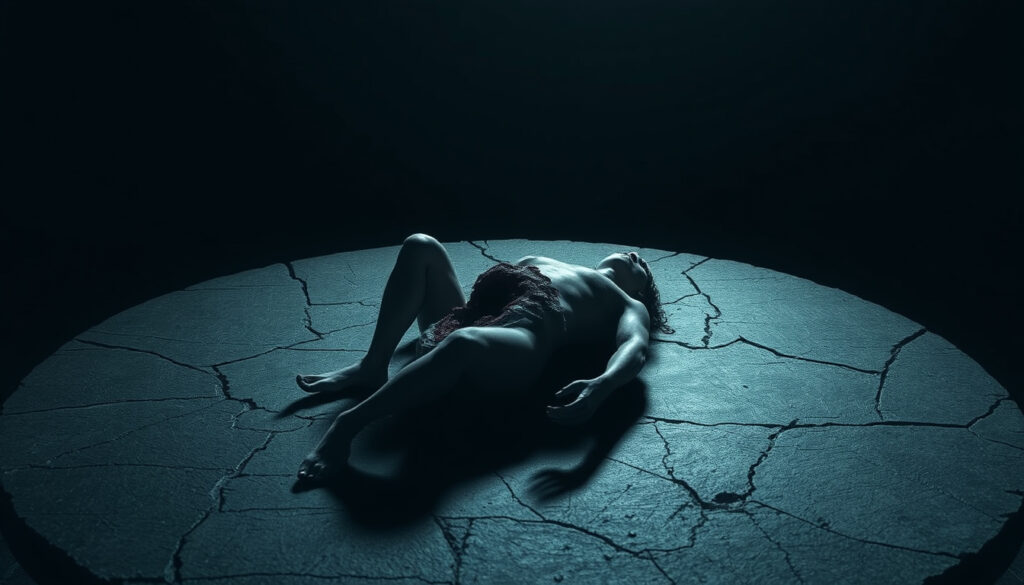
Saturn Devouring His Son: Symbolism, History, and Location
Francisco Goya’s Saturn Devouring His Son is one of the most disturbing images in Western art. Painted directly onto the wall of his villa during a period of isolation and political turmoil, the work fuses Roman myth with personal trauma—and remains a puzzle that scholars still debate.
Estimated date: 1819–1823 | Medium: Oil on canvas (transferred from wall) | Dimensions: 146.3 cm × 83.4 cm | Location: Museo del Prado, Madrid | Series: Black Paintings
The Painting
- Created by Francisco Goya between 1819 and 1823 (Museo del Prado)
- One of 14 works in the Black Paintings series (Encyclopaedia Britannica)
- Originally painted on the ground‑floor wall of Quinta del Sordo (Museo del Prado)
- Transferred to canvas in the 1870s and now at the Prado (Wikipedia)
The Myth
- Roman god Saturn (Greek Cronus) devoured his children to prevent a prophecy of being overthrown (Fundación Goya en Aragón)
- Goya depicts the moment of dismemberment and swallowing (Fundación Goya en Aragón)
- Often read as a dark allegory of time consuming all things (Encyclopaedia Britannica)
Goya’s Life
- Deaf after a severe illness in 1793 (Encyclopaedia Britannica)
- Isolated and pessimistic in later years; created Black Paintings in his villa (Museo del Prado)
- Speculation about depression or paranoia, but exact diagnosis is unknown (Encyclopaedia Britannica; Museo del Prado)
Symbolism
- Passage of time and the inevitability of decay (Encyclopaedia Britannica)
- Political commentary on Spain under French occupation (Museo del Prado)
- Raw human emotion and madness (Museo del Prado)
Key facts about the painting.
| Artist | Francisco de Goya |
| Year | 1819–1823 |
| Medium | Oil on canvas (transferred from mural) |
| Dimensions | 146.3 x 83.4 cm |
| Location | Museo del Prado, Madrid |
| Movement | Romanticism / Black Paintings |
What does Goya’s Saturn symbolize?
Symbolism of cannibalism
The act of devouring in the painting is often interpreted as the passage of time consuming all things, a theme the Encyclopaedia Britannica notes may also be read as God’s wrath or a conflict between old age and youth.
Goya’s personal demons
Art critic Robert Hughes described the painting as “a vision of madness” in his book Goya. The Museo del Prado states that Saturn could personify the human feeling of fear of losing power.
Political allegory
The picture may reflect Goya’s view of Spain under French occupation and the brutal aftermath of the Peninsular War. The Prado notes that the Black Paintings were not intended for public display, adding to their raw, personal power.
“Saturn devouring one of his sons is one of the most expressive images from his Black Paintings.” — Museo del Prado
Why did Saturn devour his children?
Roman myth of Saturn (Cronus)
The myth tells that Saturn (identified with the Greek Cronus) devoured his children to prevent a prophecy that one of them would overthrow him. The Fundación Goya en Aragón explains that Saturn, as the god of time, swallowed his offspring until Jupiter survived and forced him to disgorge his siblings.
Fear of being overthrown
Goya used the myth to comment on human nature—especially the destructive consequences of power and fear. The Prado’s analysis notes that the painting may also be read as a symbol of the human feeling of fear of losing power.
Connection to Goya’s painting
In Goya’s version, the moment depicted is particularly gruesome: the god is dismembering and swallowing one of his children. The Prado records the scene as one of the most expressive and disturbing in art history.
“The painting was never meant to be seen by a public audience.” — Artnet
Takeaway: Goya turns the myth into a visceral allegory of time devouring all things, reflecting both his personal darkness and the political turmoil of post‑Napoleonic Spain.
Where is Saturn Devouring His Son now?
Museo del Prado, Madrid
The painting is housed at the Museo del Prado in Madrid, where it has been on view since 1889 after being donated to the Spanish state.
Transfer from Quinta del Sordo
Goya painted the work directly on the wall of his villa, Quinta del Sordo, between 1819 and 1823. After his death, the mural was transferred to canvas in the 1870s by Salvador Martínez Cubells (Wikipedia).
Condition and restoration
Restoration in the 1990s–2000s revealed more about Goya’s materials and technique. Today the painting is in stable condition and remains one of the Prado’s most‑visited works (Museo del Prado).
Note: The exact date of the Black Paintings is debated; the Prado gives c.1820–1823, while Britannica says 1819–1823. The difference is small but reflects the lack of contemporary documentation.
Why is Saturn Devouring His Son famous?
Part of the Black Paintings series
It is one of 14 Black Paintings that Goya created in his villa. The Encyclopaedia Britannica notes these murals were not intended for public display, giving them an unmediated, raw quality.
Influence on modern art
The painting has influenced surrealists, expressionists, and contemporary artists. Its disturbing imagery and psychological depth continue to inspire analysis.
Shock value and popularity
In the 2020s, the painting became a viral internet meme in the context of the “Backrooms” horror lore. Its graphic nature and enigmatic meaning ensure its place in popular culture.
“It is a vision of madness.” — Robert Hughes, art critic
What was Goya’s mental illness?
Goya’s illness in 1793
Goya suffered a severe illness in 1793 that left him permanently deaf. Britannica records this as a turning point: his works became darker and more introspective.
Deafness and isolation
After losing his hearing, Goya withdrew from society. The Black Paintings, created in his villa, are often seen as an expression of his isolation and deteriorating mental state (Museo del Prado).
Theories on his psychological state
Scholars speculate about depression, paranoia, or even lead poisoning, but there is no definitive diagnosis. The Prado’s description avoids medical speculation, focusing instead on the emotional content of the work.
Caution: Applying modern psychiatric labels to historical figures is inherently uncertain. The painting’s power stands on its own, without requiring a diagnosis of the artist.
Timeline
- c. 1819–1823: Goya paints Saturn Devouring His Son on the wall of Quinta del Sordo (Museo del Prado).
- 1824–1828: Goya lives in Bordeaux; villa maintained.
- 1874–1878: Painting transferred from wall to canvas by Salvador Martínez Cubells (Wikipedia).
- 1881: Donated to the Spanish state and enters Museo del Prado (Museo del Prado).
- 1990s–2000s: Restoration and scholarly studies reveal more about materials and technique.
- 2020s: Painting becomes viral internet meme in “Backrooms” context.
Confirmed facts and open questions
Confirmed
- The painting is by Francisco Goya (Museo del Prado).
- Part of the Black Paintings series (Encyclopaedia Britannica).
- Currently at Museo del Prado, Madrid (Museo del Prado).
- Originally painted on the wall of Quinta del Sordo (Encyclopaedia Britannica).
- Transferred to canvas in the 1870s (Wikipedia).
Unclear
- Exact meaning and symbolism intended by Goya.
- Whether the painting was originally titled by Goya.
- Nature and extent of Goya’s mental illness.
- Order and arrangement of the Black Paintings in the villa.
youtube.com, youtube.com, news.artnet.com, museodelprado.es, commons.wikimedia.org, wikiart.org, 19thcenturyart-facos.com, britannica.com, xn--pivnpiste-v2ac.fi
For a deeper dive into the painting’s symbolism and history, see Goyas Saturn Devouring His Son.
Frequently Asked Questions
What are the Black Paintings by Goya?
They are 14 murals Goya painted directly on the walls of his villa Quinta del Sordo between 1819 and 1823, now transferred to canvas and housed at the Museo del Prado.
When did Goya paint Saturn Devouring His Son?
The Prado dates it to about 1820–1823; Britannica gives 1819–1823.
How was Saturn Devouring His Son discovered?
After Goya’s death, the villa was sold; the murals were discovered and transferred to canvas in the 1870s by the restorer Salvador Martínez Cubells.
What materials did Goya use for the painting?
He used oil paint directly on the plaster wall. During transfer, the work was mounted on canvas.
What is the historical context of Goya’s Saturn?
The painting was created after the Peninsular War and during the liberal triennium in Spain. Goya’s personal isolation and illness also contribute to its dark tone.
Is the myth of Saturn devouring his children Greek or Roman?
Roman (Saturn) is identified with the Greek Cronus. The story appears in both traditions, but Goya’s title refers to the Roman god.
Related reading: Beetlejuice: 1988 Cult Classic and 2024 Sequel | Black Widow Avengers: Powers, Death & Legacy Explained
More related posts
 Ja Morant: Why He Stopped Dunking, Salary, Trade, and NBA Wealth
 Kiki Dee: Her Real Name, Career, Net Worth, Life Today
 Al Carns: SBS Officer to Labour MP and Resignation
 Julian Cash Net Worth, Age, Ranking and Doubles Career
 Winston Churchill: Life, Leadership, and Controversies Explained
 Tyler Perry: From Poverty to Billionaire Mogul
 Sally Traffic: Real Name, Children, Partner, and Biography
 Hester Chambers: Age, Partner, Guitar, and Wet Leg’s Rise to Fame