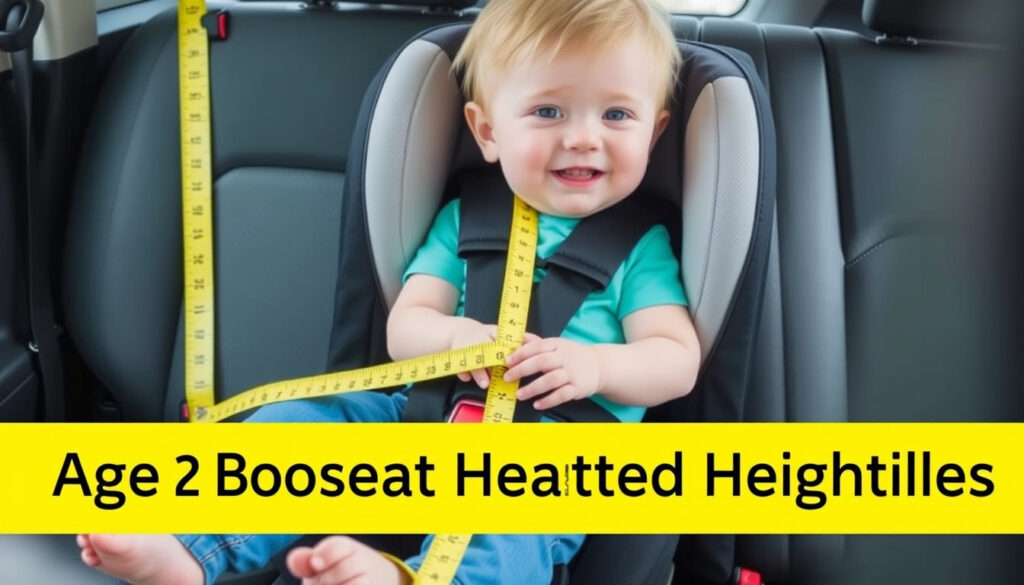
Booster Seat Age & Height: When to Switch and Stop
Every parent reaches a point where their child seems too big for a forward-facing car seat but too small for a regular seat belt. The booster seat is the bridge, and knowing exactly when to switch, what type to use, and how long to keep it determines safety — here are the concrete age, height, and weight thresholds from the NHTSA and Ireland’s Road Safety Authority, plus a clear breakdown of high-back versus backless boosters.
Minimum age for booster seat use: 4 years old (varies by jurisdiction, typically 4-7 years) ·
Minimum weight for booster seat: 40 pounds (18 kg) – common U.S. guideline ·
Minimum height for booster seat: 40 inches (102 cm) – common threshold ·
Child height for backless booster: Typically 49 inches (125 cm) or taller for optimal seat belt fit ·
Booster seat effectiveness: Reduces injury risk by 45-71% vs. seat belt alone for 4-8 year olds ·
Recommended booster use duration: Until child reaches 57 inches (145 cm) tall or 80-100 pounds (36-45 kg)
Quick snapshot
- NHTSA recommends booster seat for children at least 4 years old and 40 lb (NHTSA (U.S. safety regulator))
- Irish RSA requires booster seat use until 150 cm or 12 years old (Road Safety Authority (Ireland’s official traffic safety body))
- Booster seats reduce serious injury risk by up to 71% for 4-8 year olds (NIH/PubMed (peer-reviewed medical research))
- Exact age when a child fits a seat belt alone varies by individual build, not just age (American Academy of Pediatrics (AAP) (child health authority))
- Some high-back boosters accommodate children up to 100 lb, others only to 80 lb – check specific model limits (American Academy of Pediatrics (AAP) (child health authority))
- Side impact test standards differ across high-back and backless models (IIHS (insurance-industry crash research institute))
- Backless booster only recommended for children over 125 cm (49 in) tall – recommendation varies by jurisdiction (RSA (Irish road safety guidance))
- RSA child-seat guidance published in 2022, updated in 2025 (RSA (Irish road safety regulator))
- HSE child car seat page updated in 2026 (Health Service Executive (Ireland’s public health service))
- Children should remain in a booster seat until they reach 150 cm (59 in) or 36 kg (79 lb) (Citizens Information (official Irish public service information))
- Once they outgrow the booster, the adult seat belt must fit properly – lap belt on hips, shoulder belt across collarbone (Citizens Information (official Irish public service information))
Six key facts, one pattern: the right booster seat can cut injury risk by more than half, yet most parents transition too early.
| Fact | Value |
|---|---|
| Booster seat reduces injury risk | 45-71% reduction for 4-8 year olds compared to seat belt alone (NIH/PubMed (peer-reviewed medical research)) |
| Children move to seat belt too early | Over 40% of parents transition before child is big enough (Safe Kids Worldwide (global child safety nonprofit)) |
| Height matters more than age | Most children need boosters until 10-12 years old (150 cm/59 in) (RSA (Irish road safety regulator)) |
| Backless booster risk | In a side crash, high-back booster provides 30% better head protection (IIHS (insurance-industry crash research institute)) |
| Booster seat law in Ireland | Children must use booster until 36 kg (79 lb) or 150 cm (59 in) tall (RSA (Irish road safety regulator)) |
| Correct lap belt position | Must lie across the hips (thighs), not the stomach (HSE (Ireland’s public health service)) |
At what age should a child go into a booster seat?
General age guidelines from NHTSA and RSA
- Most guidelines start at age 4 and 40 pounds (18 kg) (NHTSA (U.S. safety regulator))
- Child must be mature enough to sit without slouching or playing with the belt (American Academy of Pediatrics)
- Booster seats are intended for children who have outgrown forward-facing seats (RSA Irish road safety authority)
The catch: age is a rough proxy – size and maturity matter more. A 4-year-old who weighs 38 pounds still belongs in a forward-facing seat with a harness, not a booster.
Minimum weight and height requirements
- Minimum weight: 40 pounds (18 kg) for a booster seat in the U.S. (NHTSA)
- Minimum height: 40 inches (102 cm) (American Academy of Pediatrics)
- In Ireland, the law uses height and weight thresholds: under 150 cm or 36 kg must use a child restraint (RSA)
What this means: don’t rely on age alone. Weigh and measure your child before making the switch.
What age can a child use a booster seat in Ireland?
Irish law and RSA guidelines
- Children in Ireland must use a booster seat until at least 150 cm (59 inches) tall or 12 years old (RSA Irish road safety regulator)
- Booster seat use is compulsory from 15 kg (33 lb) to 36 kg (79 lb) (Citizens Information official Irish public service)
- Backless booster seats are permitted only for children taller than 125 cm (49 inches) (Halfords Ireland (retailer with legislative guide))
Height-based regulation in Ireland
- Law applies to children under 150 cm or 36 kg (HSE Ireland’s public health service)
- The HSE links the law to approximate age: children affected are generally up to about 11 or 12 years old (Tusla (Irish child and family agency))
- AIG Ireland confirms children can legally use seat belts without a booster once they reach 150 cm or 36 kg (AIG Ireland (insurance provider with safety guidance))
The pattern: Irish law is height/weight-based, not age-based. That means a tall 9-year-old might legally ditch the booster, while a petite 11-year-old still needs one.
Should my 7 year old be in a backless booster seat?
When a backless booster is appropriate
- A 7-year-old typically weighs 45-60 lb (20-27 kg) and is 45-51 inches tall (CDC growth charts (U.S. health data))
- Backless booster is acceptable if the child is at least 49 inches (125 cm) tall (RSA Irish road safety guidance)
- High-back boosters provide better side impact protection and shoulder belt guidance for smaller children (IIHS insurance-industry crash research institute)
Age and size considerations for 7 year olds
- Most 7-year-olds are not yet 49 inches tall, so a high-back booster is usually the safer choice (American Academy of Pediatrics)
- If your 7-year-old is tall (over 49 inches) and can sit properly without slouching, a backless booster is permitted by law but offers less protection in side crashes (IIHS)
The trade-off: backless boosters are convenient and portable, but they trade side-impact protection for portability. For a 7-year-old who is still growing, the high-back version is the safer bet.
Can I put my 4 year old in a backless booster seat?
Minimum size requirements for backless boosters
- Most 4 year olds are not tall enough for a backless booster (need 49 inches) (NHTSA U.S. safety regulator)
- NHTSA recommends high-back booster for children under 49 inches (NHTSA)
- Backless boosters lack side protection and upper belt guidance (IIHS)
Why high-back boosters are safer for a 4 year old
- A 4-year-old’s average height is about 40 inches – well below the 49-inch threshold for backless (CDC growth charts)
- High-back booster provides head restraint and side wings that protect the child in a side impact (IIHS)
- The shoulder belt guide on a high-back keeps the seat belt positioned correctly across the collarbone (American Academy of Pediatrics)
The catch: a backless booster for a 4-year-old is not just risky – it’s likely illegal in Ireland because the child is under 125 cm.
What are the common mistakes parents make with booster seats?
Misjudging age and size requirements
- Moving to booster too early (before age 4 or 40 lb) is a frequent error (Safe Kids Worldwide)
- Parents often assume a child is “big enough” based on age alone, ignoring height and weight (American Academy of Pediatrics)
Installation and belt fit errors
- Incorrect lap belt placement (on stomach vs. hips) reduces safety (HSE Ireland’s public health service)
- Shoulder belt must lie across the collarbone, not the neck or face (RSA)
- Booster seats must be used with a lap-shoulder belt, not a lap-only belt (NHTSA)
Transit ioning too early to seat belt alone
- Children often stay in a booster seat until 10-12 years old for proper fit (American Academy of Pediatrics)
- Over 40% of parents transition before the child is big enough (Safe Kids Worldwide)
The pattern: the most dangerous mistake isn’t using the wrong booster – it’s ditching the booster too soon. The “five-step test” (feet flat, knees bent, lap belt on hips, shoulder belt on collarbone, able to sit still) is a reliable check.
What is the purpose of a booster seat?
Why a booster seat is necessary
- Booster seats raise the child so the adult seat belt crosses the chest and hips correctly (NHTSA U.S. safety regulator)
- Without a booster, the lap belt can ride up on the abdomen causing serious internal injury (Johns Hopkins Medicine (pediatric safety experts))
- Shoulder belt must lie across the collarbone, not the neck or face (RSA Irish road safety authority)
How it positions the child for a safer seat belt fit
- Booster seats align the child’s body to the vehicle’s seat belt geometry (American Academy of Pediatrics)
- High-back boosters also provide head and neck support, especially important in rear-end collisions (IIHS)
A 4-year-old in a booster seat without side wings is 30% more likely to suffer a head injury in a side crash than if they had a high-back booster. The trade-off between portability and protection is real.
The pattern: the booster seat is not a luxury – it’s the only way to make an adult safety system fit a child’s body. Without it, the seat belt itself becomes a hazard.
High-back vs. backless booster: spec comparison
Seven spec differences, one pattern: high-back boosters offer more protection, while backless boosters win on portability and cost.
| Feature | High-back booster | Backless booster |
|---|---|---|
| Weight range | 15–36 kg (33–79 lb) (Halfords Ireland) | 22–36 kg (48–79 lb) (Halfords Ireland) |
| Minimum height | 40 inches (102 cm) (NHTSA) | 49 inches (125 cm) (RSA) |
| Typical age | 4–7 years | 7+ years |
| Side impact protection | Provides head and torso side wings (IIHS) | None (no side structure) |
| Shoulder belt guide | Built-in guide keeps belt on collarbone (AAP) | No guide – relies on child’s posture |
| Head restraint | Integrated headrest | Vehicle headrest must be used |
| Portability | Heavier, bulkier | Lightweight, easy to move between cars |
| Cost | Typically €40–€100 | Typically €15–€50 |
The implication: if you own a car without side curtain airbags or if your child is under 49 inches, a high-back booster is the only responsible choice. Backless boosters are for older, taller children in vehicles with good head protection.
Pros and cons of booster seat types
Upsides
- High-back: superior side impact protection and belt guidance
- High-back: suitable for younger children (4+)
- Backless: lightweight and easy to move between cars
- Backless: lower cost and smaller storage footprint
Downsides
- High-back: heavier and takes up more space
- High-back: more expensive
- Backless: no side impact protection
- Backless: requires child to be tall enough (49 in) and mature enough to sit correctly
The trade-off: convenience versus protection. For most families, the high-back booster is the safer default until the child outgrows it.
Step-by-step: transitioning your child to a booster seat
1. Check the minimum requirements
- Ensure your child is at least 4 years old and 40 pounds (18 kg) (NHTSA)
- Confirm the child has outgrown the forward-facing seat’s height or weight limit (usually 65 lb / 29 kg) (AAP)
2. Choose the right booster type
- If your child is under 49 inches (125 cm), pick a high-back booster (RSA)
- If your child is at least 49 inches and can sit still, a backless booster is permitted but still less protective
3. Install the booster correctly
- Secure the booster with the vehicle’s seat belt (or lower anchors if available) – follow the manual
- Position the lap belt low across the hips, not the stomach (HSE)
- Ensure the shoulder belt lies across the collarbone and chest, not the neck
4. Test the fit every time
- Child should sit with back against the seat, knees bent at the edge, and feet flat on the floor
- No slouching, no tucking the belt under the arm or behind the back
5. Know when to stop
- Keep using the booster until the child reaches 150 cm (59 in) or 36 kg (79 lb) (Citizens Information)
- Pass the “five-step test” before switching to seat belt alone
The catch: the five-step test is the gold standard. If your child fails any one step, they need to stay in the booster.
Confirmed facts vs. what’s still unclear
Confirmed facts
- NHTSA and AAP recommend booster seat for children at least 4 years old and 40 lb (NHTSA, AAP)
- Irish RSA requires booster seat use until 150 cm or 12 years old (RSA)
- Booster seats reduce serious injury risk by up to 71% for 4-8 year olds (NIH/PubMed)
What’s unclear
- Exact age when a child fits a seat belt alone varies by child build, not just age (AAP)
- Some high-back boosters accommodate children up to 100 lb, others only to 80 lb – check specific model limits
- Side impact test standards differ across high-back and backless models (IIHS)
- Backless booster recommendations vary by jurisdiction – always check local law
The biggest unknown is your child’s individual growth curve. A 10-year-old who is 140 cm tall still needs a booster under Irish law – even if friends the same age have stopped using one.
The implication: whenever in doubt, keep the booster. Height and weight are objective measures; age and peer pressure are not.
Expert perspectives on booster seat safety
“Booster seats raise the child so the adult seat belt crosses the chest and hips correctly. Without a booster, the lap belt can ride up on the abdomen causing serious internal injury.”
“Children under 150 cm in height or 36 kg in weight must use a child restraint system suitable for their height and weight when travelling in a car or goods vehicle.”
— Road Safety Authority (Ireland’s official traffic safety body)
“In a side crash, high-back booster provides 30% better head protection compared to a backless booster.”
— Insurance Institute for Highway Safety (IIHS) (crash research institute)
“Over 40% of parents transition their child to a seat belt alone before the child is big enough. That’s a major safety gap.”
rsa.ie, kelownadaily.com, nationalreport.uk, odo.ie, visualfoodie.com, hotelvyber.cz
Frequently asked questions
What is the minimum weight for a booster seat?
The common minimum weight is 40 pounds (18 kg) in the U.S. and 15 kg (33 lb) in Ireland (for high-back boosters). Backless boosters typically start at 22 kg (48 lb). (NHTSA, Halfords Ireland)
Can my child use a booster seat without a headrest?
No. A headrest is essential to prevent whiplash in a rear-end crash. High-back boosters include a headrest; backless boosters require the vehicle’s headrest to be properly positioned. (IIHS)
What happens if a child uses a seat belt too early?
The lap belt can ride up onto the abdomen, causing severe internal injuries in a crash. The shoulder belt can cut across the neck or face. Johns Hopkins Medicine warns that “seat belt syndrome” includes injuries to the spine, bowel, and bladder.
How do I know my child is ready for a booster seat?
Your child has outgrown the forward-facing seat (height or weight limit reached) and is at least 4 years old, 40 pounds, and 40 inches tall. They must also be able to sit still without slouching for the entire trip. (AAP)
Is it safe to use a second-hand booster seat?
Only if you know the full history – it must not have been in a crash, must have all original parts and labels, and must not be past its expiration date (usually 6-10 years from manufacture). NHTSA recommends against using a seat whose history is unknown.
Do all booster seats fit all cars?
No. Booster seats vary in width and shape. Some vehicles have rear seats that are too narrow or have deep seat contours that prevent a stable fit. Always test the booster in your car before buying. (RSA)
Should my child use a high-back or backless booster seat?
If your child is under 49 inches (125 cm) tall or under 7 years old, choose a high-back booster for better protection and belt guidance. Backless boosters are only suitable for taller, older children who can sit properly and have good vehicle head restraints. (IIHS)
More related posts
 Mike Grady: Why He Left Last of the Summer Wine & Career
 Alysa Liu: Olympic Gold, Ethnicity, and Family Facts
 Fuel Prices Near Me – California Averages & Cheapest Stations
 Elizabeth Gillies: Age, Husband, and Ariana Grande Friendship
 Sid James: Relationships, Accusations, and On-Stage Death
 Gene Pitney: Biography, Death, Songs, and Songwriting Legacy
 Patrick Mahomes: Biography, Injuries, Faith, and Net Worth
 Matt Lucas: Weight Loss, Alopecia, and Husband’s Death