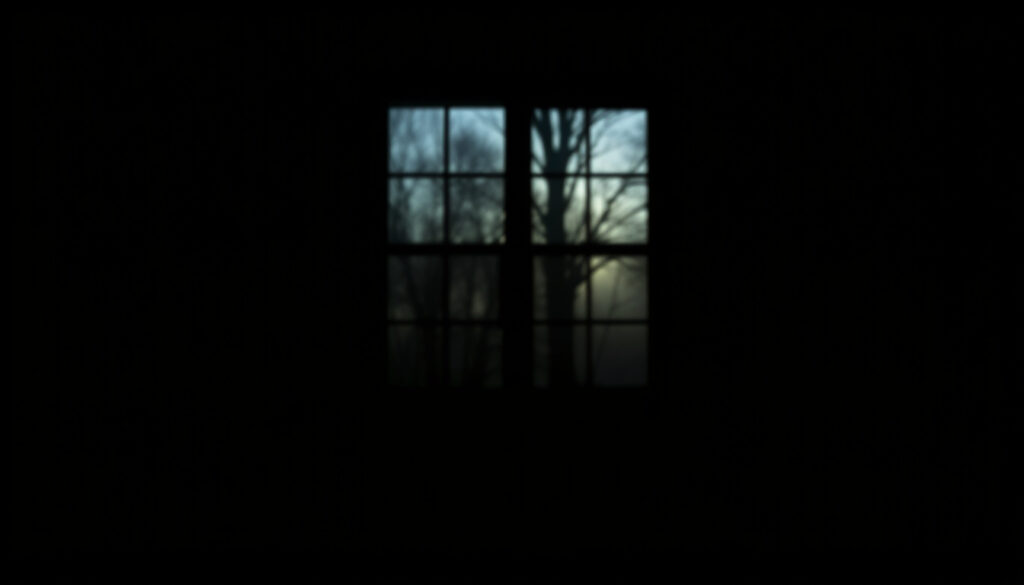
What Do Blind People See? Understanding the Spectrum of Blindness
Few questions about blindness are as common—or as misunderstood—as “What do blind people see?” The answer isn’t darkness, and it’s not a blank void. For most blind individuals, vision is a spectrum, not an on-off switch. Here’s what the medical evidence and lived experience actually show.
People with blindness globally (2023): 43 million (WHO) ·
Proportion with some residual vision: 90% ·
Legal blindness definition: Visual acuity < 20/200 ·
Leading causes of blindness: Cataracts, glaucoma, macular degeneration ·
Percentage with total blindness (no light perception): ~10-15%
Quick snapshot
- Blindness ranges from total to partial (American Foundation for the Blind (leading advocacy nonprofit))
- Legal blindness: <20/200 vision (World Health Organization (global health authority))
- Most retain some light or shape perception (CNIB (national blindness charity))
- Blindness ≠ total darkness (CNIB) (Perkins School for the Blind (specialist education provider))
- Blind people do not necessarily see black (American Foundation for the Blind) (Perkins School for the Blind (specialist education provider))
- Closing your eyes is not the same (Perkins School for the Blind (specialist education provider))
- Congenital blindness: no visual memory (CNIB)
- Acquired blindness: may retain visual imagery (Perkins School for the Blind)
- Dreams reflect sensory history (American Foundation for the Blind)
- Visual cortex adapts in blind individuals (CNIB)
- Other senses become sharper (American Foundation for the Blind)
- Brain plasticity plays a key role (World Health Organization)
Five key statistics, one takeaway: the majority of people classified as blind still have some usable sight, and total blindness is far rarer than most assume.
| Fact | Value |
|---|---|
| Global prevalence of blindness | 43 million (WHO, 2023) |
| Percentage with total blindness | ~10–15% (American Foundation for the Blind) |
| Most common cause worldwide | Cataracts (WHO) |
| Legal blindness threshold (US) | 20/200 best-corrected visual acuity (WS Blind blog (disability advocacy perspective)) |
| Age-related macular degeneration | Leading cause in developed countries (Perkins School for the Blind) |
| Central vs. peripheral vision loss | Different visual profiles produced (CNIB) |
| Blindness from early age | Associated with brain rewiring (CNIB) |
| Percentage of blind who use a cane | Not universal; varies by need (American Foundation for the Blind) |
Is anybody 100% blind?
What percentage of blind people have no light perception?
- Only about 10–15% of registered blind individuals have total blindness, defined as no light perception (American Foundation for the Blind).
- The vast majority—85–90%—retain some form of usable vision, even if limited to light, shapes, or motion (CNIB).
What does “legally blind” mean?
- In the United States, legal blindness is defined as best-corrected visual acuity of 20/200 or worse in the better eye, or a visual field narrower than 20 degrees (WS Blind blog).
- The World Health Organization uses a functional classification that includes categories for low vision (6/18 to 6/60) and blindness (<6/60 to no light perception) (World Health Organization).
The implication: “100% blind” is a rare condition. Most people labeled as blind can still perceive light, movement, or shapes.
The assumption that blindness equals total darkness leads well-meaning people to treat blind individuals as if they have no sight at all. For the 85–90% with residual vision, this can be both inaccurate and patronizing—something disability advocates point out repeatedly.
How does a blind person’s vision look like?
What do people with partial blindness see?
- People with low vision often see blurry shapes, shadows, or areas of blank spots (CNIB).
- Some describe their vision as a gray or brown haze, rather than black (CNIB).
- Central vision loss (e.g., macular degeneration) leaves peripheral sight intact, while glaucoma targets the periphery first, creating tunnel vision (CNIB).
What do people with total blindness see?
- Those with total blindness do not perceive any visual input—not darkness, not black, but an absence of the visual sense altogether (American Foundation for the Blind).
- A common analogy: it is like trying to see out of your elbow—there is simply no sensation of sight (Perkins School for the Blind).
What this means: the visual experience of blindness is just as varied as the causes behind it. Two people with the same diagnosis may describe completely different visual worlds.
What do blind people see: black or nothing?
Why is it not like closing your eyes?
- Closing your eyes still produces phosphenes (the faint colored specks you see against the eyelids)—total blindness does not (CNIB).
- The sensation of “black” requires a visual system capable of registering the color black; for a person with no light perception, there is no visual signal to interpret as black (American Foundation for the Blind).
What does ‘seeing nothing’ actually mean?
- It is not a void or a dark curtain—it is simply the complete absence of the visual modality (Perkins School for the Blind).
- Think of what a non-blind person “sees” from the back of their head: there is no image, no color, no black—just no visual input at all (CNIB).
The trade-off: using the word “nothing” to describe total blindness is accurate, but “nothing” in the visual sense is not the same as a painted black canvas—it’s the absence of the painting itself.
Even among experts, describing the subjective experience of total blindness is difficult because it requires a sighted person to imagine a modality they have never lacked. The elbow analogy is one of the clearest translations available.
What do blind people see in their dreams?
Do blind people dream visually?
- People blind from birth do not have visual dreams—they dream using other senses: touch, sound, smell, and emotion (CNIB).
- Those who lose sight later in life often continue to see visual images in dreams, sometimes for years after vision loss (American Foundation for the Blind).
How do dreams differ for people born blind vs. later blindness?
- The content of dreams reflects the dreamer’s sensory history. A person born blind may dream about navigating a space via sounds and textures, never “seeing” it (Perkins School for the Blind).
- Research suggests that blind people also experience more frequent nightmares, possibly related to real-world navigation stresses (CNIB).
The pattern: dreams are a faithful mirror of the senses the brain has learned to use—or has never had. For the congenitally blind, vision is absent from both waking and sleeping worlds.
What do blind people see from birth?
How do congenitally blind people understand vision?
- Individuals blind from birth have no visual memory or concept of sight. They understand “seeing” as an abstract concept explained by others (CNIB).
- They often describe “seeing” with their hands or hearing as a form of “visual” perception—an adaptive rewiring of the brain (American Foundation for the Blind).
What is the visual cortex like in people blind from birth?
- The visual cortex is not dormant—it is repurposed for processing touch and sound. This is one of the clearest examples of brain plasticity (CNIB).
- Studies using fMRI show the visual cortex of congenitally blind individuals activating during tactile reading (Braille) and auditory tasks (World Health Organization).
Why this matters: the brain of someone blind from birth does not have a “dark” area waiting for light—it repurposes its resources, turning the visual cortex into a multi-sensory processing hub. This is both a biological marvel and a reminder that “seeing” is not the only way to perceive the world.
“Many people who are blind still have some usable vision—it’s not all or nothing. Blindness is a spectrum, not a switch.”
— CNIB, Canada’s primary blindness organization (Source)
“Glaucoma is called the silent thief of sight because it steals peripheral vision without warning, often until it’s too late.”
— National Eye Institute, U.S. federal eye research authority (Source)
For anyone who has ever wondered what it’s like to live without sight, the honest answer is: it depends. But one thing is certain—the world of a blind person is rich with sensory input, not a void. For sighted readers, the best starting point is to let go of the idea that blindness means darkness, and instead recognize it as a different way of experiencing the world—one where the brain compensates, adapts, and builds its own version of reality. For policymakers, the implication is clear: investing in accessibility tools and early intervention can dramatically improve quality of life for the 43 million people with blindness worldwide.
Related reading: What is a Sociopath? Definition, Symptoms, and Key Differences · Can a Cat Have Down Syndrome? Myth v Reality
Frequently asked questions
Can blind people see colors?
Some can, if they have residual color vision. Those with total blindness do not perceive any color.
Do all blind people see darkness?
No. Many see gray, haze, or blotches. Only a small minority experience total darkness—and even that is not the same as the black we see when closing our eyes.
What is the difference between blind and visually impaired?
“Visually impaired” is a broader term that includes both low vision and blindness. Blindness typically refers to the most severe end of the spectrum.
Can a blind person’s vision be corrected?
It depends on the cause. Some conditions are treatable (e.g., cataract surgery), while others (e.g., retinal degeneration) are currently irreversible.
Do blind people see light?
Many blind people retain light perception—they can tell if a room is bright or dark, even if they cannot see objects.
How do blind people navigate without sight?
They use a combination of white canes, guide dogs, GPS apps, and echolocation, supported by public infrastructure like tactile paving.
What does it mean to be legally blind?
It means your visual acuity is 20/200 or worse with correction, or your visual field is 20 degrees or less—criteria set by law, not by complete sight loss.
More related posts
 Peter Mandelson: What Happened to the ‘Prince of Darkness’
 Jey Uso: From Tag Team Specialist to World Champion
 Princess Anne: Royal Protocol, Relationships, and Public Impact
 Heidi Alexander: Transport Secretary, Biography, Family & Career
 Hayley McQueen: Biography, Father Gordon and Tragic Deaths
 Touker Suleyman: Net Worth, Brands, and Dragons’ Den Exit
 Vivienne Jolie-Pitt: Name Change, Age, Twin & Family