Bar Bar Stools Buying Guide – Heights, Materials & Top Picks
Few home upgrades deliver the same instant payoff as a well-chosen bar stool. The right seat turns a kitchen island into a social hub, a breakfast bar into a morning ritual, and a home bar into a proper gathering spot.
Average counter-height stool seat: 24–27 inches (61–69 cm) ·
Average bar-height stool seat: 28–32 inches (71–81 cm) ·
Common seat width: 16–20 inches (40–51 cm) ·
Typical weight capacity: 250–350 lbs (113–159 kg) ·
Standard seat-to-counter clearance: 10–12 inches (25–30 cm)
Quick snapshot
- Standard bar stool height: 28–32 inches (Des Kelly Interiors, Irish furniture retailer)
- Counter stools typically 24–27 inches seat height (POVISON, home furnishings specialist)
- Metal frames offer durability and easy cleaning (Barstool.ie, Irish seating experts)
- Wooden stools require occasional maintenance (Barstool.ie)
- Weight capacities vary significantly by model and material (POVISON)
- Exact clearance needed may depend on the counter overhang (Civic Insight, UK-Ireland market analysis)
- Specific product availability at Irish retailers changes frequently (Des Kelly Interiors)
- Irish kitchen island trend: 90 cm counter height is standard, driving demand for 65–70 cm stool seats (Barstool.ie)
- Home bar layouts increasingly favour 105 cm surfaces with 75–80 cm stools (Civic Insight)
- Expect more clearance sales in Ireland as retailers refresh stock for 2025 (Aussie Report, market overview)
- Swivel and adjustable-height stools gaining traction in Irish homes (Des Kelly Interiors)
Irish buyers face a clear trade-off: counter-height stools (65–70 cm seat) for typical 90 cm kitchen islands, or bar-height stools (75–80 cm seat) for higher home bars. Getting it wrong means either knees hitting the counter or feet dangling — both avoidable with a single tape measure.
Key facts at a glance
Five specs, one pattern: the seat height rule is the most critical decision, and it affects everything from comfort to stool count.
| Specification | Value |
|---|---|
| Standard bar stool height | 28–32 inches (71–81 cm) |
| Standard counter stool height | 24–27 inches (61–69 cm) |
| Seat width range | 16–20 inches (40–51 cm) |
| Typical weight capacity | 250–350 lbs (113–159 kg) |
| Minimum clearance under counter | 10–12 inches (25–30 cm) |
Why this matters: a 10-inch clearance gap is the difference between a comfortable sit and a cramped one. Irish kitchen islands often sit at 90 cm, meaning a 65–70 cm stool leaves exactly the right legroom (Barstool.ie, Irish seating experts).
What Are the Best Bar Bar Stools for Kitchen Islands?
Key features to look for: height, material, backrest, and swivel function
- Height: match your counter or bar surface — 65–70 cm seat for 90 cm counters, 75–80 cm for 105–110 cm bars (Barstool.ie)
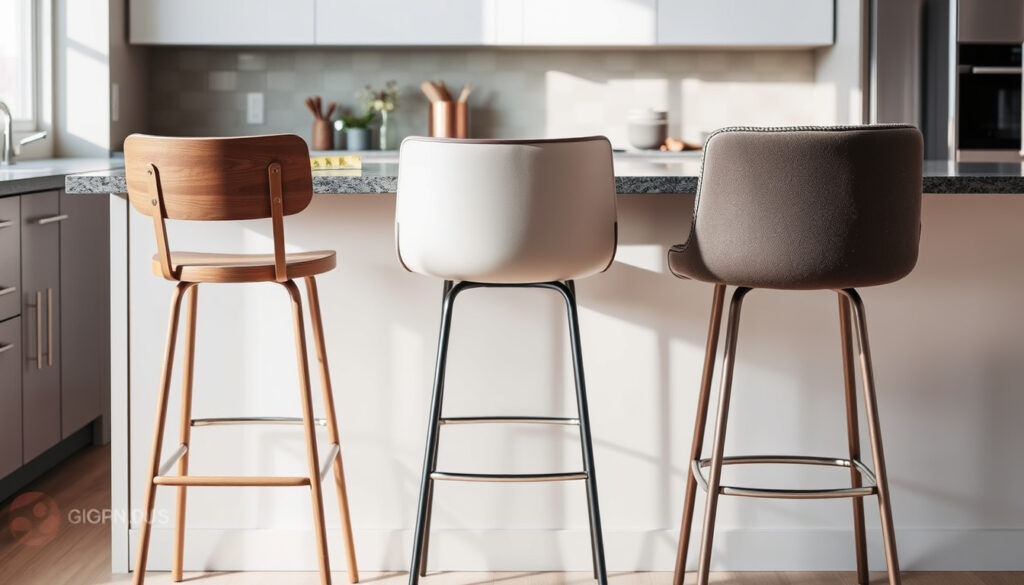
- Material: wood for warmth, metal for industrial durability, leather/PU for easy wipe-down (Barstool.ie)
- Backrest: lumbar support for long sits; backless for compact spaces (Des Kelly Interiors)
- Swivel: easy rotation without straining, ideal for busy islands (Des Kelly Interiors)
Top choices from EZ Living, Abbey Furniture, Laura James, and Casey’s
EZ Living Interiors offers a “superb range” of kitchen stools in wood, metal, and leather (EZ Living Interiors, Irish home furnishings retailer). Abbey Furniture provides “stylish bar & counter stools” at “unbeatable prices” (Abbey Furniture, Dublin-based furniture store). Laura James stocks metal, mango wood, and rubberwood options with easy assembly (Laura James, online home and garden retailer). Casey’s promotes “great value” kitchen and bar stools (Casey’s, Irish furniture chain).
How to match bar stools to your kitchen island design
Match the stool’s style to your island: a wooden island with a marble top pairs well with a wooden stool with a padded seat, while a sleek modern island suits metal or leather. The rule: contrast materials but coordinate colours (Des Kelly Interiors).
How Tall Should Bar Bar Stools Be?
Standard bar stool height vs. counter stool height
Bar stools typically measure 28–32 inches tall with a seat height of 24–27 inches, while counter stools are 24–27 inches tall with a seat height of 17–20 inches (Des Kelly Interiors, Irish furniture retailer). The distinction matters because a kitchen island in Ireland is usually about 90 cm (35.4 inches), which pairs with a counter stool of 65–70 cm seat height (Barstool.ie, Irish seating experts).
How to measure for the perfect fit
The easiest method: measure the underside of your counter and subtract 25 cm for legroom. That gives you the maximum seat height (Civic Insight, UK-Ireland market analysis). For a 90 cm counter, that means a seat height of 65 cm — right in the middle of the recommended range.
Recommended seat height for your bar counter
For a bar-height surface (105–110 cm), the seat height should be 75–80 cm (Civic Insight). ScopePress confirms the same rule: subtract 25–30 cm from the counter height to find the target seat height (ScopePress.uk, furniture buying guide).
The trade-off: too tall and you’ll hit your knees; too short and you’ll strain to reach the counter. The extra 2–3 inches of clearance between stool and counter makes all the difference.
A stool that looks perfect in the showroom can feel wrong in your kitchen. Always measure your counter height and seat height before buying. Irish retailers like Des Kelly and Barstool.ie offer detailed guides, but a tape measure beats any guess.
Bar Bar Stools with Backs vs. Backless – Which Is Right?
Comfort and support: when to choose a backrest
Backrests provide lumbar support, reducing fatigue during long meals or conversations. Des Kelly Interiors recommends a backrest for anyone who plans to sit for more than 30 minutes at a time (Des Kelly Interiors).
Space considerations: backless stools save room
Backless stools slide completely under the counter, saving floor space and allowing a cleaner look. They also make it easier to move around the island (Barstool.ie).
Style options: backs for classic, backless for modern
Wooden stools with turned backs lean traditional; metal backless stools scream contemporary. The choice often comes down to the kitchen’s overall design language (Des Kelly Interiors).
The pattern: backless stools are more versatile for compact spaces, but backs win on comfort. If your kitchen island is also a dining table, go with backs.
What Materials Are Best for Durability?
Wood, metal, leather, and PU leather: pros and cons
- Metal frames: durable, easy to clean, industrial look. Ideal for high-traffic areas (Barstool.ie).
- Wood: classic, warm, but may require more care — occasional oiling or polishing (Barstool.ie).
- Leather/PU leather: comfortable, easy to wipe, but can scratch over time. Good for a polished look with less maintenance than fabric (Barstool.ie).
How material affects maintenance and longevity
Metal stools last longer with minimal care — a damp cloth is enough. Wood stools need to be kept away from direct moisture. Leather and PU leather require occasional conditioning to prevent cracking (Barstool.ie).
Weight capacity and sturdiness considerations
Most bar stools support 250–350 lbs, but heavy-duty models can go higher. Check the manufacturer’s rating before buying, especially if the stool will be used by a larger person (POVISON, home furnishings specialist).
Why this matters: a stool that wobbles under weight is a safety hazard, not just a style miss. Metal frames with a wide base offer the best stability.
PU leather can look like real leather for a fraction of the price, but it’s less breathable and may peel after a few years. If you want longevity, spend more on genuine leather or choose a well-constructed metal stool.
Should I Choose a Swivel Bar Stool?
Benefits of swivel function for movement and access
Swivel stools allow easy rotation without back strain, making them ideal for kitchen islands where people sit on multiple sides. Des Kelly Interiors notes that swivel stools are particularly useful for busy families (Des Kelly Interiors).
When swivel may be less suitable (e.g., fixed seating areas)
In a dedicated dining bar or a row of stools against a wall, swivel can be unnecessary and may add mechanical complexity. A fixed stool is simpler and often more stable (Barstool.ie).
Popular swivel options from Irish retailers
JYSK and Homestore and More stock swivel bar stools in various heights and materials. JYSK’s range includes both counter-height and bar-height swivel models, often sold in sets of 2 (JYSK Ireland, home and furniture retailer).
The trade-off: swivel adds convenience but also a potential point of failure. For a stool that gets daily use, a quality swivel mechanism is worth the extra cost.
Where to Buy Bar Bar Stools in Ireland?
Top retailers: EZ Living, Abbey Furniture, Laura James, Casey’s
- EZ Living Interiors: “superb range” of kitchen stools in wood, metal, and leather (EZ Living Interiors, Irish home furnishings retailer).
- Abbey Furniture: “stylish bar & counter stools” at “unbeatable prices” (Abbey Furniture, Dublin-based furniture store).
- Laura James: metal, mango wood, and rubberwood options with easy assembly (Laura James, online home and garden retailer).
- Casey’s: “great value” kitchen and bar stools (Casey’s, Irish furniture chain).
JYSK and Homestore and More budget-friendly options
JYSK offers bar stools in sets of 2, with prices starting around €50. Homestore and More carries a range of colours and styles, from rustic wood to modern metal (Homestore and More, Irish homeware retailer).
Clearance bar stools sale in Ireland: tips for shopping
Clearance sales at Irish retailers can save 30–50%, but check the return policy and inspect for damage. Aussie Report notes that clearance stock often sells out quickly, so act fast (Aussie Report, market overview).
The implication: online retailers like Laura James offer wider selection, while physical stores like EZ Living let you test the stool. For clearance deals, check both.
How to Choose the Perfect Set of 2 Bar Bar Stools?
Factors to consider: matching your space, style, and budget
- Measure your counter height and seat height.
- Decide on backrest vs. backless, swivel vs. fixed.
- Choose material that matches your kitchen’s wear and tear.
- Set a budget — sets of 2 typically range from €80 to €400.
Measure your counter height and seating area
Use a tape measure from the floor to the underside of the counter. Subtract 10–12 inches (25–30 cm) for legroom. That’s your target seat height (ScopePress.uk, furniture buying guide).
Compare products from retail catalogs and online listings
Check JYSK, Homestore and More, and EZ Living for sets of 2. Look for detailed specs: seat height, seat width, weight capacity, and assembly difficulty (Barstool.ie).
The pattern: sets of 2 are cost-effective and make matching easier. But ensure the seat width fits your counter — allow 6–10 inches between each stool for comfortable spacing (Barstool.ie).
A 6-foot counter fits 2 stools comfortably at 20 inches each, with 8 inches of space between them. Stool width plus spacing equals the total seating length — a simple calculation that prevents overcrowding.
Specification Table
Six specs, one pattern: the seat height and clearance are the twin pillars of a good fit.
| Specification | Value |
|---|---|
| Bar stool total height | 28–32 inches (71–81 cm) |
| Bar stool seat height | 24–27 inches (61–69 cm) |
| Counter stool total height | 24–27 inches (61–69 cm) |
| Counter stool seat height | 17–20 inches (43–51 cm) |
| Seat width | 16–20 inches (40–51 cm) |
| Seat depth | 15–18 inches (38–46 cm) |
| Weight capacity | 250–350 lbs (113–159 kg) |
| Clearance under counter | 10–12 inches (25–30 cm) |
| Space between stools | 6–10 inches (15–25 cm) |
| Common materials | Wood, metal, leather, PU leather, upholstery |
The catch: the seat depth matters for comfort — too shallow and you’ll feel perched, too deep and your feet won’t reach the floor. Standard depth is 15–18 inches, which works for most adults.
Upsides and Downsides
Upsides
- Bar stools instantly create extra seating without a full dining table.
- Wide range of materials and styles to match any decor.
- Sets of 2 are affordable and easy to find at Irish retailers.
- Swivel and backrest options improve comfort for daily use.
- Easy to move and store — some fold flat.
Downsides
- Wrong height can cause discomfort and back pain.
- Cheaper stools may wobble or have a low weight limit.
- Leather and fabric can stain or wear quickly.
- Backless stools lack lumbar support for long sits.
- Assembly can be time-consuming with poor instructions.
Confirmed Facts vs. What’s Unclear
Confirmed facts
- Standard bar stool heights are 28–32 inches. (Des Kelly Interiors)
- Counter stools are typically 24–27 inches. (POVISON)
- Metal frames are durable and easy to clean. (Barstool.ie)
- Wooden stools require occasional maintenance. (Barstool.ie)
- Leather/PU leather is comfortable but can scratch. (Barstool.ie)
- Clearance of 10–12 inches is recommended. (Des Kelly Interiors)
What’s unclear
- Weight capacities vary significantly by model and material. (POVISON)
- Exact clearance needed may depend on the counter overhang and stool design. (Civic Insight)
- Specific product availability at Irish retailers changes frequently. (Des Kelly Interiors)
What Retailers Say
“Our superb range of kitchen stools offers a variety of styles and materials to suit every home.”
— EZ Living Interiors, Irish home furnishings retailer
“We provide stylish bar & counter stools at unbeatable prices, ensuring durability and design.”
— Abbey Furniture, Dublin-based furniture store
“Our metal, mango wood, and rubberwood bar stools are designed for easy assembly and long-lasting use.”
— Laura James, online home and garden retailer
For the Irish buyer, the choice is clear: measure your counter height first, then let the style follow. A 90 cm kitchen island demands a 65–70 cm seat — any taller and you’ll regret it. A 105 cm home bar needs a 75–80 cm seat. Material matters less than fit, but metal and wood offer the best value for daily use. The retailers are ready: EZ Living, Abbey Furniture, Laura James, and Casey’s all have quality options. The question is not whether you can find a stool, but whether you’ll find the right one. For the Irish homeowner, the decision is simple: measure, match, and sit comfortably.
morningtimes.uk, trendcurrent.org, northreview.net, coastlinebrief.com, barstool.ie, australianwatch.org
Frequently asked questions
What is the best height for a bar stool?
For a standard bar-height surface (40–42 inches), choose a stool with a seat height of 28–30 inches. For a counter-height island (34–36 inches), choose a seat height of 24–26 inches. (Barstool.ie)
How much weight can a bar stool typically hold?
Most bar stools support 250–350 lbs, but always check the manufacturer’s specification. Heavy-duty models can exceed 400 lbs. (POVISON)
Should I choose a stool with a back or without?
Backrests provide lumbar support for longer sitting. Backless stools are more compact and slide under the counter. Choose based on how long you’ll typically sit. (Des Kelly Interiors)
What is the standard seat depth for a bar stool?
Standard seat depth is 15–18 inches. This allows comfortable sitting with feet either on the floor or on a footrest. (Barstool.ie)
How do I assemble a bar stool safely?
Follow the manufacturer’s instructions, use the included tools, and tighten all bolts. If the stool has a footrest, ensure it’s at the correct height. For heavy stools, ask a second person for help. (Barstool.ie)
Can I use bar stools at a regular dining table?
Bar stools are too tall for a standard dining table (around 30 inches). You’ll need counter-height stools (24–27 inches) for a dining table. (POVISON)
How far should the seat be from the counter bottom?
Leave 10–12 inches of clearance between the stool seat and the bottom of the counter for comfortable legroom. (Des Kelly Interiors)
More related posts
 Olly Alexander: Biography, Relationships, Eurovision, and More
 Sunjay Kapur Death: Cause, Fortune, and the Bee Myth Explained
 Define Estranged: Meaning, Synonyms, and Differences
 Mel Brooks: Life, Net Worth, Relationships & Latest News
 Peter Thiel: Net Worth, LGBTQ, and Controversial Views
 Henry Winkler: Disability, Relationships, Life Beyond the Fonz
 Robert Kennedy Sr vs Jr: Assassination, Health, and Family Facts