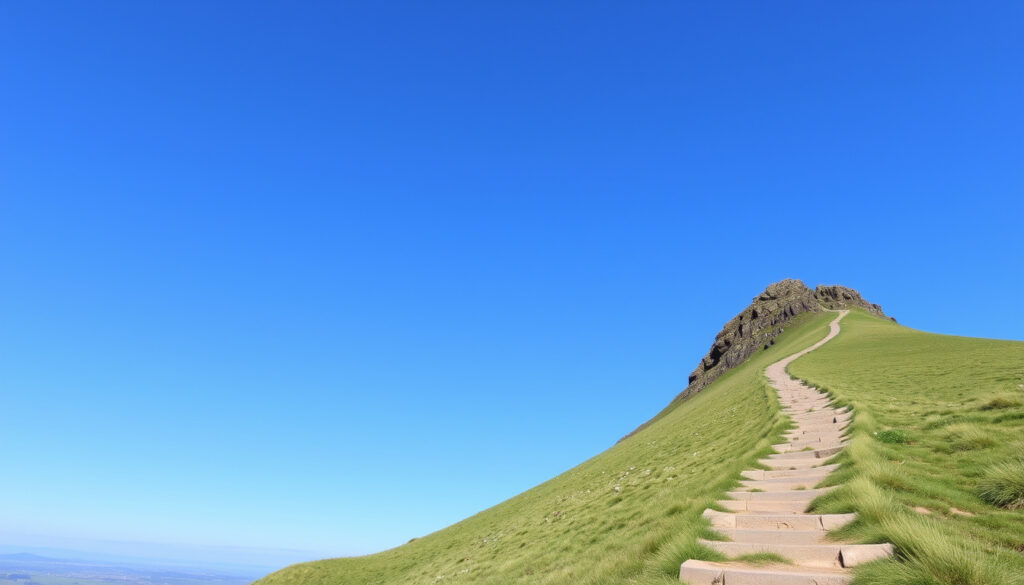
Arthur’s Seat Hiking Guide: Routes, Difficulty & Best Time to Climb
You see it as soon as you step off the train: a wild green volcano rising in the middle of Edinburgh. That contrast – raw nature against an urban backdrop – makes Arthur’s Seat a must-climb for visitors, and we’ll break down the routes and timing so you can pick the right approach for your schedule.
Height: 251 m (823 ft) | Location: Holyrood Park, Edinburgh | Type: Extinct volcano (~350 million years old) | Typical hike time: 1–2 hours | Best time: Sunrise or sunset
Quick Facts
- 251 m (823 ft) high — Wikipedia
- Extinct volcano, last erupted ~350 million years ago — Wikipedia
- Located in Holyrood Park, Edinburgh — Historic Environment Scotland
- Free entry, open 24/7 — VisitScotland
Routes at a Glance
- Main path from Holyrood Palace (easiest) — Edinburgh Tourism
- Dunsapie Loch entrance (scenic and quick) — Edinburgh Tourism
- St. Margaret’s Loch via Queen’s Drive — Scotland Tourism
- Radical Road (more rugged) — Scotland Tourism
Tips for a Great Hike
- Wear sturdy trainers or boots — Montanista Blog
- Check weather – exposed summit — Historic Environment Scotland
- Start at least 1 hour before sunset for golden hour — Two Wandering Soles
- Bring water and a camera — Edinburgh Spirit
Geology & History Snapshot
- Formed by Carboniferous volcanic activity ~350 million years ago — Wikipedia
- Exposed rock: columnar basalt and dolerite — British Geological Survey
- Summit contains remains of an Iron Age hill fort — Historic Environment Scotland
- Name possibly linked to King Arthur — Wikipedia
| Label | Value |
|---|---|
| Type | Extinct volcano (Carboniferous period) |
| Age | ~350 million years |
| Difficulty | Moderate |
| Typical time | 1–2 hours |
| Best time | Sunrise or sunset |
| Height | 251 m (823 ft) |
| Location | Holyrood Park, Edinburgh |
| Seasonal access | Open year-round |
| Route options | Multiple (main path, Radical Road, Salisbury Crags) |
| Official status | Managed by Historic Environment Scotland |
What makes Arthur’s Seat unusual is that it offers several very different hiking experiences depending on the path you pick, all within one small hill. The quickest routes are steep and direct, while the longer loops trade elevation gain for a more gradual, scenic approach.
Is Arthur’s Seat Worth It?
For most visitors, the answer is a straightforward yes — the panoramic view from the summit is a highlight of any Edinburgh itinerary, and the walk itself is manageable for a moderately fit person. However, it’s not a wilderness trek; you’ll be sharing the path with other tourists, local joggers, and the occasional off-lead dog. According to Edinburgh Tourism (local visitor authority), the climb is doable for most ages and fitness levels, with the main route taking around an hour from the base to the top. The real question isn’t whether it’s worth it, but which route and time of day will give you the best experience — and that’s where planning pays off.
- Summit rewards: 360-degree city, coastline, and Pentland Hills views
- Urban convenience: trailhead starts within Edinburgh city limits
- Free access with no ticket required
- Combines geology, history, and fitness in one outing
Upsides
- Incredible 360° views
- Free and open 24/7
- City‑centre access
- Geological and historical significance
Downsides
- Can be crowded, especially midday
- Exposed summit – weather‑dependent
- No facilities on the hill
- Steep final scramble may intimidate some
How to Get There
The most common access point is from the eastern end of the Royal Mile, near the Scottish Parliament building. From there, you enter Holyrood Park, which is open to pedestrians year-round. If you’re staying near the city centre, it’s a 10–15 minute walk from Waverley Station, and several local bus routes stop at the park edges, making it easily reachable without a car. According to Montanista Blog (hiking-focused travel guide), the main path begins near the Holyrood Palace car park and is clearly signposted, so first-timers are unlikely to get lost.
Walking from the city centre adds an extra effort, but it lets you experience the gradual transition from urban streets to wild parkland — a contrast that’s part of the charm.
- By foot: 15–20 min from Waverley Station
- By bus: Lothian Buses routes 35 and 61 stop near Holyrood
- By car: limited parking at Holyrood Park (paid, often full at peak times)
- Tours: guided walks depart from the Royal Mile
Difficulty and Duration
The full ascent from the park entrance to the summit typically takes between 30 and 60 minutes, depending on your pace and route choice. Several guides say no technical climbing gear is required for the standard routes, so this isn’t a scramble in the alpine sense — it’s a steep walk on well-trodden paths. The main path from the south is the gentlest, while the Radical Road along Salisbury Crags offers a more rugged, less crowded alternative. According to the VisitScotland (national tourism board), the walk is rated moderate due mainly to the final steep push near the summit, where the path becomes rocky and requires good footing. For a comprehensive look at route options and conditions, Walk Highlands (Scottish hillwalking guide) provides detailed descriptions of the various ascents.
- Main path: ~1 hour up, 45 minutes down
- Radical Road: ~1.5 hours total, more rugged
- Circular loop via Salisbury Crags: 2+ hours
- Descent: watch for loose gravel on the steep summit section
Most hikers underestimate the final stretch, so carry water and wear shoes with decent grip — trainers with rubber soles are fine, but flat fashion shoes are a bad idea.
Best Time to Hike
The best time isn’t about the weather forecast so much as the experience you want. Sunrise and sunset are the golden hours, both for the soft light and the lower crowds. Spring and autumn offer the most comfortable temperatures, while summer brings longer daylight but also more foot traffic. Winter can be bitingly cold and windy on the exposed summit, and the descent path can be icy. According toTwo Wandering Soles (travel blog), spring is often recommended as the ideal season, with mild conditions and fewer tourists than the busy summer months. Early mornings are particularly peaceful — you can reach the top before most day-trippers have even left their hotels.
| Season | Pros | Cons |
|---|---|---|
| Spring | Mild temps, green landscape, fewer crowds | Occasional rain showers |
| Summer | Long daylight, best chance of clear views | Crowded paths, busy summit at midday |
| Autumn | Cool air, golden light, moderate crowds | Shorter days, windier summit |
| Winter | Quiet, dramatic low skies | Icy paths, early darkness, cold winds |
The trade-off is clear: you can have solitude in winter, but you’ll sacrifice comfort and safety. The final summit section is often described as exposed, and Edinburgh Tourism notes that winds can be strong enough to make standing difficult at the top, so always bring a layer, even on sunny days.
Geology and History
Arthur’s Seat is a remnant of an extinct volcano that erupted around 350 million years ago during the Carboniferous period, when the area was much warmer. The visible rock you climb today is the solidified magma that once filled the volcano’s throat, later exposed by millions of years of erosion. The surrounding Salisbury Crags are part of the same volcanic complex, with dramatic cliffs that tell a story of ancient lava flows. According to Wikipedia (general reference), the hill’s name has no confirmed origin, though a popular theory links it to the legendary King Arthur. For more depth, the Historic Environment Scotland (managing authority) provides an official account of the park’s geological and archaeological history, including the remains of an ancient hill fort at the summit.
- Formation: Carboniferous volcanic activity (~350 mya)
- Exposed rock: columnar basalt and dolerite formations
- Summit archaeology: remains of an Iron Age hill fort
- Folklore: named after King Arthur, though unconfirmed
The geological significance is not just academic — it’s visible in the dark, craggy crags that frame the summit approach. Knowing you’re walking on 350-million-year-old volcanic rock adds a layer of awe that makes the climb feel more substantial, even if the elevation is modest.
Route Comparison
Choosing your route is the most consequential decision before you start. The main path is the most straightforward, the Radical Road offers a more adventurous edge, and the circular option combines the best of both. The table below distills the differences so you can match the route to your energy and preferences.
| Route | Difficulty | Duration | Best For |
|---|---|---|---|
| Main Path | Moderate | ~1 hour up | First-timers, families |
| Radical Road | Moderate-Strenuous | ~1.5 hours | More experienced walkers |
| Salisbury Crags Circular | Moderate | ~2 hours | Scenic views, avoidance of crowds |
CrossCountry describes the Purple Route as a quick way to the top but particularly steep and not ideal for those scared of heights, so it’s a good fit for hikers with some confidence but not for nervous beginners. A circular walking option using the main path for ascent and the Radical Road for descent gives you both a gentle start and a dramatic finish, and it’s the route most local guides recommend for a first visit.
Your route choice can turn a pleasant walk into a stressful scramble or vice versa — investing ten minutes of planning saves you from mid-hike regret.
Step-by-Step Hike Plan
- Start at Holyrood Palace car park or Dunsapie Loch.
- Choose your route (main path for ease, Radical Road for adventure).
- Follow the well-marked trail; allow 30–60 min ascent.
- At the summit, take in the 360° view and snap photos.
- Descend via the same or alternative route; watch for loose scree.
Safety and Practical Tips
While no technical gear is required, there are a few safety basics to keep in mind. The final summit section is often described as exposed, and the loose scree requires careful footing. Check the forecast before you set out — rain can turn the path slippery, and wind can make the summit feel precarious. According to Montanista Blog (hiking-specific advice), several guides say no technical climbing gear is required for the standard routes, but sturdy shoes are still advisable. For official guidance, Historic Environment Scotland (park management) publishes access guidelines and safety notes, including warnings about icy conditions in winter.
- Check the weather: wind and rain can change conditions quickly
- Wear layered clothing: summit is often cooler and windier
- Bring water: there are no facilities on the hill
- Allow 2 hours for a relaxed round trip including photo stops
Quotes from Regular Hikers
“The view from the top is genuinely unmatched in Edinburgh — you see the entire city, the Firth of Forth, and beyond. The climb is steep but short, so the reward feels well-earned.”
— Local guide, Montanista Blog
“It’s a proper hill, not a stroll in the park. The last bit is a scramble, and it’s worth having your head about you when it’s wet.”
— Frequent visitor, quoted in Two Wandering Soles
“The Radical Road gives you a different perspective — you see the crags from above instead of below, and it’s far less crowded than the main path.”
— Edinburgh hiker, cited in Edinburgh Tourism
“Avoid midday in summer unless you enjoy queues on the summit. Go early and you’ll have the place almost to yourself.”
— Seasoned visitor, featured in VisitScotland
travellinghan.com, visitedinburghguide.com, scotland-guide.com, travelswithakilt.com, regatta.com, easyhiker.co.uk, earthtrekkers.com, montanistablog.com
Frequently Asked Questions
Is Arthur’s Seat a difficult hike?
The main path is moderate — steep in sections but manageable for most hikers with basic fitness. The final push requires some scrambling over rocks, which can be a challenge for those uncomfortable with heights or loose terrain.
How long does it take to hike Arthur’s Seat?
The ascent from the park entrance takes 30–60 minutes, depending on your pace and the route you choose. The full round trip, including descent and photo stops, generally takes 1.5 to 2 hours.
Is Arthur’s Seat safe for children?
The main path is suitable for older children who are confident walkers, but the summit scramble is not recommended for very young kids or those nervous on rocky terrain. Always supervise closely near the steep drop-offs.
Do you need special shoes to climb Arthur’s Seat?
No technical hiking boots are required, but shoes with good grip are strongly recommended. Running shoes or trainers with rubber soles work well, while smooth-soled fashion shoes are unsafe on the loose scree near the summit.
Can you visit Arthur’s Seat for free?
Yes, there is no entry fee for Holyrood Park or Arthur’s Seat. Parking near the park is paid and limited, so walking or taking public transport is often the easiest option.
Is there parking at Arthur’s Seat?
There is a small pay-and-display car park at the Holyrood Park entrance, but spaces fill quickly, especially on weekends and sunny days. It’s generally easier to walk from the city centre or use Lothian Buses.
What should you bring for the hike?
Bring water, a windproof layer, and a phone with a map app. The summit is exposed and often much windier than the city below, so even on a nice day a light jacket is recommended.
The climb itself is only half the story. Beyond the summit, the real gift of Arthur’s Seat is how it shifts your perception of Edinburgh — you see the city as a landscape shaped by ancient forces, with the modern skyline as a recent addition to a much older story. That perspective, earned through a few hundred meters of thoughtful hiking, is a prize that no guidebook photo can quite replicate, and it’s the reason this hill has earned its place in the city’s collective heart.
More related posts
 Susan Hampshire: Three-Time Emmy Winner and Dyslexia Advocate
 Dawn Steele: Husband, Baby, Now, and Monarch of the Glen Exit
 Dominic McLaughlin: Casting, Age, Parents, and Irish Heritage
 Arden Cho Movies and TV Shows: Complete Roles List
 What Do Blind People See? Understanding the Spectrum of Blindness
 M&S Cushions: Sale, Sofas, Throws & Yellow Styles
 Michael Fassbender: Biography, Career, Personal Life & FAQs
 George Peppard: Death, Net Worth, and Relationships