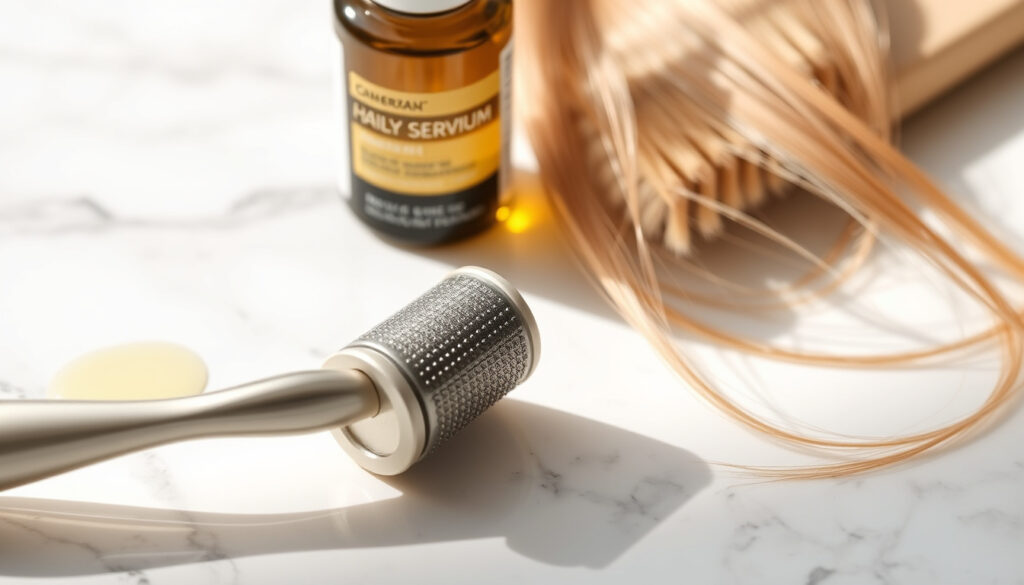
Derma Roller for Hair – Guide to Benefits, Use and Risks
Hair loss affects millions of men worldwide, prompting constant search for effective solutions beyond traditional medications. One technique gaining attention involves microneedling devices applied directly to the scalp. These small handheld tools equipped with fine needles create controlled micro-injuries on the skin’s surface, theoretically stimulating natural repair processes that may support hair regrowth. While the concept might seem unconventional, a growing body of research examines whether this approach delivers meaningful results for those experiencing thinning hair.
Derma rollers and their stamp-style counterparts represent the most accessible form of scalp microneedling available for home use. Manufacturers and retailers market these devices as tools for enhancing topical product absorption and awakening dormant hair follicles. However, the scientific evidence supporting these claims varies in strength, and potential users should understand both the promise and limitations before investing in any regimen. This guide examines the research, practical considerations, and safety aspects men should evaluate when considering derma rollers for hair growth.
Does a Scalp Derma Roller Promote Hair Growth?
Multiple clinical studies have investigated microneedling’s effects on androgenetic alopecia and general hair thinning. Research suggests the technique works through wound healing mechanisms that upregulate specific growth factors and signaling pathways. A 2013 trial found that 82% of participants combining microneedling with minoxidil achieved over 50% hair improvement after 12 weeks, compared to just 4.5% using minoxidil alone. More recent meta-analyses, including a 2024 review encompassing 13 randomized controlled trials with 696 patients, confirmed significant increases in both hair density and diameter when microneedling was combined with topical treatments.
Key Findings from Clinical Evidence
- Microneedling demonstrates superior efficacy compared to minoxidil monotherapy for hair growth outcomes
- Combination approaches with topical treatments yield superior results compared to either method alone
- Repeated stimulation with 0.25 mm or 0.5 mm rollers over 10 cycles induced prominent hair growth in preclinical studies
- Evidence supports upregulation of specific genes associated with hair follicle activation during wound healing
- Microneedling as standalone therapy shows promise but requires additional human trials for stronger validation
- Treatment response rates vary considerably between individuals, with approximately 82% achieving meaningful improvement in combination protocols
- Meta-analyses spanning multiple randomized controlled trials confirm statistically significant improvements in hair density measurements
| Fact | Details |
|---|---|
| Needle Material | Titanium preferred for durability and hypoallergenicity over stainless steel |
| Optimal Home Sizes | 0.25–0.5 mm for safety and efficacy balance; 0.5–1.0 mm increases discomfort |
| Evidence Level | Limited but promising; most robust for combination therapy with topicals |
| Professional Use | Needles 1.5 mm and above typically reserved for trained practitioners |
| Device Replacement | Every 3–6 months to maintain sterility and effectiveness |
| Primary Mechanism | Wound healing cascade triggering dormant follicle activation |
How to Use a Derma Roller for Hair?
Proper technique significantly influences both safety and potential outcomes when using microneedling devices on the scalp. For home hair growth applications, experts recommend selecting needle lengths between 0.25 and 0.5 millimeters. Research indicates these lengths offer the most favorable risk-benefit profile for unsupervised use, while longer needles increase discomfort and potential complications without proportional benefits for most users.
Step-by-Step Application Protocol
- Select appropriate needle length: Choose 0.25–0.5 mm for home hair growth applications; avoid exceeding 1.0 mm without professional guidance
- Prepare the scalp and device: Clean the scalp thoroughly and sterilize the device by soaking in isopropyl alcohol before each session
- Apply the device: Roll or stamp gently across each section of the scalp using approximately 10 cycles per area, maintaining consistent pressure throughout
- Establish frequency: Perform treatments 1–2 times per week; consistency matters more than intensity for long-term results
- Apply post-treatment topicals: If using minoxidil or other topical products, wait 24 hours if any bleeding occurred, or apply immediately after if the skin remains intact
- Maintain device hygiene: Clean thoroughly after each use and replace every 3–6 months depending on usage frequency
Men in the UK may find shorter hair provides practical advantages, as reduced hair length minimizes the risk of device tangling during application. The combination of derma roller treatment with established hair loss medications like finasteride or minoxidil represents the most evidence-backed approach current research supports.
When combining microneedling with minoxidil or similar topicals, apply the topical product after treatment only if no bleeding occurred. If pinpoint bleeding happened during the session, wait a full 24 hours before applying any product to allow the skin barriers to recover.
Why Combining Treatments Often Works Better
Most robust clinical evidence involves microneedling used alongside other hair growth treatments rather than as monotherapy. The Cleveland Clinic advises that professional microneedling combined with topical solutions typically produces optimal outcomes compared to either approach independently. This synergy occurs because the micro-channels created during treatment significantly enhance absorption of topical products into the scalp tissue where they can exert their active effects on hair follicles.
What Are the Side Effects of Derma Roller for Hair?
Understanding potential adverse effects helps users make informed decisions about incorporating microneedling into their hair care routines. Short-term side effects commonly include temporary redness, localized irritation, and pinpoint bleeding at treatment sites. These effects typically resolve within hours to days following a session, representing expected responses to the controlled micro-injuries the device creates.
Understanding the Risk Profile
Greater concerns arise with improper hygiene practices or inappropriate needle length selection. At-home users face risks including infection and potential scarring when devices are not properly sterilized or when needles exceed recommended lengths. Needles measuring 1.5 millimeters and longer generally require professional expertise for safe handling, as deeper penetration increases tissue damage probability and complication likelihood.
Those with active scalp conditions such as psoriasis, eczema, or fungal infections should avoid microneedling until these conditions resolve completely. Additionally, limited long-term safety data exists, making consultation with a dermatologist essential, particularly before using needle lengths exceeding 1.0 mm.
- Temporary redness and irritation at treatment sites
- Pinpoint bleeding that typically resolves within hours
- Infection risk from inadequate device sterilization
- Potential scarring with improper technique or excessive depth
- Increased discomfort with needle lengths above 1.0 mm
Minimizing Risks Through Proper Practice
Safety precautions center primarily on device hygiene and appropriate needle selection. Users should sterilize devices before each session using isopropyl alcohol soaks, replace devices every three to six months as needles dull over time, and never share devices between individuals. Those with underlying scalp conditions should postpone microneedling until their skin health stabilizes, and anyone considering needle lengths beyond one millimeter should seek professional guidance before proceeding independently.
Best Derma Rollers for Hair: Options for Men and UK Buyers
Product selection involves balancing accessibility, quality, and suitability for scalp-specific applications. UK consumers benefit from several retail options, with major pharmacy chains like Boots offering entry-level devices suitable for those new to the technique. Premium alternatives from specialist retailers often provide superior construction materials and longevity, though at correspondingly higher price points.
Derma Roller Versus Derma Stamp for Scalp Use
Two primary device configurations serve the scalp microneedling market, each with distinct characteristics affecting practical use. Derma rollers operate through rolling motion across the skin surface, offering quick coverage for larger areas but presenting horizontal movement that can catch and tangle scalp hair. Derma stamps instead use vertical stamping motion, providing more precise application without hair entanglement concerns. Experts generally consider stamps superior for scalp applications due to their controlled depth consistency and reduced irritation potential, though rollers remain viable for men with very short hair where tangling risks decrease substantially.
| Feature | Derma Roller | Derma Stamp |
|---|---|---|
| Motion Type | Rolling (horizontal movement) | Vertical stamping (precise control) |
| Hair Interaction | Risk of tangling and catching | No pull or tangle risk |
| Coverage Speed | Quick coverage for large areas | Slower per section |
| Depth Consistency | Varies with pressure changes | More consistent depth |
| Best Suited For | Short hair, large surface areas | Any hair length, targeted scalp areas |
| Expert Recommendation | Viable but less ideal for scalps | Preferred for hair growth applications |
Boots stocks entry-level derma rollers and stamps at accessible price points around £10–20 for those seeking immediate options without specialized ordering. Premium titanium options from specialist retailers offer enhanced longevity and sterility assurance for users committed to long-term regimens.
Recommended Specifications for Hair Growth Devices
- Titanium construction: Preferred over stainless steel for durability, hypoallergenic properties, and maintained sharpness over repeated use
- Needle length: 0.5 mm represents the optimal choice for most men; 0.25 mm suitable for sensitive scalps or beginners
- Device type: Derma stamps recommended for better control; rollers acceptable for men with very short cropped hair
- Replacement schedule: Plan device replacement every 3–6 months depending on usage frequency
- Sterility assurance: Prioritize devices from retailers who emphasize quality control and sealed packaging
Timeline: Research Behind Microneedling for Hair
The scientific investigation of microneedling for hair growth has accelerated considerably over recent years, moving from theoretical concept to evidence-supported treatment modality. Understanding this evolution helps contextualize both the promise and current limitations of available evidence.
- Early 2010s: Initial clinical observations suggest microneedling might stimulate hair growth; pilot studies design first combination protocols with minoxidil
- 2013: Groundbreaking trial reports 82% improvement rate with combination therapy versus minoxidil alone; establishes foundational methodology for subsequent research
- Preclinical studies: Murine research demonstrates gene upregulation (Wnt3a, β-catenin, VEGF, Wnt10b) explaining observed hair growth effects
- 2019–2021: Multiple systematic reviews and meta-analyses begin appearing; 2021 review specifically finds microneedling more effective than minoxidil alone
- 2024: Comprehensive meta-analysis examining 13 randomized controlled trials with 696 patients confirms significant improvements in hair density and diameter
- 2025: Most recent meta-analysis reviews 12 randomized controlled trials with 631 participants; reinforces finding that microneedling plus topicals outperforms topicals alone across needle depths
Each successive review has strengthened confidence in the technique’s efficacy while simultaneously identifying areas requiring additional investigation, particularly regarding long-term safety and optimal treatment protocols.
What We Know for Certain and What Remains Unclear
Scientific evidence regarding microneedling for hair growth presents a mixed picture of established findings alongside persistent knowledge gaps. Honest assessment requires acknowledging both dimensions to support informed decision-making.
| Established Information | Information That Remains Unclear |
|---|---|
| Microneedling creates micro-channels that enhance topical product absorption | Precise cellular mechanisms driving hair regrowth remain incompletely understood |
| Combination therapy with minoxidil shows superior results to minoxidil alone | Long-term safety beyond 12 months has not been comprehensively studied |
| Optimal needle lengths for home use are 0.25–0.5 mm | Effects on different skin tones and types require additional investigation |
| Short-term side effects include temporary redness and pinpoint bleeding | Impact on hair transplant outcomes has not been thoroughly researched |
| Consistent treatment over approximately 12 weeks produces observable improvements | Why approximately 18% of patients in combination trials show minimal response |
| Short-term side effects are manageable with proper technique and hygiene | Optimal treatment frequency and cycle duration remain debated |
How Derma Rollers Fit Into the Broader Hair Restoration Landscape
Microneedling represents one option within a broader ecosystem of hair restoration approaches available to men experiencing loss. Understanding how this technique compares with alternatives helps contextualize its appropriate role in treatment planning.
Unlike pharmaceutical interventions such as minoxidil and finasteride, which have decades of clinical use and well-characterized efficacy profiles, microneedling remains an emerging technique with a shorter evidence track record. Other established modalities include platelet-rich plasma injections, low-level laser therapy, and hair transplantation surgery. Each approach carries distinct risk-benefit profiles, cost considerations, and accessibility factors that influence suitability for particular individuals.
Derma rollers offer a minimally invasive, drug-free option that men can incorporate into existing routines without significant lifestyle disruption. The devices themselves represent a modest investment compared to clinical procedures, though this accessibility also means users bear responsibility for proper technique and hygiene practices that professionals would otherwise manage.
What Expert Sources Say About Microneedling for Hair Loss
“Microneedling involves creating tiny punctures in the skin using small, sterilized needles. This process stimulates the production of collagen and elastin, which are essential for healthy skin and hair growth. While more research is needed, early studies suggest microneedling may be a promising treatment for hair loss.”
— Medical News Today, January 2026
“Derma rollers work by creating micro-injuries in the skin, which triggers the wound healing cascade and can stimulate dormant hair follicles. However, the evidence for their effectiveness is still limited, and they work best when combined with other treatments like minoxidil.”
— Wimpole Clinic Expert Review
These expert perspectives reflect a consensus that acknowledges microneedling’s potential while maintaining appropriate caution regarding current evidence limitations. Both sources emphasize the technique’s emerging status and the importance of combination approaches for maximizing potential benefits.
The Bottom Line: Is a Derma Roller Worth Trying?
Men considering derma rollers for hair growth should weigh several factors before committing to a regimen. The evidence supports modest efficacy, particularly when combined with established topical treatments, but results vary considerably between individuals and long-term safety data remains limited.
Those choosing to proceed should invest in quality titanium devices within the 0.25–0.5 mm range, maintain rigorous hygiene practices, and set realistic expectations regarding timeline for visible results. Consulting a dermatologist before beginning treatment provides valuable personalized guidance, especially for men with underlying scalp conditions or those considering needle lengths beyond recommended home-use parameters.
For men in the UK seeking accessible entry points into hair loss treatment, Boots offers convenient options for those exploring initial approaches. However, professional consultation remains advisable before incorporating microneedling into any treatment strategy.
Can I use a derma roller on my scalp every day?
What happens if I use a derma roller longer than 1.5 mm at home?
How long before I see results from using a derma roller for hair?
Should I see a dermatologist before using a derma roller?
Is a derma roller or derma stamp better for scalp use?
Can derma rollers cause permanent damage or scarring?
Do Boots stores in the UK sell derma rollers suitable for hair growth?
Can women use derma rollers for hair growth too?
More related posts
 Laura Branigan: Biography, Cause of Death, Children & Net Worth
 Premier African Minerals Share Price: Buy, Sell, or Hold?
 Al-Nassr vs Al-Kholood: 3-0 Win Solidifies Saudi Pro League Lead
 Isabel Hodgins: Baby, Relationship & Emmerdale Future
 Tesco Mobile Phones Clearance – Best Deals on iPhone and Samsung
 Mount Everest Facts: Height, Deaths, Cost, and Climbing Guide
 Alexander Isak: Biography, Stats, Height, Languages, and More
 Peter Falk: Life, Death & Columbo Legacy – Full Bio