What Is a Baby Guinness – Recipe, History and Pro Tips
What Is a Baby Guinness?
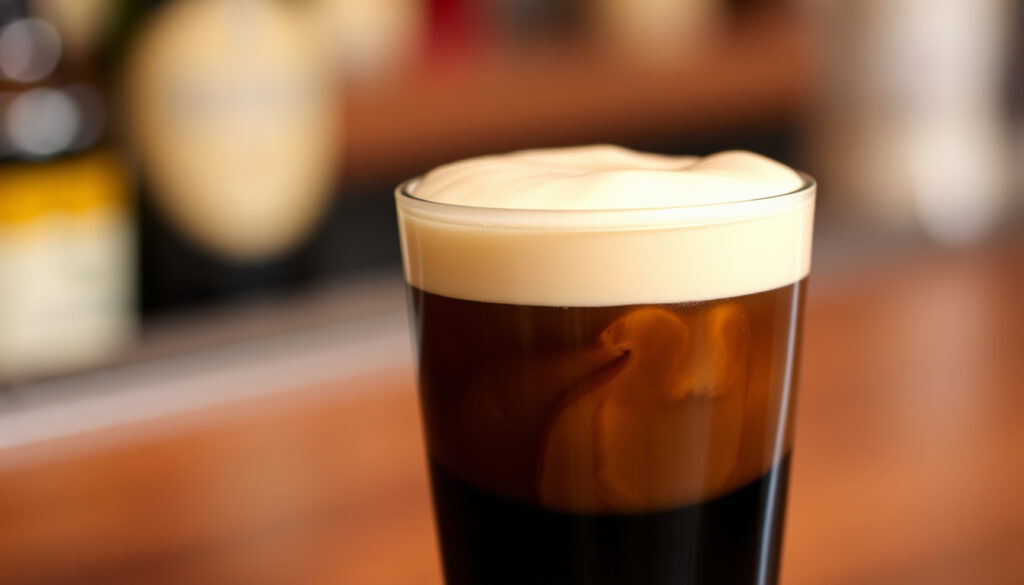
A Baby Guinness is a layered shot cocktail designed to look like a miniature pint of Guinness stout. The drink consists of coffee liqueur poured as the dark base, topped with Irish cream liqueur floated on the surface to mimic the creamy head of a pint. Bartenders typically serve it in a small 1–2 ounce shot glass or a mini pint glass, making the visual resemblance to an actual glass of Guinness remarkably convincing.
The drink is primarily a party and social occasion staple, strongly associated with Irish-themed celebrations and events such as St. Patrick’s Day. Its appeal lies in the visual trickery as much as the flavor, offering a sweet coffee-and-cream taste that contrasts sharply with the bitter roast character of an actual stout. The shot is quick to prepare, requires no shaking or blending, and scales easily for batch service at gatherings.
Unlike an actual pint of Guinness, which contains around 4.2% alcohol by volume, a Baby Guinness carries significantly more punch. The combination of coffee liqueur and Irish cream liqueur brings the total ABV to roughly 20–25%, depending on the specific brands used and their proportions. This makes the shot considerably stronger than its visual counterpart, a fact that many first-time drinkers do not anticipate.
Quick Overview
Key Facts at a Glance
- The cocktail relies on a visual illusion rather than actual beer
- The drink requires no blending, shaking, or specialized bar equipment
- Chilling all ingredients beforehand is essential for clean layering
- The shot takes under a minute to prepare once ingredients are cold
- Substitutions such as Tia Maria for coffee liqueur or alternative Irish cream brands are possible but may affect appearance
- Batch preparation is practical for serving multiple guests at once
| Fact | Detail |
|---|---|
| Primary Ingredients | Coffee liqueur (e.g., Kahlúa), Irish cream liqueur (e.g., Baileys) |
| Typical ABV | Approximately 20–25% |
| Prep Time | Under 1 minute |
| Servings per Glass | 1 shot |
| Standard Ratio | 3 parts coffee liqueur to 1 part Irish cream |
| Ideal Glass | 2 oz shot glass or mini pint glass |
For the cleanest layers and most convincing visual result, place both the liqueurs and the glasses in the freezer for at least 30 minutes before preparing the shot. Cold ingredients are denser and resist mixing more effectively during the float.
How Do You Make a Baby Guinness Shot?
The preparation of a Baby Guinness shot revolves around a single technique: proper layering. The two liqueurs must remain visually distinct, with the Irish cream sitting cleanly on top of the coffee liqueur base. Achieving this separation depends almost entirely on temperature management and pouring method.
The Layering Method
Begin by ensuring all ingredients and the glassware are thoroughly chilled. Set the shot glass or mini pint glass on a flat surface and pour the coffee liqueur directly into it, filling to approximately three-quarters capacity. This forms the dark “stout” body of the drink.
Next, take a bar spoon—or if unavailable, an ordinary teaspoon—and hold it upside down over the glass with the convex side facing upward. Position the spoon just above the surface of the liquid. Slowly pour the chilled Irish cream liqueur over the back of the spoon, allowing it to spill gently onto the surface of the coffee liqueur below.
The curved spoon diffuses the flow of Irish cream, preventing it from breaking through the coffee layer below. Pouring must be deliberate and gradual throughout this step. Rushing the pour disturbs the boundary between the two liquids and causes mixing, resulting in a muddy appearance rather than two distinct layers. Once the cream layer is in place, serve the shot immediately without stirring or dilution.
Glass and Serving Recommendations
The choice of glass significantly affects the final presentation. A standard 2-ounce shot glass provides a clean, minimal look that lets the layers speak for themselves. A mini pint glass, particularly one styled like a miniature version of a Guinness pint, amplifies the visual resemblance and makes for a more striking presentation at themed events. Bartending guides note that using the smallest available glassware reinforces the “baby” concept and heightens the novelty effect.
The shot is served chilled and straight up, never over ice. No garnish is required, though some variations add a subtle sprinkle of cocoa powder or coffee grounds over the cream layer for visual contrast and flavor accent. When preparing multiple shots for a group, bartenders commonly layer all glasses in sequence before serving, ensuring consistent presentation across the batch.
Because the layered effect depends on ingredient temperature, prepared shots should not sit for extended periods before being consumed. A brief window between preparation and service preserves the integrity of the cream layer, which can gradually begin to merge with the coffee base if left unstatted for more than a few minutes.
What Are the Ingredients in a Baby Guinness?
The Baby Guinness shot relies on just two primary ingredients: a coffee liqueur and an Irish cream liqueur. Both components are widely available, relatively affordable, and require no special handling beyond refrigeration. The simplicity of the ingredient list is part of the drink’s enduring appeal, allowing anyone with basic bar supplies to prepare it without additional purchases.
Coffee Liqueur
The dark base of the shot comes from a coffee liqueur, with Kahlúa being the most commonly recommended brand across bartending sources. Kahlúa carries a documented ABV of approximately 20%, contributing both the majority of the alcohol content and the deep brown-to-black color that forms the lower layer. Typical measurements call for 1 to 1.5 ounces (approximately 60 milliliters) per shot, depending on glass capacity.
Alternative brands such as Tia Maria can substitute for Kahlúa, though bartending guides caution that color depth and flavor intensity may vary. Some sources note that lighter-colored coffee liqueurs can produce a less convincing “stout” appearance, making the visual result less striking.
Irish Cream Liqueur
The white layer comes from an Irish cream liqueur, with Baileys being the standard recommendation. Baileys has a documented ABV of approximately 17%, and its dairy-based creamy texture makes it well-suited to floating atop a denser liquid. The recommended quantity is roughly 0.25 to 0.5 ounces (approximately 30 milliliters) per shot.
Chilling the Irish cream liqueur before use is essential. Cold cream liqueur is more viscous and retains its structure better during the floating process. Some sources suggest a salted caramel variant of Irish cream for a flavor twist, though this is less common and not widely documented across recipe sources.
Ingredient Ratio Summary
| Ingredient | Recommended Brand | Amount per Shot | ABV |
|---|---|---|---|
| Coffee liqueur | Kahlúa | 1–1.5 oz (60 ml) | ~20% |
| Irish cream liqueur | Baileys | 0.25–0.5 oz (30 ml) | ~17% |
| Standard ratio | — | 3 parts : 1 part | ~20–25% combined |
Both Kahlúa and Baileys should be stored according to their respective guidelines—Kahlúa in a cool dark place and Baileys refrigerated after opening. Using fresh, properly stored liqueurs directly impacts both flavor quality and the stability of the layered presentation.
Can You Make Variations Like Non-Alcoholic Baby Guinness?
A non-alcoholic version of the Baby Guinness presents a genuine challenge. The drink’s defining characteristics—its layered appearance, coffee-forward base, and creamy top—depend on the specific properties of alcoholic liqueurs. Coffee syrup or cold brew concentrate could replicate the dark base visually, while a chilled dairy-free or plant-based cream alternative could theoretically float in the same way. However, no widely tested or source-documented non-alcoholic recipe currently exists in the cocktail reference materials consulted.
Alcoholic Variations and Substitutions
Among alcoholic adaptations, the most common substitution involves swapping Kahlúa for alternative coffee liqueurs or Tia Maria. The color and density of the base may shift slightly depending on the brand chosen, potentially affecting how convincingly the “stout” layer reads visually. For the Irish cream layer, some bartenders report success using store-brand versions such as Kirkland Irish cream, though these are not widely benchmarked against the Baileys standard in recipe sources.
A salted caramel variant of Irish cream has been documented as a flavor enhancement option, adding a buttery sweetness that complements the coffee base. This variation does not significantly alter the appearance or layering mechanics of the drink, making it a viable option for those seeking additional complexity without sacrificing presentation.
How Strong Is a Baby Guinness?
The Baby Guinness is considerably stronger than a standard pint of Guinness, which contains approximately 4.2% ABV as a beer. The combined alcohol content of the two liqueurs places a Baby Guinness shot at roughly 20–25% ABV, depending on the precise brands and proportions used. This places the drink in the same general strength range as other popular liqueur-based shots, and significantly higher than beer.
The taste profile—sweet, smooth, and dessert-like—can mask the alcohol content effectively, potentially leading to faster consumption than the strength warrants. Sources across cocktail recipe databases consistently note that the flavor does not immediately signal the ABV level, making the drink deceptively potent.
Where Did the Baby Guinness Originate?
Concrete details about the origin of the Baby Guinness shot remain limited. No specific inventor, date, or geographic origin has been documented in the bartending sources reviewed. What sources do confirm is that the drink emerged as a modern bartender creation, likely originating in American bars during the 1980s as a novelty shot that played on the visual familiarity of Guinness branding.
The drink gained broader exposure through the 1990s, coinciding with increased marketing and distribution of Baileys Irish cream worldwide. Today, it appears consistently on cocktail menus across English-speaking countries, particularly in venues hosting Irish-themed events. For more on related cultural moments in the UK, see the England v France Six Nations 2025 – Dramatic 26-25 Twickenham Win.
Due to its high alcohol by volume and sweet flavor profile, the Baby Guinness can be consumed more quickly than its taste suggests. Those serving the drink at social gatherings should be mindful of guest consumption and ensure hydration and food are available alongside the shots.
The Rise of the Baby Guinness Shot
While pinpointing an exact origin remains difficult, the evolution of the Baby Guinness can be traced through broader trends in cocktail culture and the globalization of Irish-themed celebrations.
- — The Baby Guinness emerges as a novelty shot in American bars, designed to mimic Guinness stout through liqueur layering rather than actual beer.
- — Baileys marketing campaigns and expanded international distribution help popularize Irish cream liqueurs, coinciding with wider adoption of the shot on cocktail menus.
- — The rise of home bartending culture and online recipe sharing platforms increases visibility of the Baby Guinness beyond professional bar settings.
- — The drink remains a staple on cocktail menus worldwide, particularly during St. Patrick’s Day celebrations and Irish-themed events across the UK, United States, and Australia.
What We Know—and What Remains Unclear—About Baby Guinness
The Baby Guinness has a well-documented core recipe that remains consistent across sources. However, gaps exist in the historical record and certain technical details.
| Established Information | Unconfirmed or Unclear Details |
|---|---|
| Two-ingredient layered shot using coffee liqueur and Irish cream | Exact origin city or country of first preparation |
| Approximate 3:1 ratio of coffee liqueur to Irish cream | Identity of the original inventor or bar where it was first made |
| Visual presentation mimics a miniature Guinness pint | Specific year the drink entered mainstream cocktail culture |
| Preparation requires chilled ingredients and a slow pour over a spoon | Documented non-alcoholic recipe with verified results |
| Associated with Irish-themed celebrations and St. Patrick’s Day | Official standardization of the recipe across regions |
Why the Shot Endures in Cocktail Culture
The Baby Guinness owes much of its staying power to its simplicity and visual impact. In a beverage landscape where elaborate garnishes and complex techniques dominate cocktail menus, the Baby Guinness requires only two ingredients, one piece of basic equipment, and under a minute of active preparation time. Yet it delivers a striking visual result that consistently generates conversation and engagement.
The drink also occupies a specific cultural niche as a “trick” beverage—a cocktail that invites curiosity and discussion through its deliberate visual mimicry of something else entirely. This concept of culinary or bartending mimicry has broad appeal, from espresso martinis to “pizza” desserts, and the Baby Guinness fits squarely within that tradition. Its association with Irish culture and St. Patrick’s Day provides a ready-made context for its consumption, ensuring seasonal relevance year after year.
For seasonal inspiration during festive periods, the approach mirrors the kind of themed food and drink planning featured in resources like the M&S Christmas 2024 – Ad Series, Foods and Key Dates Guide, where celebration-oriented content drives engagement through specific timing and cultural relevance.
Sources and References
The information in this article draws on a range of bartending guides, cocktail recipe databases, and food writing sources. Key sources consulted include:
Bartending guides and cocktail recipe platforms provide the foundation for ingredient ratios, preparation techniques, and serving recommendations. Multiple sources converge on the 3:1 coffee liqueur to Irish cream ratio and the chilled-infrastructure requirement for clean layering.
— Recipe and cocktail methodology sources including Inspired by Charm, An Er Digs Cooks, Another Cocktail Blog, Feast and West, Manus Menu, and Sugar and Soul
Brand-specific ABV data was drawn from product documentation and industry sources, including the official websites for Kahlúa and Baileys, as well as the Difford’s Guide cocktail reference database.
Key Takeaways
The Baby Guinness is a two-ingredient layered shot cocktail designed to visually resemble a miniature pint of Guinness stout. Coffee liqueur, most commonly Kahlúa, forms the dark base, while Irish cream liqueur, most commonly Baileys, is floated on top to mimic the characteristic creamy head. The standard ratio is approximately three parts coffee liqueur to one part Irish cream, with an estimated combined ABV of 20–25%.
Preparation requires chilling all ingredients and glassware beforehand, pouring the coffee liqueur first, and then slowly floating the Irish cream over the back of an inverted spoon to maintain clean separation between the two layers. The drink is served chilled in a 1–2 ounce shot glass or mini pint glass, and is best consumed immediately after preparation.
The Baby Guinness originated as a modern bartender novelty, likely in American bars during the 1980s, and has since become a staple of Irish-themed events and cocktail menus globally. Its simplicity, visual impact, and sweet flavor profile make it a popular choice for parties and celebrations. Non-alcoholic adaptations are conceptually possible but lack verified recipe documentation at this time.
Frequently Asked Questions
Is Baby Guinness strong?
Yes. A Baby Guinness shot carries approximately 20–25% ABV, making it significantly stronger than a standard pint of Guinness (around 4.2% ABV). The sweet flavor can mask the alcohol content, so consumption should be paced carefully.
Where did Baby Guinness originate?
The exact origin is not documented in available sources. It is widely described as a modern bartender creation from American bars, likely emerging in the 1980s as a novelty shot designed to look like a miniature Guinness pint.
What glass is used for Baby Guinness?
The most common choices are a 2-ounce shot glass or a mini pint glass styled like a miniature Guinness pint. Both options enhance the visual presentation, with the mini pint offering the most striking resemblance to an actual glass of stout.
How long does it take to make a Baby Guinness?
The active preparation time is under one minute, assuming the liqueurs and glassware have already been chilled. The bulk of preparation involves pre-chilling the ingredients, which takes at least 30 minutes if not done in advance.
Can I substitute other brands for Kahlúa or Baileys?
Yes. Tia Maria can substitute for coffee liqueur, and store-brand Irish cream liqueurs can replace Baileys. However, color depth, flavor intensity, and layering performance may vary, potentially affecting the visual result.
How should Baby Guinness be stored before serving?
Coffee liqueur should be stored in a cool, dark place. Irish cream liqueur should be refrigerated after opening. Both ingredients perform best when thoroughly chilled immediately before use, so storing them in the freezer for 30 minutes prior to preparation is recommended.
What does a Baby Guinness taste like?
The drink has a sweet, dessert-like flavor profile combining rich coffee notes from the base liqueur and creamy vanilla-and-chocolate undertones from the Irish cream. It tastes significantly sweeter and softer than an actual glass of Guinness stout, which carries roasted bitterness and a drier finish.
More related posts
 Funny Nicknames: 200+ Hilarious, Cute, and Creative
 Dimebag Darrell: Last Words, Death, Nickname, and Legacy
 Jackets Women: The Complete Guide to Women’s Jackets
 Myra Hindley: Biography, Victims, and Latest Information
 Stephen Miller 2026: Role, Influence, and Verified Facts
 Man United vs Milan – Europa League Tie Analysis and Result
 Prince Harry UK Move Rumors: King Charles Wants Him Back?
 Florian Wirtz: Why He’s Struggling at Liverpool