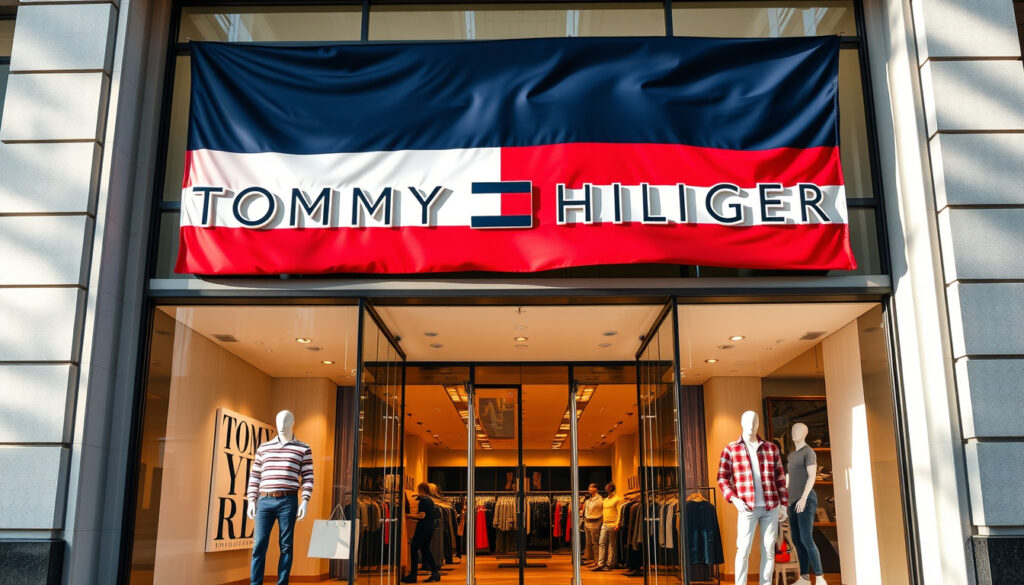
Tommy Hilfiger: Brand Evolution, Ownership, and Popularity
You’ve probably seen the red, white, and blue flag logo on a campus jacket or a celebrity collaboration, but what is the story behind the brand? Tommy Hilfiger went from a small New York startup in 1985 to a global fashion powerhouse owned by PVH Corp, with a journey that reveals how the label is classified, who owns it now, and how it clawed its way back into fashion’s spotlight.
Founded: 1985 ·
Founder: Tommy Hilfiger ·
Parent company: PVH Corp ·
Headquarters: New York City, USA ·
Target audience: Modern Americana, preppy, streetwear
Quick snapshot
- Brand founded in 1985 by Tommy Hilfiger (PVH corporate profile)
- Acquired by PVH Corp in 2010 (PVH newsroom)
- Tommy Hilfiger’s exact net worth and political affiliation are unverified
- Current market share figures vary by region and are not officially released
- 2026: brand launches first prestige women’s fragrance in over a decade (inkl news report)
- PVH management is pursuing a strategy of moving upmarket (FashionNetwork USA)
Seven facts, one pattern: Tommy Hilfiger is a brand with deep American roots and global ambitions, but its classification sits somewhere between premium and luxury.
| Full name | Thomas Jacob Hilfiger |
| Born | 1951 |
| Nationality | American |
| Occupation | Fashion designer |
| Brand founded | 1985 |
| Parent company | PVH Corporation |
| Headquarters | New York City, USA |
What has happened to Tommy Hilfiger?
Recent acquisitions and partnerships
- The Tommy Hilfiger brand was acquired by PVH Corp in 2010 (PVH corporate profile)
The acquisition brought Tommy Hilfiger under the same corporate umbrella as Calvin Klein and Van Heusen, giving it the financial firepower to expand globally. PVH news coverage frames both Tommy Hilfiger and Calvin Klein as brands the company is building toward being the most desirable lifestyle brands in the world.
Brand repositioning in streetwear
- Brand has collaborated with celebrities like Zendaya and Gigi Hadid (Tommy Hilfiger corporate overview)
Those collaborations helped shift the label from its preppy 1990s image toward a streetwear-infused aesthetic that resonates with younger shoppers. The brand’s official wording emphasizes a breadth of collections, including men’s, women’s, kids’, denim, adaptive, accessories, footwear, fragrance, and home goods. That range is a deliberate move to stay culturally relevant across age groups.
Tommy Hilfiger’s 2020s strategy
PVH’s management team has made it clear they see Tommy Hilfiger as a brand with untapped potential. In its latest earnings commentary, the company highlighted a strategy focused on winning in key categories and elevating the brand’s positioning. The company has also leaned into sustainability initiatives as a way to appeal to environmentally conscious consumers, a shift that mirrors broader industry trends.
The brand that built its name on preppy sportswear is now using celebrity star power and upmarket positioning to stay relevant, a strategy that carries real risk if it alienates its core mid-market buyers.
That tension between accessible heritage and premium ambition is now the brand’s operating model.
Is Tommy Hilfiger a luxury brand?
Price positioning compared to luxury brands
- Tommy Hilfiger is considered a premium/lifestyle brand, not luxury (PVH corporate description)
- Price range is mid-to-high, not ultra-high (medienconnect.de brand analysis)
Tommy Hilfiger himself addressed this question in a 2010 Wharton interview, saying he would like to be a luxury brand but has focused on being an affordable premium design brand. That same article notes the brand doesn’t have the luxury image of Louis Vuitton or Gucci.
In practice, one brand analysis puts a regular Tommy Hilfiger shirt at about 80–120 euros, while luxury shirts often start around 400 euros.
Target market and demographics
The brand’s official positioning is in premium lifestyle rather than explicit luxury branding. That distinction matters because it shapes everything from pricing strategy to store placement. Tommy Hilfiger’s own U.S. site reinforces that positioning with “premium materials” language (Tommy Hilfiger USA).
Brand image: preppy vs luxury
German-language analysis from medienconnect.de classifies Tommy Hilfiger as accessible premium or upper mid-range rather than luxury, emphasizing that the brand maintains broad availability and a middle-segment price position. This is a far cry from the exclusivity that defines true luxury houses.
Shoppers who expect luxury-level exclusivity will be disappointed; shoppers who want designer cachet at a working-person’s price point are exactly who Tommy Hilfiger has courted since 1985.
The premium-versus-luxury line is visible in the price tag, not just in the logo.
Why did Tommy Hilfiger lose popularity?
Overexposure in the 1990s and early 2000s
- Brand was extremely popular in 90s hip-hop culture (Tommy Hilfiger designer bio)
- Criticism of over-logging (medienconnect.de brand critique)
In the 1990s, Tommy Hilfiger was unavoidable. The brand’s flag logo became a status symbol in hip-hop culture, and its oversized silhouettes were everywhere from music videos to suburban malls. But that ubiquity had a downside: when everyone owns the same logo, it stops feeling special.
As fashion trends moved toward minimalism and then toward luxury logomania controlled by European houses, Tommy Hilfiger found itself stuck in the middle. The rise of fast fashion in the 2000s squeezed mid-tier brands across the board, and Tommy Hilfiger’s US sales declined during that period. Then something surprising happened: Gen Z discovered Tommy Hilfiger. The 1990s nostalgia cycle brought the flag logo back into fashion, and strategic collaborations with celebrities like Zendaya and Gigi Hadid gave the brand a new kind of cultural credibility.
The brand’s 1990s peak and subsequent decline is now a playbook for how heritage labels can engineer comebacks: lean into nostalgia, partner with the right celebrities, and let the logo do the talking.
Nostalgia only works when the brand still has a recognizable identity to return to; Tommy Hilfiger’s flag logo gives it that.
When did Tommy Hilfiger come out?
Founding year and early vision
- Founded in 1985 by Tommy Hilfiger himself (PVH corporate history)
- First store opened in New York (Tommy Hilfiger designer biography)
Tommy Hilfiger launched his eponymous brand in 1985 with a vision of classic American style with a twist. The brand’s 2024 corporate bio page says the brand has been “pioneering since 1985” and spans sportswear, denim, accessories, and footwear.
Timeline of brand expansion
Tommy Hilfiger has said the brand has been “welcoming and inspiring consumers since 1985.” That expansion accelerated quickly, with the label becoming a household name in America by the early 1990s.
IPO and acquisition
- Went public in 1992 (Tommy Hilfiger Newsroom bio)
- Acquired by PVH in 2010 (PVH brand page)
The company went public in 1992, giving it the capital to expand aggressively. By 2010, PVH Corp acquired Tommy Hilfiger in a deal valued at approximately $3 billion, bringing the brand into the same corporate family as Calvin Klein.
The 1985 founding and the 2010 acquisition bracket a period in which the brand became a global licensing machine.
Who is Tommy Hilfiger owned by?
Current parent company PVH Corp
- Owned by PVH Corporation since 2010 (PVH corporate profile)
PVH Corp is a global apparel company that owns a portfolio of iconic brands. The company also owns Calvin Klein and Van Heusen, giving it a powerful position in the American fashion market.
Founder’s role after acquisition
Tommy Hilfiger remains involved as lead designer and founder, though the corporate structure has shifted significantly since the acquisition. The brand operates globally with a licensing model that extends its reach into fragrances, home goods, and watches.
Subsidiaries and licensing
Tommy Hilfiger’s product ecosystem includes men’s and women’s apparel, denim, kids’ clothing, accessories, footwear, fragrance, and home goods. This licensing-heavy approach is typical of premium lifestyle brands and lets PVH maximize revenue without owning every factory and store.
The implication: PVH isn’t just a caretaker for the Tommy Hilfiger brand; it’s actively repositioning it to compete in a market where heritage brands must fight for relevance against both luxury houses and direct-to-consumer startups.
Timeline
- 1985: Tommy Hilfiger founded his eponymous brand (Tommy Hilfiger designer bio)
- 1992: Company goes public via IPO (Tommy Hilfiger Newsroom)
- 1990s: Brand gains popularity with hip-hop and rap artists (Tommy Hilfiger corporate overview)
- 2010: PVH Corp acquires Tommy Hilfiger for $3 billion (PVH corporate site)
- 2026: Brand announces first prestige women’s fragrance in over a decade (inkl news site)
The pattern: Tommy Hilfiger’s history shows a brand that has successfully reinvented itself multiple times, from preppy sportswear to hip-hop icon to global lifestyle label.
What we know for sure — and what’s still uncertain
Confirmed facts
- Tommy Hilfiger brand was founded in 1985 (PVH corporate profile)
- Tommy Hilfiger is an American fashion designer (Tommy Hilfiger Newsroom)
- Brand is owned by PVH Corp since 2010 (PVH corporate site)
- Tommy Hilfiger’s designs were popular in 1990s hip-hop culture (Tommy Hilfiger corporate overview)
What’s unclear
- Tommy Hilfiger’s exact net worth
- Political affiliation (Trump supporter claim unverified)
- Religious beliefs of Tommy Hilfiger
- Current sales figures or exact market share
Perspectives on the brand
“I would like to be a luxury brand, but I’ve focused on being an affordable premium design brand.”
Tommy Hilfiger, speaking to Wharton Knowledge
Tommy Hilfiger’s corporate description: “one of the world’s most recognized premium lifestyle brands.”
PVH, corporate brand profile
Both quotes point to the same tension: Tommy Hilfiger’s own founder acknowledges the brand isn’t luxury, while his parent company leans into its global premium status. That gap between aspiration and reality is exactly where the brand’s opportunity lies.
Summary
Tommy Hilfiger is a premium lifestyle brand with mass appeal, not a luxury house with exclusive cachet. Buyers who want heritage Americana and approachable pricing get the flag logo; buyers chasing exclusivity have to spend considerably more elsewhere.
Frequently asked questions
What is Tommy Hilfiger’s most iconic product?
The classic Tommy Hilfiger polo shirt and the flag logo crewneck sweatshirt are widely considered the brand’s most iconic products. Both items became cultural touchstones in the 1990s and remain popular today.
Where are Tommy Hilfiger clothes manufactured?
Like most global fashion brands, Tommy Hilfiger manufactures its clothing in various countries, primarily in Asia and Europe. The brand operates through a licensing and supply chain model, so production locations vary by product category and region.
Is Tommy Hilfiger considered sustainable?
Tommy Hilfiger has made sustainability commitments in recent years, including goals around circular fashion and more sustainable materials. However, the brand’s overall environmental impact remains a topic of ongoing scrutiny within the fashion industry.
How can I tell if a Tommy Hilfiger item is authentic?
Check the stitching quality, examine the flag logo for correct spacing and colors, and verify the care label details. Purchasing from official Tommy Hilfiger stores or authorized retailers is the safest way to ensure authenticity.
What is the typical price range for Tommy Hilfiger apparel?
A regular Tommy Hilfiger shirt typically costs about 80–120 euros, according to one brand analysis, placing the brand in the mid-to-high segment rather than luxury territory.
Does Tommy Hilfiger have a loyalty program?
Tommy Hilfiger offers a loyalty and rewards program through its official website that gives members early access to sales, birthday perks, and points on purchases. Availability may vary by country.
More related posts
 Dominic McLaughlin: Casting, Age, Parents, and Irish Heritage
 Noddy Holder: Merry Xmas Royalties and 2018 Cancer Diagnosis
 Robert Irwin: Age, Net Worth, Relationship Status & More (2025)
 Charles Hanson: Hair, Net Worth, Bargain Hunt & Latest News
 Jenny Han: Books, Bio, Net Worth & Adaptations
 Mo Farah: Net Worth, Family, Career & Bolt Comparison
 Kitty Castledine: Real Disability, Age & EastEnders Role
 Valterra Platinum Share Price – Live JSE Data and Analysis