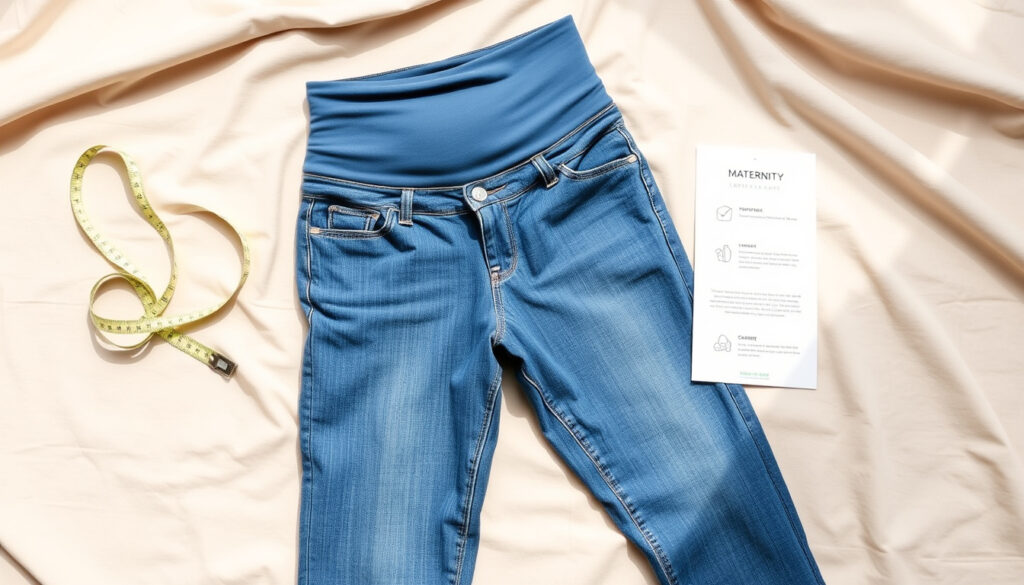
Maternity Jeans: Buying Guide, Fit Tips & Troubleshooting
Anyone who’s ever tried to pull up a pair of too-small jeans during pregnancy already knows the frustration. Between slipping waistbands and uncomfortable panels, finding jeans that actually fit can feel like a guessing game. This guide walks through when to make the switch, which styles work best, and what to do when your maternity jeans won’t stay up. You’ll get concrete, sourced advice from retailers and editorial tests.
Typical start week: Second trimester (around week 16-20) · Average price range: £30 – £80 · Most common fit issue: Waistband slipping down · Preferred bump coverage: Over-bump (full panel)
Quick snapshot
- Whether over-bump or under-bump styles are universally better for all body types (Vogue)
- The exact week when most women transition still varies widely (BabyCentre)
- Whether pre-pregnancy size works for all maternity jeans (some brands may differ) (Vogue)
- Most women switch to maternity jeans around weeks 16-20 of pregnancy (Goodto)
- Signs to swap: jeans leave deep marks, feel tight when sitting (Business Insider)
- Buy at least two pairs to rotate (BabyCentre)
- Side-panel jeans can be worn longer post-pregnancy (MadeForMums)
The table below summarizes key facts about maternity jeans.
| Fact | Value | Source |
|---|---|---|
| Average pregnancy length | 40 weeks | NHS |
| Typical start for maternity jeans | Second trimester (16-20 weeks) | Goodto |
| Common fit issue | Slipping down | Good Housekeeping |
| Price range | £30 – £80 | Good Housekeeping |
What are the best jeans to wear during pregnancy?
Maternity jeans come in three main waistband styles: over-the-bump panels, side panels, and under-the-bump bands. The choice often determines comfort and staying power.
Over-bump vs under-bump styles
- Over-bump (full panel) – Covers the entire bump and provides full support. Many wearers find these most comfortable and stable (Well+Good). However, some feel the fabric rises too high, near the bra line (Vogue).
- Under-bump – Band sits below the bump. Less coverage, cooler in warm weather, but may offer less support for carrying weight.
- Side-panel – Elastic sides expand as the bump grows. No full panel, so they can work later in pregnancy and even after birth (MadeForMums).
Top brands and retailer options
Popular UK retailers include Next, H&M, Mango, and ASOS, each offering various fits from skinny to wide leg. Buying guides from Good Housekeeping and Business Insider recommend choosing based on your pre-pregnancy size (Gap, Mamarella).
Key features to look for
- Stretch-infused fabric with spandex or elastane for growing room (People)
- Adjustable waistband or side panels that adapt to size changes (Goodto)
- Higher rise to keep the waistband above the bump (over-bump style)
The implication: there is no single best style. Your body shape, bump size, and personal preference determine which panel works.
A side-panel pair bought early in the second trimester can serve you through the third trimester and even into early post-pregnancy, while an over-bump pair gives the most support. Having both covers your bases.
The takeaway: start with one style and adjust based on how the waistband feels after a few wears.
Is it worth buying maternity jeans?
Yes, if comfort and avoiding constant readjustment matter. Dedicated maternity jeans are designed with elastic panels that adapt to changing body shape, unlike regular jeans that squeeze the waistband.
Benefits of dedicated maternity jeans
- Elastic panels distribute pressure across the bump rather than digging in (Well+Good)
- Higher waistband prevents gaps and slipping when sitting or bending
- Fabric blends with elastane allow the jeans to grow with you (People)
Cost comparison vs. regular jeans alternatives
Maternity jeans from most UK retailers cost £30 to £80 — similar to standard mid-range denim. Alternatives like sizing up a size or using extenders might cost less upfront but often result in poor fit. Good Housekeeping notes that pants extenders offer a temporary fix when pre-pregnancy jeans are too snug but maternity jeans still feel loose.
When to invest in maternity-specific denim
Invest when regular jeans leave marks, dig in when sitting, or cause discomfort (Business Insider). Buying two pairs is a common recommendation from BabyCentre to allow rotation during laundry.
The trade-off: spending £60 on two pairs of maternity jeans is less than buying three sizes of regular jeans that only fit for a few weeks each.
When to start buying maternity jeans?
Signs it’s time to switch
- Regular jeans feel tight across the belly or leave deep marks (Business Insider)
- You have to unbutton them while sitting
- Waistband rolls down or causes pressure when you lean forward
First trimester vs. second trimester
Most women transition around weeks 16-20 — the start of the second trimester. Buying too early may result in a loose fit later, but many retailers offer adjustable bands or sizing guides. BabyCentre advises trying before buying and recommends at least two pairs.
Sizing considerations for early pregnancy
Experts at Mom Loves Best advise sticking to your pre-pregnancy size, checking each brand’s size chart, and bringing one size up and one size down to the fitting room. Gap confirms maternity sizing allows for 25-30 pounds of weight gain.
The pattern: early signs are subtle — if you’re still comfortable in regular high-waisted skinny jeans, you can wait. But once marks appear, the switch becomes necessary for comfort.
Why won’t my maternity jeans stay up?
Common reasons for slipping
- The waistband panel is too wide for your body shape (Goodto)
- Over-bump panel lacks silicone grip or adjustable elastic
- You chose an under-bump style that doesn’t have enough tension
Fit adjustments
Some brands include belt loops — using a regular belt over the panel can help. Others have adjustable elastic inside the waistband. Good Housekeeping recommends panels that create a higher fit to keep jeans in place.
Choosing the right rise and panel type
Over-bump styles with a snug but comfortable panel reduce slipping. Under-bump jeans may slip more if your bump pushes them downward. Trying different types — side panel vs. full panel — often solves the problem (Vogue).
What this means: slipping is not a sign of bad jeans; it’s a fit mismatch. A pair with silicone strips or an internal drawstring can make a huge difference.
If you feel the need to hoist your jeans up repeatedly (Goodto), try a different waistband style before giving up on maternity jeans altogether.
What are some good jeans for pregnancy that are not maternity?
High-waisted jeans as an alternative
Regular high-waisted jeans with at least 2-5% elastane can work early in pregnancy. The stretch allows the waistband to sit under or over the bump without cutting in.
Stretchy denim and jeggings
Jeggings or denim leggings mimic the look of jeans with more give. However, they lack the structured panel that provides support as the bump grows. MadeForMums notes that maternity jeans are specifically designed with an expandable waistband or adjustable fit.
Sizing up and using extenders
Buying one size up in regular jeans paired with a belly band or hair tie can extend wear, but Good Housekeeping cautions this is only a temporary fix — the jeans will still pinch when sitting, and the extender can create a bulky bump.
The catch: non-maternity alternatives work only for the first half of pregnancy. By the third trimester, the lack of a proper panel usually leads to discomfort and slipping.
Four key specifications separate maternity jeans from regular denim: waistband construction, rise height, fabric stretch, and adjustability.
| Specification | Typical Value | Why It Matters |
|---|---|---|
| Waistband style | Over-bump, side-panel, under-bump | Determines coverage and support (Well+Good) |
| Rise height | High (10-12 inches for over-bump) | Prevents slipping (Vogue) |
| Stretch content | 2-5% elastane or spandex | Allows fabric to grow with you (People) |
| Adjustability features | Elastic side panels, drawstrings, belt loops | Enables custom fit (MadeForMums) |
| Panel type | Full coverage or demi-band | Affects insulation and comfort (Business Insider) |
| Recommended size | Pre-pregnancy size | Ensures consistent fit (Gap) |
| Fabric weight | Light to mid-weight (8-12 oz) | Balances durability with stretch |
| Price range | £30 – £80 | Comparable to standard jeans (Good Housekeeping) |
Upsides
- Elastic panels distribute pressure comfortably
- Higher rise keeps jeans in place throughout the day
- Stretch fabric accommodates weight gain without buying new sizes
- Many styles look identical to regular jeans (People)
Downsides
- Some over-bump panels feel suffocating near the ribs (Vogue)
- Under-bump styles may slip when walking or sitting
- Limited use after pregnancy (some side-panel styles are an exception)
- Fit can vary widely between brands (Mom Loves Best)
Steps to Finding the Right Maternity Jeans
- Measure your pre-pregnancy waist and hips – Use these as a baseline. Gap and Mamarella recommend ordering your pre-pregnancy size.
- Decide on waistband style – Over-bump for full support, side-panel for longer wear, under-bump for cooler days.
- Check fabric content – Look for at least 2% elastane or spandex (Mom Loves Best).
- Try on with a variety of sizes – Bring your measured size plus one up and one down (Mom Loves Best).
- Test for slipping – Sit, bend, and walk. The waistband should stay in place without hoisting (Goodto).
- Buy at least two pairs – BabyCentre suggests a rotation to avoid daily washing.
The catch: following these steps still doesn’t guarantee a perfect fit on the first try — but it reduces the chances of buying jeans that end up in the back of the drawer.
Confirmed facts
- Wearing jeans is safe during pregnancy if they fit comfortably (general medical consensus)
- Maternity jeans with stretch panels provide better support than regular jeans (Well+Good)
- Over-bump jeans are the most common type recommended by guides (Good Housekeeping)
- Sizing remains consistent with pre-pregnancy size across major brands (Gap, Mamarella)
What remains unclear
- Which specific brand fits best for different body types — personal reviews vary widely (Reddit PregnancyUK)
- Whether over-bump is universally better than under-bump; some find it suffocating (Vogue)
- The exact week when most women buy maternity jeans still depends on individual growth patterns
“Waistband is the most important area — a supporting belly band should grow with the bump and extend comfortably over it.”
— Maternity fashion expert quoted in NY Post
“I bought second-hand skinny maternity jeans with an over-bump section, but they keep slipping down. I feel like I’m constantly pulling them up.”
— Reddit user, PregnancyUK community
The trade-off highlighted by these quotes: even with expert advice, real-world wearers often face slipping. The difference between a good pair and a frustrating one usually comes down to panel width and the presence of grip features.
momlovesbest.com, mamarella.com, people.com, motherhoodcloset.com, nypost.com
Frequently asked questions
Is it okay to wear jeans during pregnancy?
Yes, as long as they fit comfortably and don’t constrict the bump. Maternity-specific jeans are designed to avoid pressure on the belly (Business Insider).
Can I turn regular jeans into maternity jeans?
You can use a belly band or hair tie extender, but it won’t provide the same support as a true maternity panel (Good Housekeeping). For all-day comfort, dedicated jeans are better.
Should I go up a size in maternity clothes?
No. Most brands, including Gap and Mamarella, recommend sticking to your pre-pregnancy size. The maternity panel provides the extra room.
What to wear instead of maternity clothes?
High-waisted stretch jeans, jeggings, or leggings with tunic tops. These work early on but lack the structured support for later trimesters (MadeForMums).
What are the comfiest clothes for maternity?
Soft cotton leggings, over-bump jeans with wide elastic bands, and loose dresses are consistently rated comfortable by buyers on forums like PregnancyUK.
What are the trendy maternity outfits for 2026?
Wide-leg maternity jeans, high-waisted over-bump styles, and monochrome denim sets are trending (fashion editorials, 2026). Check retailers like ASOS and H&M for current collections.
When should I buy maternity jeans?
Most women buy around weeks 16-20, when regular jeans become uncomfortable (BabyCentre).
How many pairs of maternity jeans do I need?
BabyCentre recommends at least two pairs to rotate, especially if you wear them daily.
Related reading
- How to Style Grey Jeans: 2026 Outfit Ideas
- Best Winter Jackets 2025: Expert Buying Guide & Top Brand Comparisons
For any pregnant person in the UK, the choice of maternity jeans comes down to how much support you need and when you start. Over-bump styles work for most, but side-panel jeans offer longer use. The decision is clear: invest in two pairs around week 16, prioritize stretch and adjustable waistbands, and don’t hesitate to swap styles if slipping persists. Your comfort—and your posture—will thank you.
More related posts
 George Kay: Lupin Creator, Death, and Life with Kerry Katona
 Julian Cash Net Worth, Age, Ranking and Doubles Career
 Princess Anne: Royal Protocol, Relationships, and Public Impact
 Pain on Top of Foot: Causes, Relief, and When to Worry
 The Long Good Friday – Plot, Cast & Ending Explained
 Booster Seat Age & Height: When to Switch and Stop
 Best Winter Jackets 2025: Expert Buying Guide & Top Brand Comparisons
 Sterling K. Brown – Age, Wife, Kids, Career, Awards