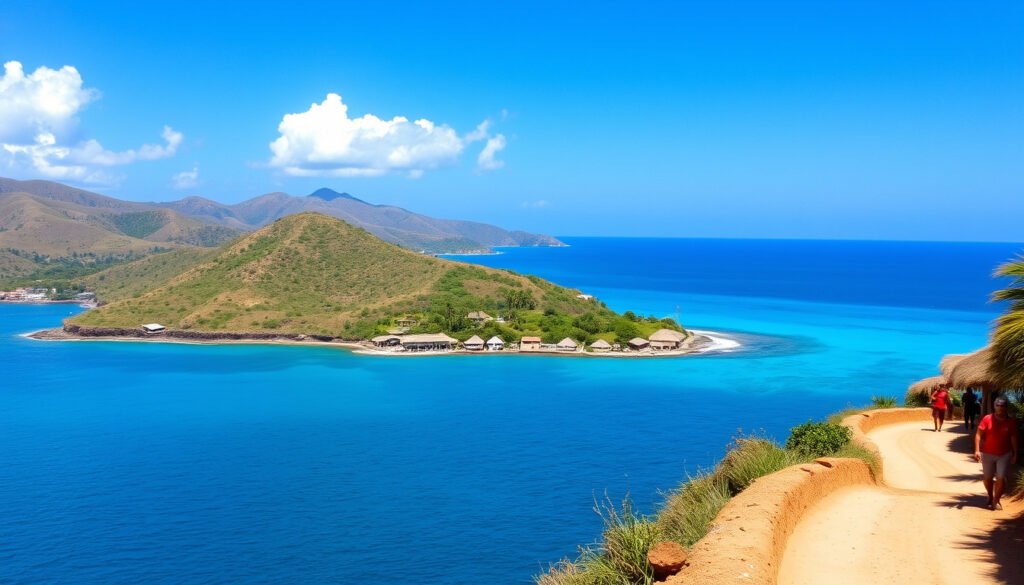
Timor Leste Travel Guide: Safety, Costs & Key Facts
Few places in Southeast Asia still feel genuinely off the beaten path, but Timor-Leste is one of them. This tiny half-island nation only gained independence in 2002, and its tourism industry is still in its infancy.
Capital: Dili ·
Population: ~1.3 million ·
Official Languages: Tetum and Portuguese ·
Currency: US Dollar (USD) ·
Independence: 2002 ·
Area: 15,007 sq km
Quick snapshot
- Low violent crime; watch for petty theft (U.S. State Department travel advisory)
- Limited healthcare; travel insurance essential (U.S. State Department)
- Political situation stable but monitor advisories (U.K. Government travel advice)
- Budget traveler: $40–60/day (Rezerva travel guide)
- Mid-range: $100–150/day (Rezerva travel guide)
- US Dollar widely accepted (Rezerva travel guide)
- Dry season May–October
- Avoid November–April for heavy rain
- July–September peak for diving
- Diving at Atauro Island
- Mountaineering in Ramelau
- Exploring Dili’s markets and museums
- Beach relaxation at Jaco Island
Ten facts about Timor-Leste reveal a consistent pattern: the country is young, small, and still finding its footing.
| Label | Value |
|---|---|
| Full Name | Democratic Republic of Timor-Leste |
| Capital | Dili |
| Population | 1,340,513 (2024 est.) |
| Official Languages | Tetum, Portuguese |
| Currency | US Dollar (USD) |
| Independence | 20 May 2002 |
| Area | 15,007 km² |
| Time Zone | UTC+9 |
| Calling Code | +670 |
| Drives on the | Left |
Is it safe to visit Timor-Leste?
Current travel advisories
The U.S. State Department (Level 1: Exercise Normal Precautions) rates Timor-Leste as one of the safest destinations in Southeast Asia. The U.K. Foreign Office notes that the security situation has improved but warns that gang-related violence, robbery, and assault are common in Dili. The Canadian government echoes these cautions, advising travellers to avoid large gatherings and political demonstrations.
Timor-Leste gets a green light from official advisories, yet the same agencies warn about poor healthcare, unregulated tourism, and common street crime. The safety rating is optimistic, but the fine print demands caution.
Crime and personal safety
Petty theft and scams are the main concerns, especially in Dili’s markets and near tourist spots. The U.K. Government reports that gang-related violence, robbery, and assault are common. The U.S. State Department warns that dangerous areas and activities are not always marked with signs. Daytime walking in Dili is generally safe, but avoid isolated spots after dark, as noted by Rezerva (local travel guide).
Health and medical facilities
Medical infrastructure is limited. The U.S. State Department states that injured travellers will likely need to travel to a major city for appropriate care, and first responders cannot reach remote areas. The German Foreign Office (Auswärtiges Amt) notes that the country was certified malaria-free by the WHO in July 2025, but dengue and other mosquito-borne diseases remain. Comprehensive travel insurance is non-negotiable.
Political stability
The U.K. Government says the security situation has improved but underlying tensions persist, especially during election periods. The German Foreign Office describes the security situation as generally stable but notes conflict potential due to social tensions and high youth unemployment. The Encyclopaedia Britannica (reference) highlights that the 2006 crisis and subsequent UN intervention underscore the fragility of democratic institutions.
The implication: Timor-Leste is safe enough for a cautious traveller, but the risks are real and often overlooked in glossy travel blogs.
Why does no one visit Timor-Leste?
Lack of tourism infrastructure
Timor-Leste receives fewer than 100,000 tourists annually, a fraction of what neighbouring Indonesia attracts. The World Bank (development partner) notes that the country lacks basic tourism infrastructure: paved roads, reliable electricity outside Dili, and a network of hotels. Accommodation and transport outside the capital are basic, according to Rezerva. Budget guesthouse private rooms in Dili run about $15–30, but outside Dili prices rise to $25–40, reflecting the scarcity of options.
High flight costs and limited connections
Direct flights are few and expensive, mostly from Bali and Darwin. The U.K. Government confirms that the visa fee is $30, payable only in cash at the airport. A round-trip from Bali can cost $400–600, far more than a flight to Lombok or Flores. The Canadian government adds that a tourist visa on arrival is available at Dili’s airport and the Port of Dili for visits up to 30 days, with possible extension.
Limited awareness and marketing
Ask most travellers to name a Southeast Asian country, and Timor-Leste rarely comes up. The Encyclopaedia Britannica notes that the country’s painful history of occupation and conflict overshadowed its potential as a destination. The national tourism board has a small budget, and the country’s image is still tied to war and poverty.
Historical perception of instability
For decades, Timor-Leste was synonymous with conflict: the 1999 violence, the 2006 crisis, and recurring political tensions. The World Bank points out that high youth unemployment (around 30% for 15–24 year olds) fuels social unrest. The U.S. State Department warns that the tourism industry is not well regulated and safety inspections are rare. These perceptions, reinforced by official advisories, keep many travellers away.
For the adventurous traveller, the invisibility of Timor-Leste is exactly the draw. Fewer crowds, authentic encounters, and a chance to see a country in the making. But the trade-off is real: you pay more to get there and navigate fewer services once you arrive.
What is the main problem in Timor-Leste?
Economic dependence on oil and gas
Oil and gas revenues account for over 90% of the government budget, according to the World Bank. Reserves are declining, threatening long-term fiscal stability. The Encyclopaedia Britannica notes that the petroleum fund, set up to manage wealth, faces depletion by 2030 if no new fields are developed. This structural vulnerability is the country’s biggest economic challenge.
High youth unemployment
The World Bank reports that the unemployment rate for 15–24 year olds is around 30%. The German Foreign Office cites this as a driver of social tensions. The U.K. Government links the high unemployment to gang activity and crime in urban areas.
Infrastructure deficits
Power shortages and poor roads hinder development. The World Bank notes that road quality is poor, especially outside Dili, and electricity supply is unreliable. The U.S. State Department warns that road conditions are poor and driving can be hazardous. The U.K. Government adds that accidents, particularly involving motorbikes and scooters, are common.
Political tensions and corruption
Political coalitions are fragile. The Encyclopaedia Britannica describes the 2006 crisis and the 2018 first peaceful transfer of power as signs of progress, but corruption remains a problem. The World Bank ranks Timor-Leste low on governance indicators, and the U.K. Government warns of underlying tensions that can flare during elections.
The catch: Timor-Leste’s oil wealth has created a fragile economy that will need to diversify fast, and tourism is one of the few sectors that could help.
Why is Timor-Leste split in two?
Colonial history: Portuguese vs. Dutch
Timor Island is divided between independent Timor-Leste (east) and Indonesian West Timor. The division dates to Portuguese and Dutch colonial treaties in the 19th century. The Encyclopaedia Britannica explains that the 1859 Treaty of Lisbon split the island: the Portuguese kept the east and the Dutch took the west. This colonial border stuck after Indonesia’s independence and later became the international boundary.
Independence and Indonesian occupation
East Timor declared independence in 1975, but Indonesia invaded and annexed it. The Wikipedia (reference) notes that the 24-year occupation was marked by violence and resistance. In 1999, a UN-supervised referendum chose independence, leading to a final push for freedom in 2002.
The exclave of Oecusse
Oecusse is a separate coastal exclave surrounded by West Timor. The Encyclopaedia Britannica explains that this oddity results from the 19th-century colonial boundaries. The Wikipedia (reference) notes that Oecusse is now a special administrative region with its own development plans. Travellers need a special permit to visit, and it is accessible by road from Dili via a winding route through Indonesian West Timor.
The pattern: the split is a living legacy of colonialism, and it makes overland travel between the eastern and western halves of the island a crossing of two nations.
Is Timor-Leste cheap or expensive?
Accommodation costs
Timor-Leste is moderately priced compared to Southeast Asian neighbors. Rezerva (local travel guide) reports that budget guesthouse private rooms in Dili run about $15–30, mid-range hotels around $100, and outside Dili budget rooms average $25–40. The U.S. State Department warns that the tourism industry is not well regulated, so quality can vary.
Food and dining
Local meals cost $2–5, according to Rezerva. Western restaurants in Dili charge $10–15 per meal. The currency is the US Dollar, which simplifies budgeting for American travellers but can be expensive for others due to the strong dollar.
Transportation
Car rental with a driver runs $50–70 per day, as noted by Rezerva. Domestic flights, mainly to Oecusse, cost $80–150. Public transport (minibuses) is almost free but unreliable and uncomfortable. The U.K. Government warns that roads are generally in poor condition and accidents are common.
Activities and tours
Diving trips to Atauro Island start at around $80–100 for a day trip including equipment. Guided treks in the mountains cost $50–80 per day. The World Bank notes that the tourism sector is small, so prices are not as competitive as in Thailand or Bali.
For a budget traveller, Timor-Leste is not as cheap as Vietnam or Indonesia. The daily spend of $40–60 buys basic guesthouse accommodation and local meals, but little else. The value is in the experience, not the price.
Is Timor-Leste a good holiday destination?
Natural attractions: beaches, mountains, reefs
Timor-Leste offers pristine beaches and world-class diving at Atauro Island (Wikipedia), which has reefs with over 400 coral species. Mountain trekking in the interior, including Mount Ramelau, provides stunning views. The UNESCO tentative list (cultural heritage) includes the traditional village of Jiqui, adding cultural depth.
Cultural experiences
The Encyclopaedia Britannica notes that Timor-Leste’s culture is a blend of Austronesian, Portuguese, and Catholic influences. Dili’s markets, the Resistance Museum, and the Cristo Rei statue offer a mix of history and local life. The World Bank highlights that the country’s unique heritage could be a draw for culturally curious travellers.
Accessibility and convenience
Limited tourist infrastructure means fewer crowds and authentic experiences. The U.S. State Department warns that the tourism industry is not well regulated, so travellers must be self-reliant. The Canadian government recommends registering with your embassy and purchasing comprehensive travel insurance.
Comparison to other Southeast Asian destinations
Timor-Leste is best suited for adventurous travellers, not for luxury or nightlife seekers. The World Bank compares it to early-stage tourism in Laos or Myanmar decades ago. The Encyclopaedia Britannica notes that the country is still finding its footing as a destination, which means raw authenticity but also unpredictability.
The upshot: if you want a beach holiday with all the comforts of a resort, go elsewhere. If you want to be one of the first to explore a place that most travellers skip, Timor-Leste delivers.
Pros and cons of visiting Timor-Leste
Upsides
- Pristine, uncrowded beaches and dive sites
- Unique cultural heritage and friendly locals
- Low crime rate compared to other Southeast Asian capitals
- US Dollar simplifies budgeting
- One of the few truly off-the-beaten-path destinations in the region
Downsides
- Expensive and limited flights
- Basic infrastructure: poor roads, unreliable electricity, limited healthcare
- High cost of living for travellers (moderate, not cheap)
- Political stability still fragile; occasional tensions
- Limited nightlife, shopping, and luxury amenities
Timeline: key events in Timor-Leste’s history
Eight milestones reveal one pattern: a long struggle for sovereignty.
- 1500s – Portuguese establish settlements on Timor.
- 1859 – Treaty between Portugal and Netherlands divides Timor Island.
- 1975 – East Timor declares independence; invaded by Indonesia.
- 1999 – UN-supervised referendum; vote for independence.
- 2002 – Timor-Leste becomes fully independent.
- 2006 – Political and military crisis; UN intervention.
- 2018 – First peaceful transfer of power between rival parties.
- 2023 – President José Ramos-Horta re-elected; focus on economic diversification.
The pattern: each decade since independence has brought a new test, and the country has survived them all.
Clarity: what’s confirmed and what’s unclear
Confirmed facts
- Timor-Leste is a sovereign nation in Southeast Asia.
- Capital is Dili.
- Currency is US Dollar.
- Independence was in 2002.
What’s unclear
- Long-term economic sustainability post-oil depletion.
- Future tourism growth trajectory.
- Stability of political coalitions.
- Impact of climate change on coastal areas.
What experts say
Timor-Leste’s tourism industry is not well regulated, and safety inspections for equipment and facilities are rare.
— U.S. State Department (official travel advisory)
Oil and gas revenues account for over 90% of the government budget, but reserves are declining, threatening long-term fiscal stability.
— World Bank (country overview)
The traditional village of Jiqui reflects the cultural heritage of Timor-Leste, blending Austronesian and Portuguese influences.
For the traveller, the choice is clear: visit now for raw authenticity, or wait for the country to develop and risk losing its edge. Timor-Leste won’t be a secret forever, but for now it demands patience, a sense of adventure, and a readiness to accept the unexpected.
rezerva.tl, timor.travel, adoption.state.gov, horizonjumpers.com, farmertofarmer.crs.org, wanderlustapp.io, gov.uk, lagekompass.de
Before visiting, the Timor Leste travel safety guide provides essential details on currency, safety, and LGBTQ+ rights for this young nation.
Frequently asked questions
Do I need a visa to visit Timor-Leste?
Most nationalities can obtain a 30-day tourist visa on arrival at Dili Airport or the Port of Dili for $30, payable in cash (USD). The visa can be extended for a fee at the Immigration Service in Dili. Source: U.K. Government.
What is the best time of year to visit Timor-Leste?
The dry season from May to October offers the best weather for travel, with July to September being peak for diving. Avoid the rainy season from November to April when roads can become impassable.
What are the top things to do in Timor-Leste?
Top experiences include diving at Atauro Island, trekking Mount Ramelau, exploring Dili’s markets and museums, and relaxing on the beaches of Jaco Island. Cultural tours to Oecusse and traditional villages like Jiqui are also recommended.
Is English widely spoken in Timor-Leste?
English is not widely spoken outside Dili. The official languages are Tetum and Portuguese; Indonesian is also understood. Learning a few Tetum phrases will help.
What is the food like in Timor-Leste?
Local cuisine features rice, fish, and vegetables, with Portuguese influences like bacalhau (salt cod). Street food is cheap ($2-5), and Dili has a few Western restaurants. Tap water is not safe to drink.
How do I get to Timor-Leste from Australia?
Direct flights from Darwin to Dili are available (approx. 1 hour). Alternatively, fly from Bali or connect via Jakarta. Flights are limited and can be expensive.
Is Timor-Leste safe for solo female travelers?
Generally yes, but with precautions. Petty theft and harassment can occur in Dili. Avoid walking alone at night, and use registered taxis. The U.K. Government advises caution in isolated areas.
More related posts
 Jaden Smith: Death Hoax, Vitiligo, and Jackie Chan Facts
 Phillip Schofield: Scandal, Comeback, and New Survival Show
 Coca-Cola Sales, History, Marketing Campaigns, and Controversies
 Joan Hickson: The Miss Marple Agatha Christie Chose
 Roy Lichtenstein: Pop Art Pioneer and His Lasting Impact
 Amy Lynn Bradley: 2025 Status, Theories, and Netflix Documentary
 Chloe Burrows: Love Island Fame, ADHD Rumors, and Net Worth in 2025
 Charlotte Coleman: Life, Death, and Olivia Colman Confusion