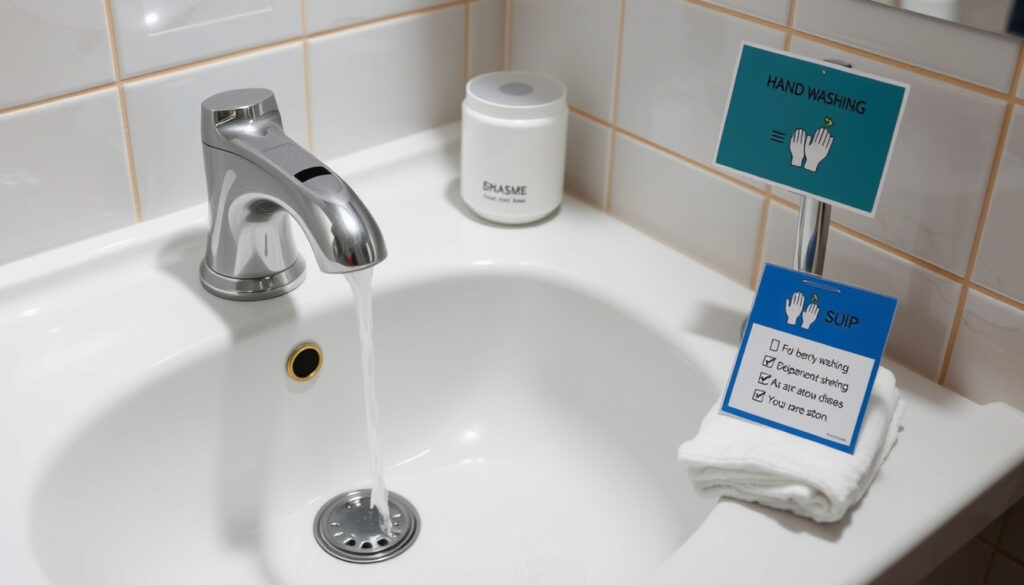
Washing Hands: The Correct 7-Step Method Explained
You’ve been doing it your whole life, but there’s a good chance you’re missing a few spots – handwashing is one of the simplest things you can do to stay healthy, yet most people rush through it or skip key areas. This guide breaks down the evidence-based technique, the science behind each step, and the common mistakes that undermine your efforts.
Minimum scrub time: 20 seconds · WHO procedure duration: 40–60 seconds · Effective sanitizer alcohol: 60% – 95% · Diarrheal illness risk reduction: up to 58%
Quick snapshot
- Soap and water for 20 seconds removes most germs (CDC Clean Hands).
- Surfactants in soap break down viral lipid membranes (CDC FAQ).
- Handwashing prevents diarrheal and respiratory infections (CDC Clean Hands).
- The exact origin of the “5 principles” phrase is not formally attributed to a single body. (WHO Guidelines on Hand Hygiene)
- Comparative efficacy of soap vs. sanitizer varies by pathogen type (WHO Guidelines on Hand Hygiene).
- Historical context of Jesus’ remarks on washing is theological, not scientific. (WHO Guidelines on Hand Hygiene)
- No established timeline; guidelines are evergreen and based on ongoing research.
- CDC and WHO recommendations are updated periodically; last major review 2023.
- Continue practicing the 7-step method consistently. (CDC Global WASH poster)
- Use hand sanitizer with at least 60% alcohol when soap is unavailable (CDC Global WASH poster).
- Stay informed about updates from CDC and WHO. (CDC Global WASH poster)
The snapshot confirms the 20-second rule and the 7-step method as cornerstones.
Five key facts about handwashing, one pattern: the evidence consistently points to time, coverage, and soap as non-negotiable.
| Fact | Value | Source |
|---|---|---|
| Minimum scrub time | 20 seconds | CDC Clean Hands |
| Effective sanitizer alcohol content | 60% – 95% | CDC Global WASH poster |
| Steps in the WHO technique | 7 steps | WHO handwashing poster |
| Global reduction in diarrheal disease risk | Up to 58% | CDC Clean Hands |
| Key scientific principle | Friction and soap lift microbes from skin | CDC FAQ |
What are the 7 steps of handwashing?
- Step 1: Wet hands – Wet hands with clean, running water (warm or cold). Turn off the tap to save water (CDC Clean Hands).
- Step 2: Apply soap – Apply enough soap to cover all hand surfaces (CDC Clean Hands).
- Step 3: Lather and scrub all surfaces – Lather by rubbing palms, backs of hands, between fingers, and under nails (CDC Clean Hands).
- Step 4: Scrub for at least 20 seconds – Scrub for at least 20 seconds — hum “Happy Birthday” twice as a timer (CDC Clean Hands).
- Step 5: Rinse thoroughly – Rinse hands well under clean, running water (CDC Clean Hands).
- Step 6: Dry with a clean towel – Dry hands using a clean towel or air dryer (CDC Clean Hands).
- Step 7: Turn off tap with the towel – Use a towel to turn off the faucet to avoid recontamination (WHO handwashing poster).
The 20‑second scrub isn’t arbitrary — it’s the time needed for soap to break down the lipid envelope of many viruses, including coronaviruses. Rushing that step means leaving behind germs that can still cause infection.
The implication: following the 7‑step sequence guarantees every surface gets cleaned, and skipping even one step reduces effectiveness.
What is the correct method for washing hands?
The WHO-recommended sequence
The World Health Organization’s WHO handwashing poster outlines a specific 7‑step method for healthcare workers that includes palm‑to‑palm rubbing, interlaced fingers, backs of fingers to opposing palms, rotational thumb rubbing, and rotational fingertip rubbing in the palm. This method ensures that commonly missed areas — thumbs, fingertips, and between fingers — are covered.
Adapting the method for clinical vs. home settings
In clinical settings, the WHO procedure takes 40–60 seconds and is designed for maximum pathogen removal. At home, the CDC’s CDC Clean Hands guidance condenses this into a simpler five‑step routine (wet, lather, scrub, rinse, dry) while still emphasizing the same 20‑second scrub and full coverage.
Duration: How long the friction step should last
Scientific studies show that scrubbing for 20 seconds is needed to remove harmful germs and chemicals from hands (CDC FAQ). Washing for a shorter time removes fewer germs. The friction step — rubbing hands together — is the action that physically dislodges microbes.
Even with the correct method, wet hands recontaminate faster. That’s why drying thoroughly with a single‑use towel is part of the official protocol — not an afterthought.
The pattern: the method is the same whether you’re a surgeon or a food handler — only the duration at the sink differs. For home use, the 20‑second scrub is the bedrock.
Why is it important to wash your hands?
Preventing the spread of infections
Handwashing with soap removes germs from hands, preventing the spread of respiratory and diarrheal infections (CDC Clean Hands).
- It is one of the most effective ways to prevent transmission of pathogens like viruses and bacteria.
- Regular handwashing significantly reduces the risk of contracting and spreading illnesses like colds, flu, and COVID‑19.
Reducing the risk of foodborne illness
Handwashing after using the restroom and before handling food prevents contamination of food and surfaces (CDC FAQ). The CDC estimates that handwashing can reduce the risk of diarrheal illness by up to 58%.
The global impact on public health
Improved hand hygiene is a key public health measure for reducing child mortality from diarrheal diseases. The WHO calls it one of the most cost‑effective health interventions available (WHO handwashing poster).
Why this matters: every time you skip the sink, you’re not just risking your own health — you’re breaking a chain of transmission that could protect someone more vulnerable.
What are the 5 principles of hand washing?
Principle 1: Soap and water are key
- Soap’s chemical structure lifts and detaches dirt and microbes from the skin (CDC FAQ).
Principle 2: The “friction” step is crucial
- Friction physically dislodges germs from the skin (CDC Clean Hands).
Principle 3: Coverage of all surfaces
- Every part of the hand, including thumbs, fingertips, and under nails, must be cleaned (CDC Clean Hands).
Principle 4: Time is a non-negotiable factor
- The recommended scrubbing time is at least 20 seconds to ensure effectiveness (CDC Clean Hands).
Principle 5: Proper drying is the final step
- Drying hands with a clean towel is essential because wet hands can more easily transmit germs (WHO handwashing poster).
The trade-off: skipping any one principle dramatically reduces the whole operation’s effectiveness. The 20‑second scrub, for example, is useless if you forget to dry properly.
What are common handwashing mistakes?
Skipping the soap
- Water alone cannot lift germs — soap is necessary (CDC FAQ).
Rushing the process
- Washing for less than 20 seconds removes fewer germs (CDC FAQ).
Neglecting the backs of hands and thumbs
- These areas are commonly missed, according to CDC clinical guidance (CDC Clean Hands).
Forgetting to dry hands
- Walking away with wet hands increases the risk of picking up new bacteria (WHO handwashing poster).
The most common error — rushing the 20‑second scrub — is also the easiest to fix. Set a timer, and you’ll catch the germs most people leave behind.
The pattern: most mistakes are about speed and coverage. Fix those two, and you’ve already solved the biggest hygiene loopholes.
What’s clear and what’s not
Confirmed facts
- Washing with soap and water for at least 20 seconds is globally recommended (CDC Clean Hands).
- Surfactants in soap break down the lipid membranes of many viruses (CDC FAQ).
- Handwashing prevents transmission of diarrheal and respiratory infections (CDC Clean Hands).
What remains unclear
- The specific historical origin of the “5 principles” phrase is not formally attributed to a single governing body.
- While soap and water are superior for many pathogens, direct comparative efficacy between sanitizer and soap varies by pathogen type (WHO Guidelines on Hand Hygiene).
- The exact utterance of Jesus on this topic is open to historical and theological interpretation, distinct from scientific fact.
- Improper drying and tap recontamination are legitimate concerns, but the exact risk reduction is context-dependent.
This distinction helps separate proven science from historical or theological contexts.
Expert perspectives
“Handwashing is a do‑it‑yourself vaccine — it’s one of the most effective ways to protect yourself and your family from getting sick.”
CDC Clean Hands (public health authority)
“The 7‑step technique ensures that every surface of the hand is cleaned, including the thumbs and fingertips, which are most often missed.”
WHO handwashing poster (global health body)
For anyone who regularly handles food or cares for vulnerable people, the choice is clear: adopt the full 7‑step method, or commit to a thorough 20‑second scrub with soap every time. The science is settled — the rest is just habit.
cdc.gov, cdc.gov, cdc.gov, cdc.gov, who.int, cdc.gov, cdc.gov, stacks.cdc.gov, stacks.cdc.gov, stacks.cdc.gov, apic.org, youtube.com, zurichheute.ch
For those who want to ensure they’re following the most up-to-date guidance, WHOs recommended handwashing steps offer a clear and authoritative reference.
Frequently asked questions
What is the single most important reason to wash your hands?
To prevent the spread of infections. Handwashing with soap removes germs that can cause respiratory and diarrheal illnesses, protecting both you and those around you.
Is hand sanitizer as effective as washing with soap and water?
Hand sanitizer with at least 60% alcohol can quickly reduce the number of microbes on hands, but it does not remove all types of germs and is less effective on visibly dirty or greasy hands. Soap and water remain the gold standard (CDC FAQ).
How often should you wash your hands in a day?
There is no fixed number, but the CDC recommends washing at key times: before eating, after using the restroom, after coughing/sneezing, and after touching public surfaces.
What can happen if you don’t wash your hands properly?
Improper handwashing can leave germs on your hands, increasing the risk of infections such as colds, flu, food poisoning, and diarrheal diseases.
Does using a hand dryer or paper towel matter for hygiene?
Yes. Paper towels are generally preferred because they dry hands quickly and create friction that removes remaining germs. Air dryers can be effective if well‑maintained, but wet hands spread bacteria more easily (WHO handwashing poster).
The answers reinforce that soap and water remain the gold standard.
More related posts
 Gene Pitney: Biography, Death, Songs, and Songwriting Legacy
 Justin Trudeau After Politics: Wife, Rumors, and Resignation
 Eve Myles: Biography, Career, Family, and John Barrowman Link
 Nigel Havers: Biography, Family, Career, and Net Worth
 Justin Hartley: Biography, Marriages, and Net Worth
 Lil Durk Sentencing, Eye Condition, and King Von Death
 Shane Lynch: Biography, Career, Net Worth, and Personal Life
 Robert Kennedy Sr vs Jr: Assassination, Health, and Family Facts