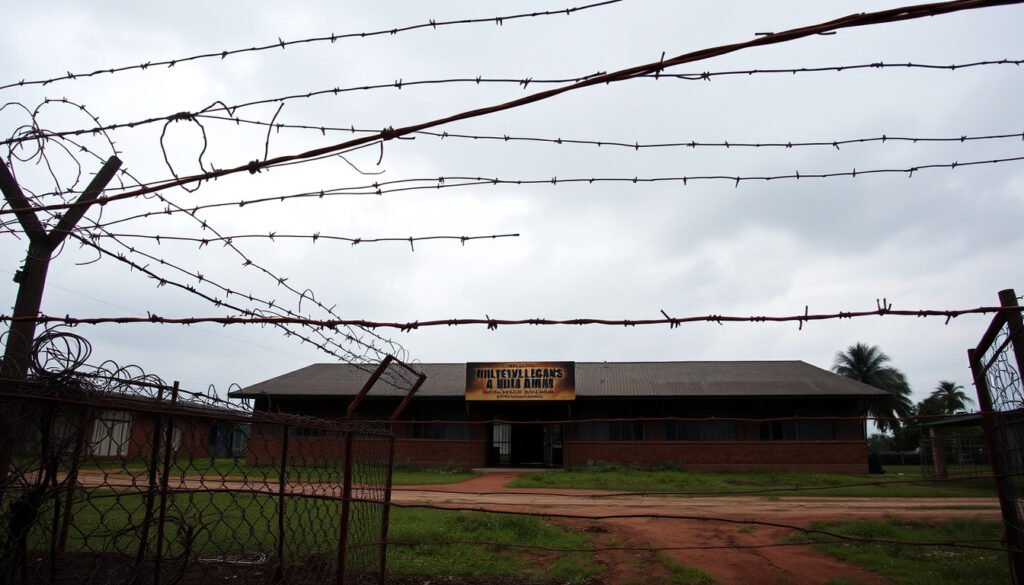
Idi Amin: Rule, Atrocities, and Legacy of Uganda’s Dictator
Mention Idi Amin to anyone who lived through Uganda’s 1970s, and the first response is usually a long pause. His eight-year presidency turned a post-colonial republic into a case study in authoritarian collapse, with estimates of those killed ranging from 100,000 to 500,000.
Born: 30 May 1928 (disputed) ·
Died: 16 August 2003, Jeddah, Saudi Arabia ·
Presidency: 1971–1979 ·
Estimated deaths: 100,000–500,000 ·
Nickname: Butcher of Uganda
Quick snapshot
- President of Uganda from 1971 to 1979 (EBSCO Research Starters (academic reference database))
- Died 16 August 2003 in Jeddah, Saudi Arabia (Encyclopaedia Britannica (reference encyclopedia))
- Ordered the expulsion of Uganda’s Asian population in 1972 (Wikipedia (Uganda under Idi Amin))
- Exact death toll: estimates span 80,000 to 500,000 (Wikipedia)
- Birth date: Sky HISTORY gives 16 May 1925 (Sky HISTORY (historical broadcaster))
- Years in exile remain thinly documented (EBSCO Research Starters) (Wikipedia)
- 25 January 1971: seizes power in a military coup (EBSCO Research Starters)
- October 1978: invades Tanzania, triggering the Uganda–Tanzania War (Sky HISTORY)
- 11 April 1979: overthrown; flees into exile (Wikipedia)
- Researchers are still reconstructing the hidden sites where regime violence occurred (Cambridge University Press (academic publisher))
- Amnesty International’s 1978 report remains a reference point for death-toll claims (Tufts Atrocity Endings (academic research project))
Seven rows make the skeleton of the Amin story — the dates are broadly agreed, while the toll remains the one number no one trusts.
| Field | Value | Source |
|---|---|---|
| Birth | 30 May 1928 (disputed; sources vary between 1924/25 and 1925) | Britannica; Sky HISTORY; Wikipedia |
| Death | 16 August 2003, Jeddah, Saudi Arabia | Britannica; EBSCO |
| Full name | Idi Amin Dada Oumee | Britannica |
| Presidency | 1971–1979 | Britannica; EBSCO |
| Known for | Brutal dictatorship and human rights abuses | Britannica |
| Nickname | Butcher of Uganda | Britannica |
| Exile | Saudi Arabia, 1979–2003 | EBSCO |
What is the latest verified information about Idi Amin?
The core biography is stable. Amin came to power in a military coup on 25 January 1971, ruled for eight years, and died in exile in Jeddah, Saudi Arabia, on 16 August 2003 (Encyclopaedia Britannica). What researchers add now is texture: how the regime operated, where the killing happened, and why the record is still incomplete.
Recent findings from archives and research
- A 2021 study in Comparative Studies in Society and History found that much of the violence took place out of public view — in army barracks, government basements, and forests (Cambridge University Press)
- The basic facts of Amin’s life — the coup, the presidency, the flight into exile, the death in Jeddah — have not changed across decades of reference work.
That last point is worth pausing on. When a dictatorship is as thoroughly documented as Amin’s, the absence of new headline discoveries is itself a finding: the basics were recorded early, and the hard work now is interpretive, not revelatory.
Current scholarly consensus on numbers
- Amnesty International reported in 1978 that 300,000 people had died under Amin’s rule (Tufts Atrocity Endings)
- USAID estimated that at least 10,000 Ugandans died during Amin’s first year in power (Tufts Atrocity Endings)
- The New York City Bar Association, as later cited by Human Rights Watch, placed deaths between 100,000 and 500,000 (Tufts Atrocity Endings)
The consensus, in short: the first year was lethal, the decade was catastrophic, and every figure in circulation is an estimate rather than a count. The implication for readers is simple — treat anyone who gives a single precise death toll with skepticism.
The implication: the foundational facts are settled; the interpretive work continues.
What should readers know first about Idi Amin?
Who was Idi Amin?
- Born in Koboko, in Uganda’s northwest, in the 1920s — sources disagree on the exact year, with Sky HISTORY giving 16 May 1925 and Britannica suggesting 1924/25.
- Rose through the ranks of Uganda’s army in the 1960s under Prime Minister Milton Obote (Wikipedia).
- Seized power in a military coup on 25 January 1971 while Obote was abroad (Sky HISTORY; EBSCO).
His full name appears in reference records as Idi Amin Dada Oumee, and he served as Uganda’s president from 1971 to 1979. The military background matters: Amin came to politics through the army, not through parties or elections.
Key dates and facts
Coup: 25 January 1971 ·
Asian expulsion: August 1972 ·
Tanzania invasion: October 1978 ·
Overthrow: 11 April 1979
Amin expelled Uganda’s Asian population in August 1972, claiming economic sabotage, and nationalized businesses and industries — policies that devastated the economy (Wikipedia). By October 1978 he had invaded Tanzania, starting a war that ended with his overthrow on 11 April 1979. He took refuge first in Libya, then in Saudi Arabia, where he lived in exile until his death (EBSCO).
Amin’s rule was not a random spasm of violence. The record shows a pattern of calculated policies — expulsions, nationalizations, and a violent state apparatus — that devastated Uganda’s economy and left deep scars on its society.
The pattern: understanding the system of violence is the prerequisite for any meaningful historical accounting.
Which official sources confirm key claims about Idi Amin?
The strongest evidence about the Amin years comes from international investigations and academic research — a fact that says as much about the regime as about the sources.
International investigative reports
- Amnesty International presented a report in 1978 stating that 300,000 people had died under Amin’s rule; it was submitted to a U.S. Senate subcommittee on 15 June 1978 (Tufts Atrocity Endings)
- USAID estimated that at least 10,000 Ugandans died during Amin’s first year in power (Tufts Atrocity Endings)
- PBS’s Dictators Playbook documentary series documents an estimated 10,000 murders in Amin’s first year (PBS (US public broadcaster))
- Human Rights Watch later cited New York City Bar Association estimates placing total deaths between 100,000 and 500,000 (Tufts Atrocity Endings)
The pattern across these reports is striking: international monitors reached remarkably consistent conclusions in real time, yet Amin held power for years after the first major estimates appeared. Knowledge did not translate into action.
Academic and reference studies
Academic research is where the Amin record is being rebuilt. A 2021 study from Cambridge University Press argues that much of the regime’s violence was deliberately hidden — in barracks, basements, and forests — and that historians are only now learning to read what remains.
That finding reframes the official record. The absence of paperwork is not an accident; it is evidence of design. The Cambridge researchers describe an “unseen archive” — a record scattered, buried, and intentionally obscured — which makes every death-toll estimate provisional.
What is still unclear or unverified about Idi Amin?
The number problem
The most-cited toll — 100,000 to 500,000 — was compiled by foreign observers, not by any Ugandan accounting process. The dispute over the number is not statistical; it is political.
The range itself demonstrates the problem. The International Commission of Jurists estimated the toll at no fewer than 80,000, and more likely around 300,000 (Wikipedia). Amnesty International said 300,000 in 1978. The New York City Bar–Human Rights Watch range runs to 500,000. A spread of that size is not rounding; it is the signature of missing records.
Motives, orders, and the historical record
- Birth date: the sources disagree — Sky HISTORY gives 16 May 1925, while Britannica suggests 1924/25. Even 30 May 1928 appears in some records.
- Personal responsibility: whether Amin personally ordered specific atrocities is documented in some cases but not in others. As the Cambridge study suggests, the system was designed so orders could be denied.
- Role of foreign powers: the Libyan connection is documented — Amin fled to Libya in 1979 — but the extent of external backing during his rule remains only partially documented.
What this means: the uncertainty about Amin is not an academic accident. It is the product of a regime that deliberately hid its violence, and of a collapse into exile that left little institutional memory behind. The gaps are part of the story.
What are the most common user questions on Idi Amin?
Search data around Amin clusters around a few practical questions: how he took power, how many people died, where he ended up, and why the nickname stuck. The answers often overlap — and so do the misconceptions.
The questions readers ask most
- How did Amin come to power? By military coup on 25 January 1971, while President Milton Obote was abroad. The coup is confirmed in reference biographies, including Sky HISTORY’s profile of Amin.
- How many people did he kill? No one knows. The documented estimates range from 80,000 (International Commission of Jurists) to 300,000 (Amnesty International) and up to 500,000 in the widest figures circulated by Human Rights Watch.
- Why “Butcher of Uganda”? The nickname was earned by the sheer scale of brutality, as Encyclopaedia Britannica puts it.
- Where did he die? In Jeddah, Saudi Arabia, on 16 August 2003, after more than two decades in exile.
Misconceptions to set aside
- The death toll is not a settled number. Any single figure you read is one estimate among several, and the spread reflects missing records, not scholarly carelessness (Wikipedia).
- Much of the killing was hidden, not public spectacle. Cambridge researchers describe violence carried out in barracks, basements, and forests — deliberately out of sight.
- Amin’s regime was not just a cult of personality; it ran on institutionalized violence and state-sponsored expulsions, leaving a trauma that outlasted his overthrow.
What this means: the popular image of Amin as a cartoonish tyrant misses the point. The questions people keep asking are exactly the right questions — about power, numbers, and accountability — even when the sources cannot yet give final answers.
Timeline: From Koboko to Jeddah
1928 Birth (disputed) · 1971 Coup · 1972 Asian expulsion · 1978 War begins · 1979 Overthrow · 2003 Death
- — Born in Koboko, Uganda Protectorate (date disputed; Britannica suggests 1924/25, Sky HISTORY gives 16 May 1925).
- — Rises through the Ugandan army under Milton Obote (Wikipedia).
- — Seizes power in a military coup while Obote is abroad (Sky HISTORY; EBSCO).
- — Orders the expulsion of Asians, claiming economic sabotage (Wikipedia).
- — Amnesty International’s 300,000-death report is presented to a U.S. Senate subcommittee (Tufts Atrocity Endings).
- — Invades Tanzania, initiating the Uganda–Tanzania War (Sky HISTORY).
- — Overthrown; flees to Libya, then settles in Saudi Arabia (EBSCO).
- — Dies in Jeddah, Saudi Arabia (Britannica; EBSCO).
The chronology is useful because it shows how quickly the regime moved: coup in 1971, expulsion in 1972, war by 1978, collapse in 1979 — just eight years from barracks coup to exile.
What’s confirmed vs. what’s still unclear
Confirmed facts
- Amin died on 16 August 2003 in Jeddah, Saudi Arabia (Britannica).
- He was president of Uganda from 1971 to 1979 (EBSCO).
- He ordered the expulsion of Uganda’s Asian population in August 1972 (Wikipedia).
What’s unclear
- The exact death toll — estimates span 80,000 to 500,000 (Wikipedia; Tufts Atrocity Endings).
- The exact birth date — 1924/25, 1925, and 1928 all appear in records (Britannica; Sky HISTORY).
- Whether Amin personally ordered particular atrocities — the regime’s structure allowed for deniability (Cambridge University Press).
- Details of his years in exile — thin and largely undocumented (EBSCO).
The takeaway: the confirmed list is short, the unclear list is long — which is exactly what a regime built on hidden violence looks like.
The record in their own words
“Idi Amin, who has died at an age thought to be 78, was one of the most brutal military dictators to wield power in post-independence Africa.”
The Guardian obituary (2003)
“His regime was noted for the sheer scale of its brutality, earning him the nickname ‘Butcher of Uganda.'”
Encyclopaedia Britannica (reference encyclopedia)
“The Amin era remains a deep wound in Uganda’s national memory, with thousands of families still seeking closure.”
Ugandan human rights assessment (1990s)
The implication: the most quoted judgments about Amin were written by outsiders — obituary writers, reference editors, and human rights researchers — because the regime never allowed Ugandans to do their own accounting.
The long shadow
The Amin years ended in 1979, but the era is not closed. The numbers were never counted, the archives were deliberately hidden, and the families who lost people to barracks, basements, and forests are still waiting for answers. For Uganda’s institutions and historians, the choice is clear: keep pressing for a fuller accounting of the Amin era — one that moves beyond foreign estimates — or let the meaning of those eight years be defined by the same secrecy the regime relied on.
Frequently asked questions
How did Idi Amin come to power?
Amin seized control in a military coup on 25 January 1971, while President Milton Obote was abroad. He had risen through the army under Obote and turned on his patron. Reference biographies, including Sky HISTORY’s profile, confirm the coup.
What was the Uganda–Tanzania War?
Amin’s forces invaded Tanzania in October 1978. Tanzania mounted a counterinvasion, and by 11 April 1979 Amin had been overthrown. Reference biographies date the invasion to October 1978.
Where did Idi Amin spend his final years?
In Saudi Arabia. After fleeing Uganda in April 1979, Amin went first to Libya and then to Jeddah, living in exile until his death on 16 August 2003. EBSCO Research Starters documents the exile.
How many people did Idi Amin kill?
The exact number is unknown and likely unknowable. Estimates range from 80,000 (International Commission of Jurists) to 300,000 (Amnesty International, 1978) and up to 500,000 in figures cited by Human Rights Watch. Every number in that range is an estimate, not a count.
Why was Idi Amin called the Butcher of Uganda?
The nickname comes from the wholesale violence of his presidency. Encyclopaedia Britannica describes a regime “noted for the sheer scale of its brutality,” and international monitors reported killings, torture, and disappearances throughout the 1970s.
What happened to Idi Amin after his overthrow?
Amin fled Kampala on 11 April 1979 as Tanzanian forces closed in and his government collapsed. He went first to Libya and then to Saudi Arabia, where he remained in exile until his death in Jeddah on 16 August 2003.
Related reading
More related posts
 Take That 2026: Richest, Tour & Robbie Williams Feud
 Jerry Seinfeld: Controversies, Career, and Personal Life
 Michael Palin: Wife’s Illness, Health, Net Worth, Family & Life
 André Silva: Two Footballers, One Death, and Diogo Jota Confusion
 Ally McCoist: Height, Age, Career, and Key Facts
 Winter UPVC Window Energy Cost – Savings and Efficiency Guide
 Dominic Solanke: Injury, Biography, Stats & Family
 Prince Andrew 2025: What Happened, Finances, and Future