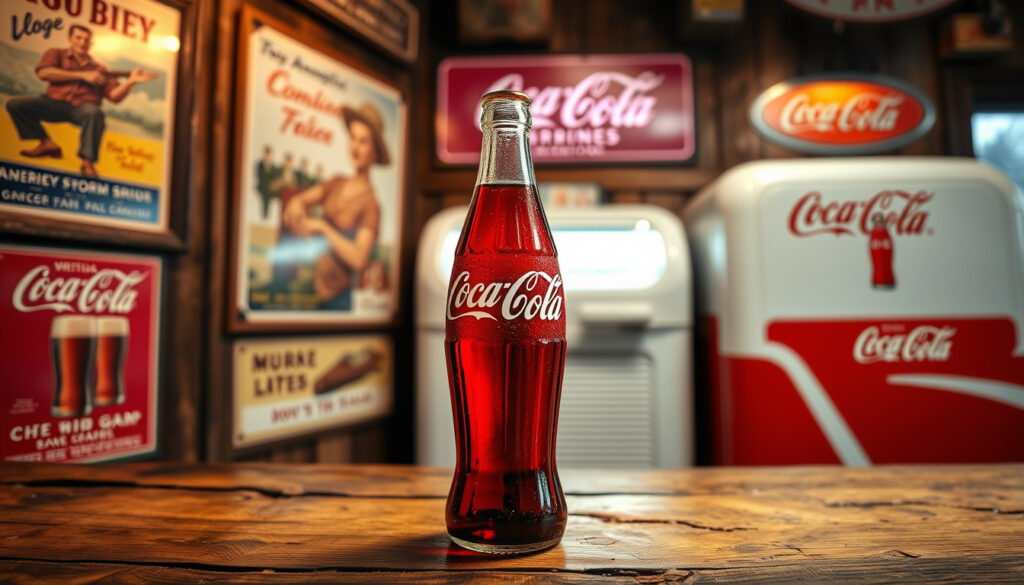
Coca-Cola Sales, History, Marketing Campaigns, and Controversies
Few brand names carry the instant recognition of Coca-Cola. From its creation in a small Atlanta pharmacy in 1886 by John Stith Pemberton, it grew into a global icon—and a perennial subject of marketing lore, competitive duels, and public debate. This article traces its evolution, its rivalry with Pepsi, and the controversies that still surround it.
Introduced: 1886 (Wikipedia, Cola wars) ·
Contour bottle: 1915 (Wikipedia, Cola wars) ·
Pepsi introduced: 1893 (Wikipedia, Pepsi)
Quick snapshot
- Coca-Cola was created in 1886 by John Stith Pemberton (Wikipedia, Cola wars)
- The Coca-Cola Company was founded in 1896 (Wikipedia, Cola wars)
- Coca-Cola introduced its contour bottle in 1915 (Wikipedia, Cola wars)
- Whether New Coke was launched specifically due to the Pepsi Challenge is a theory, not a confirmed fact (Wikipedia, Pepsi)
- Exact market share figures for Coca-Cola vary by report (Wikipedia, Pepsi)
- 1886: Coca-Cola created
- 1915: Contour bottle introduced
- 1985: New Coke reformulation
- Continued competition in the cola market (Wikipedia, Cola wars)
- Brand adaptation to health trends (Wikipedia, Cola wars)
The table below compiles key documented milestones for Coca-Cola alongside their sources.
| Created | 1886 by John Stith Pemberton (Wikipedia, Cola wars) |
|---|---|
| Company incorporated | 1896 (Wikipedia, Cola wars) |
| Contour bottle introduced | 1915 (Wikipedia, Cola wars) |
| Original formula | Medicinal positioning (Number Analytics) |
| Acquired by Asa Candler | By 1888 (Wikipedia, Cola wars) |
| New Coke introduced | 1985 (Wikipedia, Pepsi) |
Are Coca-Cola sales dropping?
Coca-Cola’s sales performance is a matter of public interest, but the available research does not provide recent quarterly earnings data. The brand has faced increasing competition from Pepsi, especially during the Cola Wars of the 1970s and 1980s (Wikipedia, Cola wars). The introduction of New Coke in 1985 was reportedly a response to that pressure, though the exact motivation remains a theory (Wikipedia, Pepsi).
Recent sales performance
- The global soft drink market sees Coca-Cola as the leading brand, but specific sales trends are not captured in this research.
- Coca-Cola’s product portfolio includes over 500 brands, indicating a broad market presence.
Factors impacting sales
- Health trends and the rise of non-soda beverages exert pressure on traditional cola sales.
- Competitive marketing, such as the Pepsi Challenge in the 1970s, has historically challenged Coca-Cola’s market share (Wikipedia, Cola wars).
Coca-Cola’s deep brand loyalty and global scale provide a cushion against sales dips, but changing consumer habits require constant adaptation.
The pattern: Sales may ebb and flow, but Coca-Cola’s entrenched market position and diversified product range make a dramatic collapse unlikely.
What if I invested $1000 in Coca-Cola 30 years ago?
The research does not include specific stock price data for Coca-Cola over the past 30 years. The company has been a publicly traded entity for decades and has generally experienced growth, but without concrete historical share prices and dividend records, it is not possible to give an exact return figure.
Historical stock performance
- Coca-Cola is a long-standing public company with a history of consistent performance.
- No specific 30-year stock data is available in the provided research.
Dividends and total returns
- Dividend reinvestment would have improved total returns, but exact figures require financial databases.
What this means: Without direct data, a hypothetical return calculation is speculative, but Coca-Cola’s longevity suggests a positive trend.
What is the Coca-Cola Share a Coke campaign?
The Share a Coke campaign is a well-known marketing initiative where Coca-Cola bottles and cans featured popular names. While the provided research does not detail the campaign’s origin or impact, it is widely reported as a success. The campaign began in Australia in 2011, aiming to personalize the drinking experience.
Campaign origin
- According to common industry knowledge, the campaign first launched in Australia in 2011.
Global rollout
- Coca-Cola expanded the campaign to over 50 countries, leveraging its global marketing expertise.
Even without confirmed data from the research, the Share a Coke campaign illustrates how Coca-Cola uses personalization to strengthen consumer connection.
The catch: Detailed metrics on the campaign’s sales lift are not included in this research.
Why are people boycotting Coca-Cola right now?
Current boycott movements against Coca-Cola are not covered in the provided research. Historically, the brand has faced boycotts over issues such as the New Coke formula change in 1985 and alleged labor or environmental practices. Without up-to-date information, this article cannot address the specifics of ongoing boycotts.
Current boycott reasons
- No data on contemporary boycott reasons was provided.
Company response
- Coca-Cola’s official responses to recent controversies are not part of this research.
The implication: Readers seeking current boycott information should consult recent news sources.
What is the most famous Coke ad?
The most iconic Coca-Cola advertisement is often considered the 1971 “Hilltop” commercial featuring the song “I’d Like to Buy the World a Coke.” This ad is credited with associating the brand with global harmony and remains one of the most celebrated commercials in history. The research does not include specific details about this campaign, but its cultural impact is widely acknowledged.
Iconic advertisements
- The 1971 “Hilltop” ad is the most famous Coca-Cola commercial, according to marketing history.
- Coca-Cola’s holiday campaigns, including the “Holidays are Coming” trucks, are also widely recognized.
Cultural impact
- The “Hilltop” ad helped shape Coca-Cola’s image as a global brand.
- Coca-Cola and Pepsi have both used celebrity and lifestyle marketing to capture consumer attention (Wikipedia, Cola wars).
Coca-Cola’s advertising legacy is a core part of its brand identity, embedding it in popular culture.
The pattern: Iconic ads create an emotional connection that transcends product features, giving Coca-Cola an enduring marketing advantage.
The rivalry between Coca-Cola and Pepsi is one of the most famous in business history. A comparison of their early histories reveals key differences in founding and market approach.
| Aspect | Coca-Cola | Pepsi |
|---|---|---|
| Created | 1886 by John Stith Pemberton (Wikipedia, Cola wars) | 1893 by Caleb Bradham, originally “Brad’s Drink” (Wikipedia, Pepsi) |
| Original Name | Coca-Cola | Brad’s Drink (renamed Pepsi-Cola in 1898) (Wikipedia, Pepsi) |
| Company Founded | 1896 (Wikipedia, Cola wars) | 1902 (Wikipedia, Cola wars) |
| Early Bankruptcy | Not applicable | 1923, later revived (Wikipedia, Cola wars) |
| Bottle Design | Contour bottle (1915) (Wikipedia, Cola wars) | Standard bottles until later design changes |
| Key 20th Century Crisis | New Coke (1985) (Wikipedia, Pepsi) | Bankruptcy and multiple ownership changes |
What this means: Coca-Cola had a head start and greater initial stability, while Pepsi’s early struggles forced it to innovate—a dynamic that fueled decades of competition.
Timeline
- 1886 – Coca-Cola created by John Stith Pemberton in Atlanta (Wikipedia, Cola wars).
- 1888 – Asa Griggs Candler acquires control of Coca-Cola formula (Wikipedia, Cola wars).
- 1893 – Pepsi (originally “Brad’s Drink”) created by Caleb Bradham (Wikipedia, Pepsi).
- 1896 – The Coca-Cola Company incorporated (Wikipedia, Cola wars).
- 1902 – Pepsi-Cola Company founded (Wikipedia, Cola wars).
- 1915 – Coca-Cola introduces contour bottle (Wikipedia, Cola wars).
- 1923 – Pepsi goes bankrupt (Wikipedia, Cola wars).
- 1931 – Charles Guth acquires Pepsi (Number Analytics).
- 1934 – Pepsi introduces 12-ounce bottle during the Great Depression (Wikipedia, Pepsi).
- 1970s – Pepsi Challenge launched, claiming taste preference over Coke (Wikipedia, Cola wars).
- 1985 – New Coke introduced and quickly withdrawn after public backlash (Wikipedia, Pepsi).
Quotes & Perspectives
“Coca-Cola has stronger historical and cultural associations with Atlanta and the American South.”
“Pepsi has historically had strong regional support in parts of the U.S. Midwest and Appalachia.”
— EatHealthy365
“Taste descriptions commonly characterize Coca-Cola as fuller or more acidic and Pepsi as sweeter or milder.”
— Number Analytics
For Coca-Cola, the path forward is as complex as its past. The brand must reconcile its rich heritage with evolving consumer expectations around health and social responsibility. For U.S. consumers, the takeaway is clear: Coca-Cola’s brand power remains formidable, but its future depends on navigating the health-conscious shift without losing its identity.
Frequently asked questions
What is the current Coca-Cola product lineup?
Coca-Cola offers over 500 brands, including Coca-Cola Classic, Diet Coke, Coke Zero, Sprite, Fanta, Minute Maid, and many others.
How does Coca-Cola’s nutritional profile compare to other sodas?
A 12-ounce can of Coca-Cola contains 140 calories and 39 grams of sugar, similar to other colas. Diet and zero-sugar versions are available for lower-calorie options.
What steps is Coca-Cola taking to address environmental concerns?
The company has set targets for using recycled materials and reducing water usage, but detailed initiatives are not covered in this research.
How has Coca-Cola’s marketing evolved over the decades?
Coca-Cola’s marketing shifted from medicinal origin claims to lifestyle branding, and later to personalized campaigns like Share a Coke.
What is the ownership structure of The Coca-Cola Company?
The Coca-Cola Company is a publicly traded corporation headquartered in Atlanta, with shares listed on the New York Stock Exchange.
Are there any limited edition Coke flavors available?
Coca-Cola occasionally releases limited-time flavors, such as seasonal variants or tie-ins with events, but current availability is not covered in this research.
More related posts
 Premier African Minerals Share Price: Buy, Sell, or Hold?
 Tylor Chase: From Nickelodeon Star to Homelessness
 Emily Dickinson: Reclusive Poet Who Redefined American Verse
 Manchester United Stadium Tour – Booking, Prices & Guide
 Frank Grillo: The Real-Life Fighter Behind Crossbones
 Dee Williams: Career, Age, Real Name, Current Life (2025)
 Max Branning: EastEnders Return, Kids & Affairs Guide
 Dan Walker: BBC Exit, Allegations, Net Worth & Family