Oskar Schindler: The Real Story Behind Schindler’s List
Most people meet Oskar Schindler in black and white, with Liam Neeson’s face and a violin on the soundtrack. The real man was messier: a Nazi Party member, a black-marketeer, and a factory owner whose workforce walked out of the war alive — more than 1,200 people by the count of Yad Vashem (Holocaust remembrance authority).
People saved: More than 1,200 · Born: 28 April 1908, Zwittau, Austria-Hungary · Died: 9 October 1974, Hildesheim, West Germany · Hollywood biopic: Schindler’s List (1993)
Quick snapshot
- German industrialist and Nazi Party member who ran a factory in occupied Kraków (United States Holocaust Memorial Museum (Holocaust research center))
- Employed Jewish forced laborers from the Kraków ghetto (US Holocaust Memorial Museum (Holocaust research center)) (United States Holocaust Memorial Museum (Holocaust research center))
- Recognized as Righteous Among the Nations in 1963 (Muzeum Krakowa (Kraków city museum))
- Why he did it — self-interest, guilt, or a slow moral awakening — remains debated (Encyclopaedia Britannica (reference publisher))
- The number saved varies: Encyclopaedia Britannica (reference publisher) puts it near 1,100, while Yad Vashem’s count exceeds 1,200
- No official count of living Schindler Jews is published (Encyclopaedia Britannica (reference publisher))
- 1939: took over the enamelware factory known as Emalia (Memorial to the Silent Heroes (Berlin memorial to Nazi-era rescuers))
- 1944: moved production to Brünnlitz to keep workers away from Auschwitz (Memorial to the Silent Heroes (Berlin memorial to Nazi-era rescuers)) (Memorial to the Silent Heroes (Berlin memorial to Nazi-era rescuers))
- 1993: the film that made the rescue famous (TIME (news magazine))
- The Emalia building now houses the Oskar Schindler Enamel Factory museum, a branch of the Historical Museum of the City of Kraków (Muzeum Krakowa (Kraków city museum))
- His grave on Mount Zion remains a place of remembrance; visitors leave stones (Deutsche Biographie (German biography archive))
- Historians keep working on the archival record of the rescue and its aftermath
Six rows, one pattern: every biographical fact leads back to the rescue — even the party card and the marriage that didn’t last.
| Label | Value |
|---|---|
| Spouse | Emilie Pelzl, married 1928 (Muzeum Krakowa) |
| Party | Nazi Party member (United States Holocaust Memorial Museum (Holocaust research center)) |
| Known for | Rescue of more than 1,200 Jewish workers (Yad Vashem (Holocaust remembrance authority)) |
| Arrived in Kraków | 17 October 1939, after the Nazi invasion of Poland (Muzeum Svitavy (birthplace museum, Czechia)) |
| Buried | Mount Zion, Jerusalem (Deutsche Biographie (German biography archive)) |
| Museum | The Kraków factory building is now the Oskar Schindler Enamel Factory museum, a branch of the Historical Museum of the City of Kraków (Muzeum Krakowa) |
Was Schindler a good guy?
It’s the question most visitors carry in, and the honest answer is that the record refuses to cooperate. Schindler was a German industrialist, a member of the Nazi Party, and a wartime factory owner in occupied Kraków. The same man was recognized as Righteous Among the Nations in 1963 for protecting Jewish workers. Both facts are true at the same time, and the gap between them is the real subject of his biography.
- The rescue ran through the Nazi system, not around it: party membership, bribes, and black-market goods were the tools he used.
- The workers were employees, not charity cases: their labor made the Emalia factory profitable while it protected them.
- The BBC’s documentary portrait of Schindler is titled The Accidental Hero — a phrase that captures how little his rescue looks like a plan.
That portrait is not flattering. The BBC describes him as a Nazi and a notorious black-marketeer as well as a savior of more than 1,200 people. The question “good guy?” gets more complicated the closer you look, which is why the moral debate is a permanent part of the story.
Do Jews respect Schindler?
- The institutional answer: Yad Vashem named Oskar and Emilie Schindler Righteous Among the Nations in 1963, the highest recognition Israel gives to non-Jewish rescuers.
- The human answer: survivors called themselves “Schindler Jews” and stayed loyal to him after the war.
- The broader answer: respect is not universal. Critics argue that celebrating a Nazi Party member who did good with bad means sanitizing the system that made rescue necessary.
Schindler did not save his workers despite the party card, the bribes, and the profits — he saved them with those tools. The rescue and the compromises are the same story, not separate chapters.
The implication: if you separate Schindler the rescuer from Schindler the Nazi profiteer, you get a clean hero who never existed. The uncomfortable version is the documented one.
The takeaway: the documentary record does not ask you to approve of Schindler — it asks you to acknowledge what he did.
What happened to Oskar Schindler after the war ended?
The war ended for Schindler in defeat. He and Emilie crossed into American-occupied territory in 1945; the Brünnlitz workers survived. He did not stay in Europe, and the rest of his life moved in a downward arc.
- 1949: emigrated to Argentina with Emilie.
- 1958: returned to West Germany alone; the marriage did not survive the distance.
- 1974: died in Hildesheim, West Germany. Deutsche Biographie’s entry records the death and his burial on Mount Zion in Jerusalem.
His postwar business ventures failed. The fortune he had built in Kraków did not follow him, and the man who once bribed camp commandant Amon Göth ended his life far from the wealth he had controlled. His postwar story echoes other wartime lives in unexpected ways; our Vera Lynn biography takes a different angle on the same era.
Was Schindler rich when he died?
- No. The biographical record shows failed ventures, debt, and a modest existence in West Germany.
- The film’s triumphant finale reads differently against that record: the real postwar years were a long financial decline.
The war made Schindler’s name; it did not make his fortune. The man who saved more than 1,200 people spent his last decades in near-obscurity in West Germany.
The pattern: the rescue brought him a kind of immortality and almost nothing else. For the workers he saved, the outcome was the opposite — life itself.
Was Oskar Schindler ever caught?
No trial, no Allied court, no war-crimes charge. Schindler was never “caught” in the way people usually mean, because by the end of the war he had walked into American lines with his workers’ survival on the record. The move was practical: he and Emilie went west to avoid Soviet capture.
- His Nazi Party membership remained part of his file in postwar West Germany, and authorities had to weigh it against the rescue.
- Yad Vashem and the United States Holocaust Memorial Museum both document the rescue that defined his case.
- He was not put on trial by the Allies after the war.
The catch: the Allies never had to decide what to do with Oskar Schindler, because his workers were the evidence.
Why did Oskar Schindler leave his wife?
He married Emilie Pelzl in 1928, and she worked beside him through the war years — both are credited together with the rescue. The marriage did not survive the postwar decades. He returned to West Germany in 1958 without her, and the couple separated without divorcing.
Was Oskar Schindler faithful to his wife?
- The biographical record is blunt: biographers document extramarital relationships, without treating them as the center of his historical legacy.
- The precise date and details of the separation are not fully documented — which is why this question belongs in the “unclear” column.
What this means: a man who failed his marriage can still be the person who saved more than 1,200 people. The history doesn’t grade on a curve.
Does Schindler’s factory still exist?
Yes. The Emalia factory building on Lipowa Street in Kraków survives, and it now houses the Oskar Schindler Enamel Factory museum, a branch of the Historical Museum of the City of Kraków (Muzeum Krakowa (Kraków city museum)).
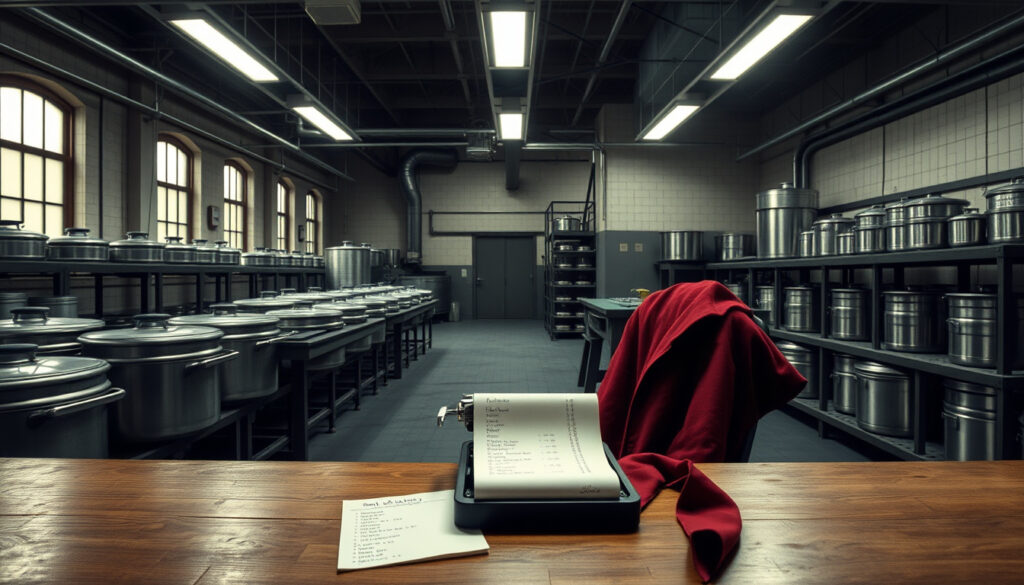
This is the site where Schindler made enamelware and, from 1941, employed Jewish forced laborers from the Kraków ghetto. The archive of the Memorial to the Silent Heroes records that he bribed camp commandant Amon Göth to let workers live on the factory premises.
- The factory is one of the few intact sites connected to a major rescue story.
- The museum makes the rescuer’s side of the story its centerpiece.
- Kraków tourism now treats the factory as a companion stop to the ghetto and Plaszow sites.
Are there any Schindler Jews still alive today?
- Yes — survivors and their descendants continue to identify as Schindler Jews, though no official registry publishes a running count.
- The original Brünnlitz workforce numbered roughly 1,100 at the end of the war, by the Memorial to the Silent Heroes’ count.
- In the film’s epilogue, survivors appear at the real grave; visitors still leave stones there today.
Why this matters: the rescue isn’t only an archive story. Living people carry the name “Schindler Jew,” which makes the museum and the memory more than exhibit pieces.
What part of Schindler’s List is not true?
Start with what the film is: a dramatized adaptation of Thomas Keneally’s novel Schindler’s Ark, not a documentary (Encyclopaedia Britannica (reference publisher)). Spielberg compressed timelines, merged characters, and added visual symbols. The most famous is the girl in red — a storytelling device, not a literal documented event, as TIME’s true-story account notes (TIME (news magazine)).
- The factory, the ghetto, and Amon Göth are real; Schindler did bribe Göth to protect workers.
- The list was a real transport record for the move to Brünnlitz; the film gives it a dramatic weight it did not have as a document.
- The farewell and the ring are dramatized from documented gratitude, not filmed as-is.
Who turned down the role of Oskar Schindler?
- The familiar names attached to the role reportedly vary by retelling, and the film’s production history does not confirm them.
- What is confirmed: the role went to Liam Neeson, whose performance became the standard image of Schindler.
For more on actors who built careers around World War II stories, see our Tom Hanks biography.
Who put the rose on Schindler’s grave?
- In the film’s epilogue, Liam Neeson — as Schindler — places a rose on the grave on Mount Zion.
- At the real grave, visitors follow Jewish tradition and leave stones instead. The rose is cinema; the stones are the living custom.
A film needs a moral shape. History doesn’t have one. Audiences get the emotional truth of the rescue at the cost of the messy, compromised man who actually performed it.
The implication: watch the film for the emotion, but read the sources for the man. They do not fully overlap.
The catch: the film’s moral clarity works precisely because the real man was harder to read.
Key dates in Schindler’s life
Nine dates trace the arc from factory owner to rescuer to memory.
- — Born in Zwittau, Austria-Hungary, now Svitavy in the Czech Republic.
- — Married Emilie Pelzl.
- — Took over the Kraków enamelware factory that became Emalia; according to Muzeum Svitavy (birthplace museum, Czechia), he had arrived in the city on 17 October 1939, weeks after the Nazi invasion.
- — Moved production and workers to Brünnlitz to keep them from Auschwitz (Memorial to the Silent Heroes (Berlin memorial to Nazi-era rescuers)).
- — Crossed into American-occupied territory with Emilie; the Brünnlitz workers survived.
- — Emigrated to Argentina.
- — Returned to West Germany without Emilie.
- — Died in Hildesheim, West Germany.
- — Schindler’s List premiered and won seven Academy Awards (TIME (news magazine)).
What this means: the rescue was concentrated in a few wartime years, but its memory has been under construction ever since.
What’s confirmed, what’s still unclear
The record is clearest on the rescue itself and murkiest on the man behind it.
Confirmed facts
- Schindler was a Nazi Party member.
- He saved more than 1,200 Jewish workers, according to Yad Vashem.
- The Emalia factory building in Kraków is now the Oskar Schindler Enamel Factory museum.
- He died in Hildesheim, West Germany, on 9 October 1974.
What’s unclear
- The balance of self-interest against altruism in his motives remains debated.
- The number saved varies by source: roughly 1,100 in some memorial records, more than 1,200 according to Yad Vashem.
- The precise date and details of his separation from Emilie are not fully documented.
- No official count of living Schindler Jews is published.
- Some casting claims about Schindler’s List rest on anecdote rather than confirmed production records.
The distribution matters: the facts of the rescue are solid, while the interpretation is open. That is exactly the pattern you want from a complicated historical figure.
What the sources say
Three voices anchor the story: the institutions that documented the rescue and the source that turned it into cinema.
Oskar Schindler saved more than 1,200 Jews by employing them in his enamelware factory. That is the core of Yad Vashem’s account of his rescue work.
Yad Vashem (Holocaust remembrance authority)
Encyclopaedia Britannica describes the film as based on the true story of a German Nazi who saved more than 1,000 Jews by employing them in his factory.
Encyclopaedia Britannica (reference publisher)
About 300 women from Schindler’s workforce were deported to Auschwitz during the move to Brünnlitz. Schindler secured their release — the detail that turns the factory move from logistics into rescue.
Memorial to the Silent Heroes (Berlin memorial to Nazi-era rescuers)
The pattern: the sources agree on the outcome — more than a thousand people lived — while the interpretation keeps moving.
What remains of the Schindler story
The Schindler story has outlived every attempt to file it under one moral. A Nazi who rescued. A profiteer who paid for lives with bribes. A husband who lost his marriage and his fortune while his workers gained everything. For a generation meeting this history through screens and school trips, the choice is clear: walk through the Emalia factory in Kraków, read what Yad Vashem and the Holocaust Memorial Museum documented, and keep the contradictions intact — or accept the film’s hero as the whole story, and lose the man who really lived it.
schindlers-factory-tickets.com, en.wikipedia.org, britannica.com, biography.com
Frequently asked questions
Where is Oskar Schindler buried?
On Mount Zion in Jerusalem. Deutsche Biographie records that his grave follows his wish to be buried in the city.
Who wrote the book Schindler’s List?
Thomas Keneally wrote the novel Schindler’s Ark, on which the film Schindler’s List is based. The film is a dramatized adaptation of that book.
How many people did Oskar Schindler save?
More than 1,200, according to Yad Vashem. Encyclopaedia Britannica and the Memorial to the Silent Heroes put the figure at roughly 1,100. The range reflects the difference between counting names and counting memories.
What was Schindler’s Enamel Factory used for?
It was an enamelware factory in Kraków that employed Jewish forced laborers from the Kraków ghetto. The building is now the Oskar Schindler Enamel Factory museum, a branch of the Historical Museum of the City of Kraków.
Is Schindler’s List based on a true story?
Yes, as a dramatized adaptation. The film compresses timelines, merges characters, and adds symbolic elements such as the girl in red to a documented rescue story.
What happened to Emilie Schindler?
She survived the war with Oskar, moved to Argentina, and remained there after Oskar returned to West Germany in 1958 without her. Yad Vashem recognized Oskar and Emilie together as Righteous Among the Nations.
What is Oskar Schindler’s legacy?
A documented rescue of more than 1,200 workers, honored by Yad Vashem, and a film that made the rescue a global reference point. The Emalia factory in Kraków preserves the first; the debate about his motives preserves the second.
More related posts
 Gary Stevenson: Biography, Net Worth, Criticisms, and Politics
 Katy Wix: Ghosts Exit, Ted Lasso Role, Illness & Net Worth
 Jacob Elordi: Age, Height, Net Worth & Movies (2025)
 Anger Management: Techniques, Causes & Medications Explained
 Luke Shaw: Career Stats, Injury History, and Family Life
 Dana White Net Worth 2025: $500M-$520M UFC Empire
 Define Estranged: Meaning, Synonyms, and Differences
 Sharon Rooney: Biography, Barbie Role, and More