Myra Hindley: Biography, Victims, and Latest Information
Few names from postwar Britain still land with the force of Myra Hindley’s — shorthand for the Moors murders that the tabloids never fully let go, yet more than two decades after her death in prison, the verified record is easier to reach than the myth: a 1966 conviction, five child victims, and a case file that still has open edges. This page separates what official sources actually confirm from what remains disputed.
Number of victims: 5 · Years of murders: 1963–1965 · Conviction year: 1966 · Death year: 2002 · Life sentence: Whole life tariff · Accomplice: Ian Brady
Quick snapshot
- Convicted on 6 May 1966 and sentenced to two concurrent life sentences (BBC On This Day (contemporary trial archive))
- Five known victims: Edward Evans, Lesley Ann Downey, John Kilbride, Pauline Reade, Keith Bennett (BBC News (UK public broadcaster))
- Died in prison in 2002 (BBC News (UK public broadcaster))
- Whether Hindley was a willing participant or was coerced by Ian Brady — the central unresolved question in the case record (BBC News (case background))
- Full details of her role in planning the murders (BBC News (case background))
- Whether her later expressions of remorse were genuine (BBC News (case background))
- 1961: meets Ian Brady (BBC News (case background))
- 1963–1965: five children murdered (BBC News (UK public broadcaster))
- 1966: convicted; whole life tariff follows (BBC On This Day (contemporary trial archive))
- 2013: prison papers released (BBC News (case background))
- Keith Bennett’s body has never been recovered (BBC News Manchester (regional reporting))
- Police said the investigation into case-related issues was ongoing (BBC News (UK public broadcaster))
Six facts anchor every serious account of the case; fixing them first makes the debate that follows much easier to follow.
| Full name | Myra Hindley |
|---|---|
| Born | , Manchester, England |
| Died | , Bury St Edmunds, England |
| Nationality | British |
| Occupation | Typist; later serial killer |
| Known for | Moors murders with Ian Brady (BBC News (UK public broadcaster)) |
What should readers know first about Myra Hindley?
The basics are not in dispute. The argument starts only when you ask why she did it — and that question has no settled answer.
Who was Myra Hindley?
- Born on 23 July 1942 in Manchester; worked as a typist before her arrest.
- Met Ian Brady in 1961; the two were later charged together.
- Convicted on 6 May 1966 of two murders and acting as an accessory to a third (BBC On This Day (contemporary trial archive)).
At the time of her conviction, Hindley was 23 — younger than most people who now write about her. The trial record shows a woman who was present during the murders, but it says little about her inner life, which is part of why she remains a riddle.
Summary of the Moors murders
- Five children and teenagers were murdered over roughly 18 months between 1963 and 1965; the known victims are Edward Evans, Lesley Ann Downey, John Kilbride, Pauline Reade, and Keith Bennett (BBC News (UK public broadcaster)).
- Children were lured to the couple’s home in Manchester before being tortured and killed (BBC On This Day (contemporary trial archive)).
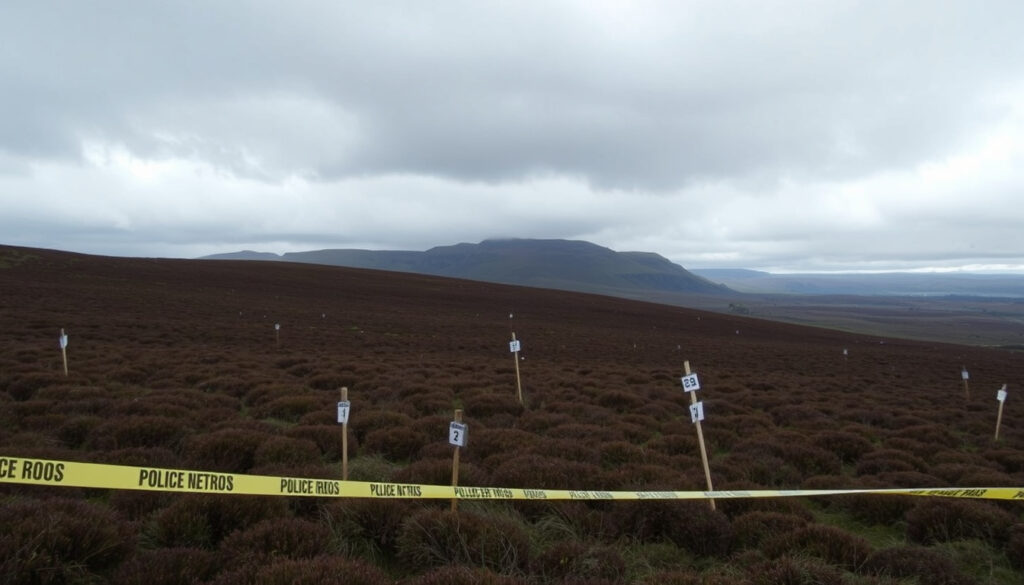
- Four of the five victims were buried on Saddleworth Moor (BBC News Manchester (regional reporting)).
The murders took place in Greater Manchester and on Saddleworth Moor in the Pennines. In 1987, Brady and Hindley confessed to the killings of Pauline Reade and Keith Bennett — crimes they had not been convicted of at trial (BBC News (UK public broadcaster)).
Conviction and life sentence
- The trial ended on 6 May 1966 with Hindley sentenced to two concurrent life sentences (BBC On This Day (contemporary trial archive)).
- She was found not guilty of the killing of John Kilbride; Ian Brady received three concurrent life sentences (BBC On This Day (contemporary trial archive)).
Hindley was given a whole life tariff — a sentence with no release date. She served 36 years and was never released. The trial judge’s own assessment is preserved in the archive, but the sharpest description of the crimes was aimed at Brady, not at her.
What is the latest verified information about Myra Hindley?
Since her death, the case has moved in small, evidence-shaped steps rather than dramatic reveals. The verified updates are specific — and mostly archival.
Hindley’s death and subsequent developments
- Hindley died on 15 November 2002 at West Suffolk Hospital after a chest infection and suspected heart attack (BBC News (UK public broadcaster)).
- Greater Manchester Police said after her death that the investigation into issues arising from the Moors murders case was ongoing (BBC News (UK public broadcaster)).
- Ian Brady died in 2017 (BBC News (UK public broadcaster)).
- Pauline Reade’s remains were reburied in 2018 after being found on the moor (BBC News (UK public broadcaster)).
The fact that police kept an open investigation for years after Hindley’s death is worth pausing on. The case was never closed the way most convictions close cases; the search for physical evidence continued on the moor.
Release of prison papers in 2013
- Prison papers released in 2013 revealed details of Hindley’s personality and daily life in custody.
- The papers include her own written statements, including her claim that “the woman who committed those crimes is dead.”
The release gave researchers a primary source instead of a secondhand image. It did not settle the question of remorse — it just moved the argument from the tabloids into the archives.
Recent academic research on her prison role
- Academic analyses — notably Mark Pettigrew’s 2016 work — examine Hindley’s role as a policy architect in prison reform during her decades in custody.
- This research frames her as an institutional actor, not merely a symbolic one.
This is the least-known part of the story: a woman serving a whole life tariff who became involved in prison policy work. The shift in academic approach matters because it changes the question from “was she evil?” to “what did the system do with her — and what did she do inside it?”
For researchers and journalists, the 2013 release turned Hindley from a tabloid symbol into a documented institutional actor — which is more complicated to write about, and far more accurate.
Which official sources confirm key claims about Myra Hindley?
The case is unusually well documented at the official level. The problem for readers is not finding sources — it is knowing which layer of the record to trust.
Court records and trial transcripts
- The trial records are held at the National Archives.
- The verdict and sentencing on 6 May 1966 are preserved in the BBC’s On This Day archive (BBC On This Day (contemporary trial archive)).
- The prosecution’s chief witness was David Smith, whose testimony is part of the documented trial record (BBC News (UK public broadcaster)).
“Held at the National Archives” is the kind of phrase that sounds bureaucratic and is actually essential: it means a researcher can go to the original documents rather than relying on what journalists said about them.
Home Office documents
- Home Office-era policy set the whole life tariff that kept Hindley in prison.
- Public records document that she was never released and remained in custody until death.
Hindley’s case became a recurring reference point in debates about whole life tariffs and whether any prisoner should die without a review date. The policy context matters: her sentence was not just about her crimes; it was also about what the state does when public anger meets a life sentence.
BBC archives and news reports
- BBC On This Day preserves the 1966 verdict report (BBC On This Day (contemporary trial archive)).
- BBC News has documented the victims, the 1987 confessions, the searches, and the deaths of both killers (BBC News (UK public broadcaster)).
- Regional BBC coverage tracks the Saddleworth Moor search and the unresolved recovery of Keith Bennett (BBC News Manchester (regional reporting)).
The BBC’s long, near-continuous coverage functions as a de facto public archive. Encyclopedic summaries — including the Wikipedia entry on the case — aggregate these official sources; useful for orientation, but no substitute for the underlying records.
What is still unclear or unverified about Myra Hindley?
For all the documentation, the core psychological questions remain open. Anyone who claims to have settled them is overstating the record.
Extent of her agency and coercion
- Whether Hindley was a willing participant or was coerced by Ian Brady remains unresolved.
- The trial record confirms her presence during the murders but says little about her internal state.
The two competing accounts — a cold accomplice versus a woman controlled by an abusive partner — have driven biographies, films, and arguments for decades. The verified record is not empty on this question, but it is thinner than the confidence of either side suggests.
Unreleased evidence from the case
- Some evidence from the case has never been made public.
- Keith Bennett’s body has never been recovered, so part of the physical record is simply missing (BBC News Manchester (regional reporting)).
“Never been made public” is doing a lot of work in this case. It means that claims about exactly what happened on the moor sit on top of a record with deliberate gaps — not because historians failed, but because parts of the record remain sealed.
Conflicting accounts of her remorse
- Hindley’s later statements that she had changed are documented.
- Whether those statements were genuine is disputed by victims’ families and by many commentators.
- The often-quoted phrase about her being “evil beyond belief” has been attributed to a Home Office official, but it is not part of the official record.
That last point is the pattern in miniature: the most dramatic quote in the case’s folklore cannot be verified, while the less dramatic documents can. The documents say a prisoner spent decades petitioning for release; they do not say what was in her heart.
Because key evidence has never been made public, any account claiming to know exactly how much Hindley “really” did or felt is interpretation, not report — including parts of this article’s framing.
What are the most common user questions on Myra Hindley?
The questions people actually search about Hindley are simpler than the academic debate, and most of them have straightforward answers from the record.
Did she have children?
- No. The documented record shows that Hindley had no children.
Her public identity was defined entirely by the case and by her relationship with Ian Brady — there was no separate private life visible in the sources.
Why was she not released?
- She was given a whole life tariff — life meaning life, with no release date.
- She died in prison in 2002 after serving 36 years (BBC News (UK public broadcaster)).
The legal answer is the tariff; the surrounding debate made the question of release far more charged. Her own legal efforts never changed the outcome, and she was held until death.
What was her relationship with Ian Brady?
- They met in 1961 and became a couple; the relationship lasted through the murders and the trial.
- Accounts describe the relationship as long-term and abusive, with Brady as the dominant figure.
- Brady died in 2017, fifteen years after Hindley (BBC News (UK public broadcaster)).
The relationship is the hinge of the whole case. If Hindley was an equal partner, the standard account holds; if she was coerced, then the legal verdict and the moral verdict separate — which is exactly the argument that has never closed.
Why this matters: these routine questions are the ones real readers type, and they are answerable from the record. The questions that are not answerable are the psychological ones — and they should be labeled as such.
Timeline signal
Eight dates carry the entire case, from birth to the 2013 archive release. Read them once and the shape of the story stops blurring.
| Date | Event |
|---|---|
| Myra Hindley born in Manchester (BBC News (case background)). | |
| Meets Ian Brady (BBC News (case background)). | |
| Five children murdered (BBC News (UK public broadcaster)). | |
| Arrested after the murder of Edward Evans (BBC News (case background)). | |
| Convicted; sentenced to life (BBC On This Day (contemporary trial archive)). | |
| Prison, petitions, and policy work (BBC News (case background)). | |
| Dies in hospital (BBC News (UK public broadcaster)). | |
| Prison papers released (BBC News (case background)). |
The timeline’s real signal: the gap between 1966 and 2013 is where the public image froze. The papers released in 2013 are the closest thing we have to Hindley’s own voice after conviction.
Confirmed facts vs. what remains unclear
This is the central partition of this article. Everything on the left is verified; everything on the right is open — and each side should be read differently.
Confirmed facts
- Hindley was present during the murders of five children (BBC News (UK public broadcaster)).
- She was convicted of two murders and acting as an accessory in a third (BBC On This Day (contemporary trial archive)).
- She died in prison in 2002 (BBC News (UK public broadcaster)).
- She served 36 years before death (1966–2002).
What’s unclear
- Whether she was a willing participant or was coerced by Brady.
- Full details of her involvement in the planning of the murders.
- Whether her later claims of remorse were authentic.
- Whether Keith Bennett’s remains will ever be recovered (BBC News Manchester (regional reporting)).
The balance here is deliberate. The verified facts are all legal and temporal — what a court established, when someone died. The unverified questions are all psychological. That is not an accident; it is the structure of the case.
What was said about the case
Three statements, from three very different perspectives, capture why the case refuses to settle.
I am a very different person now. The woman who committed those crimes is dead.
Myra Hindley, from her later prison papers (released 2013)
Hindley was a victim of her sex; being a woman who murdered children made her uniquely monstrous in the public eye.
Mark Pettigrew, academic analysis (2016)
Three calculated, cruel, cold-blooded murders.
Judge Fenton Atkinson, sentencing remarks, 1966 (BBC On This Day (contemporary trial archive))
The first two quotes offer competing frames: the prisoner who claimed to have changed, and the academic who argues the public could never see past her gender. The third is the legal bedrock beneath both.
Where the case stands now
More than sixty years after the first murder, the Hindley case resists a tidy ending. The verified record — the 1966 trial, the five victims, the 1987 confessions, the deaths in 2002 and 2017 — is shorter than the mythology built around it, and the two will probably never fully separate. For anyone writing about the case, the choice is clear: anchor every sentence to the court record and the documented news archive, or inherit the tabloid legend she could never outrun. For journalists in particular, the implication is practical: the sources that look most dramatic are often the least reliable, and the plain ones — trial transcripts, news archives, official papers — are the only ground that holds.
bbcselect.com, news.bbc.co.uk, bbc.com, bbc.com, bbc.com, bbc.com, crimeandinvestigation.co.uk, news.bbc.co.uk
Frequently asked questions
Was Myra Hindley related to anyone famous?
No. The verified record shows no famous relatives. Hindley was born on 23 July 1942 in Manchester, and her place in public history comes entirely from the Moors murders case.
What happened to Ian Brady after the trial?
Brady received three concurrent life sentences in 1966 (BBC On This Day (contemporary trial archive)). He and Hindley confessed in 1987 to the killings of Pauline Reade and Keith Bennett (BBC News Manchester (regional reporting)). He died in 2017, and Keith Bennett’s body has still never been recovered (BBC News (UK public broadcaster)).
Did Myra Hindley ever marry?
No. She never married. The defining relationship of her adult life was with Ian Brady, whom she met in 1961.
Why are the Moors murders still talked about?
Because the case combines durable elements: five child victims, bodies hidden on Saddleworth Moor, a female defendant, a life sentence that became a policy battleground, and one body that has never been found. The BBC’s continuing coverage reflects that public memory has not closed the file (BBC News Manchester (regional reporting)).
How many times did Myra Hindley appeal her sentence?
The verified record does not support a specific number. What is documented is that she held a whole life tariff, was never released, and remained in prison until her death in 2002 after 36 years.
Are any of the victims’ bodies still missing?
Yes. Four of the five victims were buried on Saddleworth Moor, but Keith Bennett’s body has never been recovered (BBC News Manchester (regional reporting)). Pauline Reade’s remains were found and reburied in 2018 (BBC News (UK public broadcaster)).
What was Myra Hindley’s relationship with her family?
The available record says little about her family relationships beyond her Manchester upbringing. She had no children, and after the 1966 conviction her public identity was defined almost entirely by the case.
Did Myra Hindley write any books?
No verified book by Hindley exists in the sources reviewed here. Her written legacy runs through letters and statements that surfaced with the prison papers released in 2013.
Related reading
More related posts
 Tilda Swinton Biography: Family, Oscar Win, Partners & Net Worth
 Minecraft Mods: Best Free Mods, Legal Guide & Top Platforms
 M&S Christmas 2024 – Ad Series, Foods and Key Dates Guide
 Toyah Willcox: Career, Personal Life, and Top Questions
 HD Parque Cri tóbal Gran Canaria: Family Hotel with Water Park
 Myron Gaines: Verified Facts, Real Name, and Controversies (2025)
 Dominic Sandbrook: Biography, Podcast, Books, and Personal Life
 Bebe Rexha: Biography, Relationships, Health, and FAQs