Kate Middleton Wedding Dress – Designer, Details and Legacy
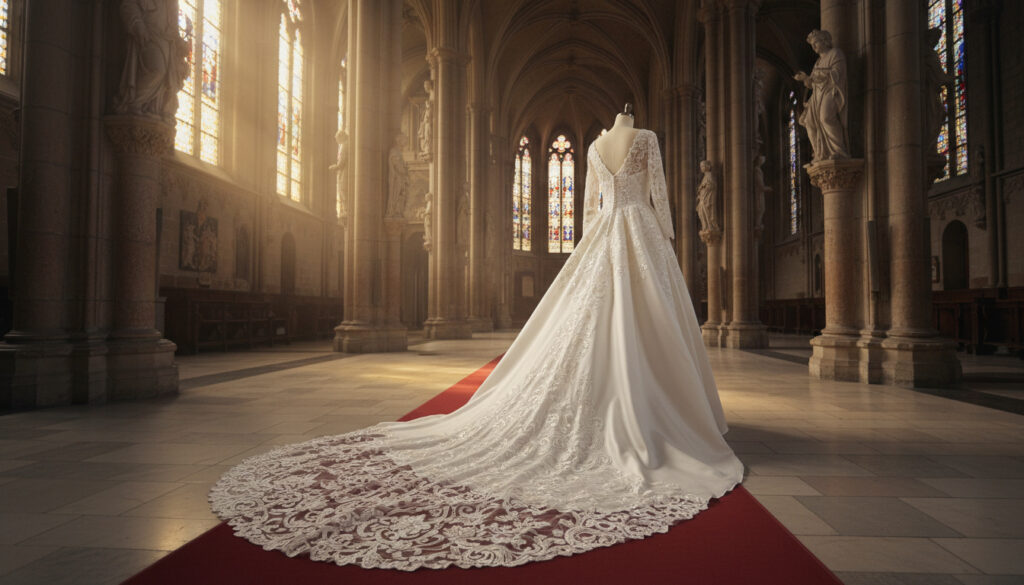
Kate Middleton married Prince William at Westminster Abbey on April 29, 2011, in a gown that instantly entered the canon of royal fashion history. Sarah Burton, then creative director of Alexander McQueen, designed the dress, creating a garment that merged Victorian corsetry traditions with contemporary elegance. The commission remained one of the fashion house’s most closely guarded secrets until the bride emerged from her car at the Abbey.
The construction involved meticulous collaboration between Burton and Middleton, focusing on shape, style, and color specificity. Artisans at the Royal School of Needlework at Hampton Court Palace executed the lace appliqué work, attaching machine-made floral motifs onto silk net tulle by hand. The final design incorporated specially sourced UK fabrics, including ivory and white satin gazar for the skirt and underskirt trim.
Beyond the ceremony, the dress generated substantial cultural impact, drawing record crowds during its subsequent exhibition and influencing bridal fashion trends worldwide. Replicas proliferated globally, cementing the gown’s status as a reference point for modern royal weddings.
Who Designed Kate Middleton’s Wedding Dress?
| Designer Sarah Burton for Alexander McQueen |
Wedding Date April 29, 2011 |
Key Feature 270 cm Victorian semi-bustle train |
Est. Cost £250,000 (unconfirmed) |
- Sarah Burton served as creative director of Alexander McQueen during the design process
- The aesthetic drew heavily from Victorian corsetry and 19th-century lace traditions
- Floral motifs throughout the design echoed an opening flower
- The Royal School of Needlework executed all lace appliqué by hand at Hampton Court Palace
- Karl Lagerfeld publicly praised the classic proportions, comparing the look to 1950s royal weddings
- The designer’s identity remained secret until the ceremony began
- The gown combined traditional royal requirements with McQueen’s modern sensibility
| Attribute | Detail |
|---|---|
| Designer | Sarah Burton for Alexander McQueen |
| Wedding Date | April 29, 2011 |
| Venue | Westminster Abbey |
| Bodice Fabric | Ivory satin with Victorian corsetry inspiration |
| Skirt Fabric | Ivory and white satin gazar with soft pleats |
| Train Length | 270 cm (110 inches) |
| Lace Technique | Machine-made floral motifs appliquéd onto silk net |
| Buttons | 58 covered buttons up the back |
| Tradition Details | Blue ribbon inside for “something blue” |
Burton worked closely with Middleton to refine the silhouette, incorporating padded hips and a narrowed waist to achieve the distinctive Victorian-inspired shape. The design process emphasized UK-sourced materials, with the satin gazar specifically selected from British fabric suppliers. British Heritage documents the extensive collaboration between the designer and the royal bride.
What Materials and Construction Details Defined the Dress?
Fabric Selection and Structure
The bodice utilized ivory satin constructed with Victorian corsetry techniques, featuring strategic padding at the hips and waist narrowing to create a distinctive silhouette. For the skirt, Burton selected ivory and white satin gazar—a crisp, lightweight silk fabric—arranged with soft pleats designed to echo an opening flower. The underskirt trim and train incorporated additional layers of organza and gazar, all sourced from UK suppliers.
Machine-made lace floral motifs were appliquéd onto silk net tulle, requiring extensive handwork by the Royal School of Needlework. The back of the gown featured 58 covered buttons running from the neckline to the waist, each individually crafted to match the fabric.
The Train and Silhouette
The train measured 270 cm (approximately 110 inches or just under 3 meters), forming a Victorian-style semi-bustle at the rear. This length balanced the full skirt while maintaining mobility for the Westminster Abbey ceremony. Wikipedia’s detailed entry provides architectural diagrams of the silhouette.
The lace appliqué work was executed by artisans at Hampton Court Palace, though no confirmed hour count was publicly reported for the total construction time. The institution’s involvement marked a continuation of royal tradition, as they have provided embroidery for British monarchs since 1870.
Additional construction details included a blue ribbon sewn inside the bodice to satisfy the “something blue” tradition, while the bodice lace itself honored the “something old” custom. The British Museum holds comparable historical lace examples from the 19th century that influenced the design aesthetic.
What Accessories Complemented the Wedding Dress?
The Veil
The veil followed a modern design calibrated to the dress’s substantial scale, falling on a plain fabric panel positioned between embroidered areas. This coordination ensured visual continuity without overwhelming the lace details on the bodice. The veil’s length and attachment method were specifically engineered to work with the Halo Tiara lent to Middleton for the occasion.
Footwear
The shoes were covered in matching ivory satin gazar, pleated to complement the skirt fabric, with additional lace appliqué by the Royal School of Needlework. While not visible during the wedding ceremony itself, the footwear was later displayed alongside the gown in exhibitions.
Jewelry
Middleton wore diamond and gold earrings commissioned by her parents specifically for the wedding. The design drew inspiration from the Halo Tiara, creating coherence between the headpiece and jewelry. These earrings were also displayed with the dress in subsequent exhibitions.
Where Is Kate Middleton’s Wedding Dress Today?
Exhibition History
From July 23 to October 3, 2011, the original dress appeared in a special exhibition at Buckingham Palace. The display included not only the gown but also the shoes, earrings, a replica bouquet, and the wedding cake. This presentation drew record attendance figures and raised £10 million for charity and the Royal Collection. A film featuring Sarah Burton detailing the creation process accompanied the exhibition. Footage from the exhibition remains available documenting the display.
Following the exhibition’s closure, the dress returned to private preservation by the couple. The location of the current storage remains private, though it is understood to be maintained under archival conditions suitable for historic royal garments.
The 2011 Buckingham Palace exhibition generated £10 million in revenue, with proceeds supporting charitable causes and the Royal Collection. This figure represented one of the most successful single-garment exhibitions in the palace’s history.
Replicas and Influence
The gown’s influence extended immediately into the commercial bridal market, with thousands of replicas produced and sold worldwide. These reproductions ranged from high-end couture copies to accessible retail versions, demonstrating the design’s broad appeal. Luxuo tracked the global proliferation of these reproductions and their impact on subsequent bridal trends.
The surprise reveal of the dress designer generated massive media coverage, with Burton’s appointment cementing Alexander McQueen’s reputation for royal commissions. This connection to Six the Musical Tour highlights continuing British cultural exports, though the dress itself remains distinct from theatrical costume design in its construction methods.
Timeline of the Dress’s Creation and Display
- 2009–2010: Initial fittings begin with Sarah Burton at Alexander McQueen, establishing the Victorian corsetry direction and fabric selection.
- January 2011: Final embroidery completed by the Royal School of Needlework at Hampton Court Palace.
- April 29, 2011: Worn at Westminster Abbey for the marriage to Prince William.
- July 23, 2011: Exhibition opens at Buckingham Palace, displaying the dress alongside accessories and cake.
- October 3, 2011: Exhibition closes after record attendance.
- 2011–2024: Continues to influence bridal fashion trends and replica production globally. BBC archives document the ongoing cultural impact.
What Do We Know About the Dress’s Cost?
| Established Information | Information That Remains Unclear |
|---|---|
| The Middleton family reportedly paid for the dress | Exact total cost never officially disclosed by the Royal Family |
| Fabric sourcing utilized UK suppliers for satin gazar and lace | Specific breakdown of material costs versus labor costs |
| Construction involved the Royal School of Needlework and Alexander McQueen atelier | Total hours invested by individual artisans |
| Subsequent exhibition generated £10 million in revenue | Whether insurance valuations match the £250,000 tabloid estimates |
British tabloids claimed a £250,000 price point shortly after the wedding, a figure that the Royal Family officially denied. The lack of disclosed accounting leaves the actual cost a matter of estimation, though the involvement of high-end couture techniques and royal embroidery suggests significant investment.
What Cultural Impact Did the Dress Create?
Karl Lagerfeld praised the gown’s classic proportions, lace craftsmanship, and veil coordination, specifically comparing the aesthetic to 1950s royal weddings including Queen Elizabeth’s ceremony. This endorsement from the Chanel creative director validated the design within high fashion circles beyond royal enthusiasts.
The gown’s Victorian-inspired silhouette triggered renewed interest in structured bodices and full skirts within the bridal industry. Designers reported increased demand for similar corsetry techniques and UK-sourced lace in the years following the 2011 ceremony. The dress’s influence paralleled that of other historic royal wedding gowns, establishing a contemporary reference point for ceremonial fashion.
Media coverage of the surprise reveal demonstrated the continued cultural power of royal fashion moments. Vogue’s analysis placed the gown within the context of McQueen’s broader design legacy, noting how Burton balanced the house’s avant-garde reputation with royal protocol requirements.
Sources and Documentation
Primary documentation of the dress’s construction appears in a film produced for the 2011 Buckingham Palace exhibition, featuring Sarah Burton discussing the design process and fabric selection. Karl Lagerfeld’s contemporaneous praise was recorded in fashion press coverage. The official Royal.uk wedding page confirms the Alexander McQueen commission and Sarah Burton’s central role.
Detailed fabrication specifications, including the 270 cm train measurement and Victorian corsetry inspiration, are archived in the Royal School of Needlework’s records of the commission. The Buckingham Palace exhibition records provide attendance figures and revenue documentation for the charitable proceeds.
Summary
Sarah Burton for Alexander McQueen designed Kate Middleton’s wedding dress, creating a garment that utilized Victorian corsetry techniques, UK-sourced satin gazar, and hand-appliquéd lace by the Royal School of Needlework. The 270 cm train and 58 covered buttons defined the silhouette, while the design generated lasting influence on bridal fashion despite uncertainty regarding its exact cost. The dress raised £10 million during its 2011 Buckingham Palace exhibition and continues to serve as a reference point for royal ceremonial attire. Those interested in contemporary British cultural events might also follow the England v France Six Nations 2025 coverage.
Frequently Asked Questions
What inspired Kate Middleton’s wedding dress design?
The design drew from Victorian corsetry traditions, 19th-century lace styles, and floral motifs suggesting an opening flower. Sarah Burton incorporated these elements with Alexander McQueen’s modern aesthetic.
How many hours did it take to make Kate Middleton’s wedding dress?
No confirmed hours were publicly reported. The Royal School of Needlework executed the lace appliqué by hand, and the construction involved meticulous coordination between Burton and Middleton, though specific time records remain private.
Can you buy a replica of Kate Middleton’s wedding dress?
Yes. Thousands of replicas were produced and sold globally following the 2011 wedding, ranging from high-end couture copies to accessible retail versions.
What was the “something blue” in Kate Middleton’s wedding dress?
A blue ribbon was sewn inside the bodice to satisfy the traditional “something blue” requirement for bridal attire.
How long was Kate Middleton’s wedding dress train?
The train measured 270 cm, approximately 110 inches or just under 3 meters, forming a Victorian-style semi-bustle.
What shoes did Kate Middleton wear with her wedding dress?
She wore shoes covered in matching ivory satin gazar with pleating and lace appliqué by the Royal School of Needlework, though they remained unseen during the ceremony itself.
What jewelry did Kate Middleton wear on her wedding day?
She wore diamond and gold earrings commissioned by her parents, inspired by the Halo Tiara design, and the Halo Tiara itself lent by the Queen.
More related posts
 Willem Dafoe: Ethnicity, Health, Film Career Facts
 Nanette Newman: Biography, Net Worth, Family, and Career
 Robert Kennedy Sr vs Jr: Assassination, Health, and Family Facts
 Josephine Langford: After Movies, Sister, and 2025 Projects
 Tree Houses Ireland: Prices, Retailers & Kids Options (2025)
 Gerry Adams: Allegations, IRA Claims, and ‘Say Nothing’ Explained
 Joshua Jackson’s Partner in 2026: Is He Dating Katie Holmes
 Henna Designs: Types, Trends, Cost, and Cultural Meaning in 2026