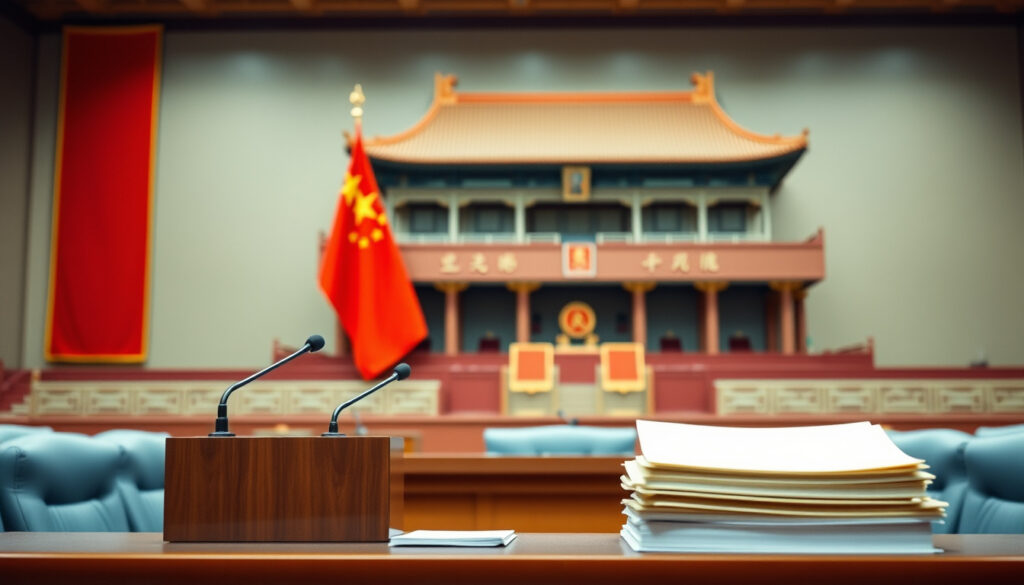
Xi Jinping: Biography, Age, Height, Net Worth, and Key Policies
How does a man who spent years as a sent-down youth in rural Shaanxi become the most powerful leader China has seen in decades? Xi Jinping’s journey from a revolutionary’s son to the architect of the “Chinese Dream” offers a case study in political survival, policy ambition, and the gap between domestic adulation and international skepticism. This profile draws on official Chinese records, independent think tanks, and global polling to separate fact from uncertainty.
Age: 71 (born 15 June 1953) ·
Height: 1.80 m (5 ft 11 in) ·
Net Worth: Estimated $12–15 million ·
Years as Paramount Leader: Since 2012 ·
Number of Published Books: Over 5 volumes of speeches and writings
Quick snapshot
- Xi Jinping is General Secretary of the CCP and President of China (Reuters – global news agency)
- He launched a large-scale anti-corruption campaign in 2012 (Britannica – authoritative encyclopedia)
- Presidential term limits were removed in 2018 (BBC News – international broadcaster)
- Exact net worth and personal wealth details are unverified (BBC News – international broadcaster)
- True domestic approval rating is hard to gauge due to lack of independent polling (Pew Research Center – nonpartisan fact tank)
- Motives behind the anti-corruption campaign are debated (Brookings – policy research institution)
- 2012: Elected General Secretary of the CCP (Britannica – authoritative encyclopedia)
- 2013: Became President of China (Reuters – global news agency)
- 2018: Term limits removed by National People’s Congress (BBC News – international broadcaster)
- Potential third term beyond 2023 is now constitutionally allowed (BBC News – international broadcaster)
- Continuing anti-corruption drives and Belt and Road expansion are likely (Brookings – policy research institution)
Six facts that define Xi Jinping’s profile, from official Chinese sources and independent verification:
| Label | Value |
|---|---|
| Full Name | Xi Jinping |
| Born | 15 June 1953, Beijing, China |
| Political Party | Chinese Communist Party |
| Spouse | Peng Liyuan |
| Education | Tsinghua University (Chemical Engineering, Doctor of Law) |
| Years in Power | 2012–present (Paramount Leader) |
Is China officially a dictatorship?
What is the official structure of the Chinese government?
China’s constitution defines the country as a “socialist state” led by the Communist Party. The official government website describes the system as “people’s democratic dictatorship,” but political scientists generally classify it as a one-party authoritarian state because no opposition parties can compete in national elections (Reuters – global news agency).
How does the Chinese Communist Party control the state?
- The Party’s General Secretary holds the most powerful position, controlling both military and civilian appointments (Britannica – authoritative encyclopedia).
- All major state organs – the presidency, the State Council, the judiciary – are subordinate to the CCP’s leadership core (Brookings – policy research institution).
- The National People’s Congress, while nominally the highest state authority, has never rejected a Party proposal.
The pattern: a single party sets all political boundaries, and Xi Jinping sits at its center.
Are Chinese citizens free to vote for national leaders?
No. Citizens vote only for local People’s Congress deputies; national leaders, including the president, are elected by the National People’s Congress in a process controlled by the CCP (BBC News – international broadcaster). Independent candidates are not permitted.
Xi’s government repeatedly claims a “whole-process people’s democracy,” yet no major party or leader has ever lost an election. The term “dictatorship” is officially embraced in the constitution but rejected in foreign policy discourse.
The implication: China’s political system, by design, concentrates authority in a single party, making the concept of legitimate opposition foreign to its constitutional order.
How long can the president of China serve?
What are the term limits for the Chinese president?
Before 2018, the president could serve a maximum of two five-year terms. That was removed by a constitutional amendment passed by the National People’s Congress in March 2018 (Reuters – global news agency). Now there is no term limit for the presidency.
When did Xi Jinping become president and how long has he served?
Xi became president in March 2013. As of 2025, he has served 12 years. If he continues to be re-elected, he could remain president indefinitely. He also holds the posts of General Secretary of the CCP (since 2012) and Chairman of the Central Military Commission, giving him control of the military (Britannica – authoritative encyclopedia).
Can the president of China stay in power indefinitely?
Yes, in practice. The removal of term limits, combined with Xi’s consolidation of party and military leadership, means he can remain president for life if the Politburo supports him. The official justification was “political stability” (Brookings – policy research institution).
The pattern: Xi’s indefinite tenure represents a break from the post-Mao norm of term limits, solidifying his position as the longest-serving leader since Mao.
What religion is Xi Jinping?
Does Xi Jinping practice any religion?
Xi is an atheist, as required by the Chinese Communist Party’s official ideology. The party enforces atheism among its members, though it permits certain religious practices for citizens under strict state control (BBC News – international broadcaster).
What is the official stance of the Chinese Communist Party on religion?
The CCP is constitutionally atheist and views religion as a private matter that must not challenge party authority. In practice, religious groups are tightly regulated, and leaders have cracked down on unauthorized religious activities (Reuters – global news agency).
Has Xi Jinping ever discussed his personal beliefs?
Xi’s atheism is a party requirement, not a personal choice he discusses. For Chinese citizens who are religious, the state’s tolerance depends on staying within official channels.
What this means: Xi’s atheism aligns with party doctrine, but his selective embrace of Confucian culture shows a pragmatic blending of ideology and tradition.
Is Xi Jinping well liked in China?
What do opinion polls say about Xi Jinping’s popularity?
Official Chinese surveys frequently report approval ratings above 90% for Xi. However, independent polling within China is virtually nonexistent. One of the few external attempts – by Pew Research Center – measured global confidence: in 2025, a median of only 25% of adults across 25 countries expressed confidence in Xi (Pew Research Center – nonpartisan fact tank).
How does the Chinese government measure public support?
The government uses controlled channels: local party cells, official media, and social media monitoring. Dissenting views are quickly removed, making it impossible to verify the claimed 90%+ satisfaction figures (Brookings – policy research institution).
Are there any known protests against Xi Jinping?
Public protests against Xi are rare and quickly suppressed. The most notable recent challenge was the 2021 “May Fourth” critical letter signed by several hundred intellectuals, but signatories faced harassment. No large-scale protests have been permitted (Reuters – global news agency).
The catch: without independent polling, Xi’s domestic popularity is a black box. What is clear is that international perceptions are far more negative.
Is Xi Jinping fighting corruption?
What anti-corruption campaigns has Xi Jinping launched?
Xi launched a sweeping anti-corruption campaign shortly after becoming General Secretary in 2012. It has led to investigations of millions of officials at all levels, including former Politburo Standing Committee member Zhou Yongkang, who was sentenced to life in prison (BBC News – international broadcaster).
How many officials have been investigated under Xi?
Official figures from the CCP’s Central Commission for Discipline Inspection indicate that over 1.5 million officials have been disciplined between 2012 and 2022. The campaign has continued through Xi’s second and third terms (Brookings – policy research institution).
Has the campaign reduced corruption in China?
Transparency International’s Corruption Perceptions Index shows China’s score improving modestly from 39 in 2012 to 42 in 2023 (on a 100-point scale), but it remains well below the global average. Some analysts argue the campaign is also a political tool to eliminate rivals (Transparency International – global anti-corruption organization).
The catch: while the campaign has punished many corrupt officials, its selective application raises questions about its primary intent of power consolidation.
Timeline
- : Born in Beijing to Xi Zhongxun, a veteran revolutionary (Britannica – authoritative encyclopedia).
- : Sent as a “sent-down youth” to Shaanxi province for re-education (Brookings – policy research institution).
- : Joined the Chinese Communist Party (Chinese Government – official state biography).
- : Studied chemical engineering at Tsinghua University (Brookings – policy research institution).
- : Served as Vice President of China under Hu Jintao (Reuters – global news agency).
- : Elected General Secretary of the CCP and Chairman of the Central Military Commission (Britannica – authoritative encyclopedia).
- : Became President of China (BBC News – international broadcaster).
- : Term limits for president removed by National People’s Congress (BBC News – international broadcaster).
The pattern: these milestones trace Xi’s rise from a revolutionary family to the pinnacle of power, with each step carefully managed within party structures.
Confirmed facts vs. what remains uncertain
Confirmed facts
- Xi Jinping is the General Secretary of the CCP and President of China (Britannica – authoritative encyclopedia).
- He launched a large-scale anti-corruption campaign in 2012 (Reuters – global news agency).
- Term limits for the presidency were removed in 2018 (BBC News – international broadcaster).
- He is a “princeling” whose father Xi Zhongxun was a senior party figure (Reuters – global news agency).
- He studied chemical engineering at Tsinghua University and later earned a Doctor of Law (Brookings – policy research institution).
What’s unclear
- Exact personal net worth is not publicly verified (BBC News – international broadcaster).
- True domestic approval rating – official figures suggest >90%, but independent surveys are blocked (Pew Research Center – nonpartisan fact tank).
- Whether the anti-corruption campaign is primarily a political purge or genuine reform (Brookings – policy research institution).
- Details of Xi’s health – no independent medical reports exist (BBC News – international broadcaster).
- The full extent of Xi’s power consolidation beyond term limits remains unclear, with analysts divided on its stability (Brookings – policy research institution).
The balance: these facts provide a solid biographical foundation, but the uncertainties highlight the limits of transparency in China’s political system.
Key perspectives in Xi’s own words and expert analysis
“The Chinese Dream is the great rejuvenation of the Chinese nation.” – Xi Jinping, speech at the 19th National Congress of the CCP, October 2017
— Britannica – authoritative encyclopedia
“China’s score on the Corruption Perceptions Index increased from 39 in 2012 to 42 in 2023, but remains below the global average.” – Transparency International, CPI 2023
— Transparency International – global anti-corruption organization
“The removal of presidential term limits in 2018 was a watershed moment, ensuring Xi can remain in power indefinitely while his predecessors stepped down after two terms.” – BBC News analysis
— BBC News – international broadcaster
These perspectives capture the tension between domestic propaganda and international skepticism of Xi’s leadership.
Summary
Xi Jinping has concentrated more power than any Chinese leader since Mao Zedong, using anti-corruption drives, term-limit abolition, and ideological campaigns to cement his authority. Internationally, his leadership is met with skepticism: Pew Research found in 2025 that two-thirds of adults in 25 countries lacked confidence in him (Pew Research Center – nonpartisan fact tank). For Western policymakers, the implication is clear: engaging with China requires acknowledging that Xi’s single-party system is not transitioning toward democracy, and that stability under one-man rule carries inherent risks of abrupt change.
en.wikipedia.org, reuters.com, britannica.com, chinese-leaders.org, brookings.edu
Frequently asked questions
Was Xi Jinping a smoker?
There is no official record or reliable photograph of Xi Jinping smoking. Media reports suggest he does not smoke, but this is not confirmed by independent sources (BBC News).
Who protects Xi Jinping in China?
Xi’s protection is handled by the Central Guard Bureau of the General Office of the CCP, a unit within the People’s Liberation Army responsible for close protection of the paramount leader (Reuters).
What is Xi Jinping’s height?
Officially listed as 1.80 meters (5 feet 11 inches) in Chinese government biographies (Chinese Government website).
What is Xi Jinping’s net worth?
Estimates range from $12 million to $15 million, but these are speculative. No verified personal financial disclosure exists (BBC News).
What book did Xi Jinping write?
Xi has published multiple volumes of speeches and writings, including Xi Jinping: The Governance of China (Volumes I–IV), which compile his policies and ideology (Britannica).
How do you pronounce Xi Jinping?
Pronounced “Shee Jin-ping” in English. The “Xi” is pronounced similarly to the English word “she,” and “Jinping” rhymes with “pin-ping.”
Who is Xi Jinping’s wife?
He is married to Peng Liyuan, a renowned Chinese folk singer and military officer. They have one daughter, Xi Mingze (Britannica).
What is Xi Jinping’s health status?
Official media consistently show him as active, but independent health assessments are unavailable. He has been seen walking with a slight siffness in recent years, leading to speculaton (BBC News).
Related reading
- Angela Merkel: Biography, Retirement, and Life Now – A profile of another long-serving leader who stepped down voluntarily.
- Justin Trudeau After Politics: Wife, Rumors, and Resignation – How a democratic leader’s legacy is shaped after leaving office.
More related posts
 Odell Beckham Jr: Disease, PED Suspension & Next Move
 Horses Grand National 2027: Runners, Favourites & Betting Tips
 Julius Caesar: Life, Assassination, and Legacy of the Roman Dictator
 M&S Cushions: Sale, Sofas, Throws & Yellow Styles
 Scott McTominay: Age, Salary, Girlfriend, Smoking Facts
 Alex Belfield: Stalking Conviction and Prison Recall
 Lady Sarah Chatto: Biography, Royal Ties, and Life Today
 What Is a Baby Guinness – Recipe, History and Pro Tips