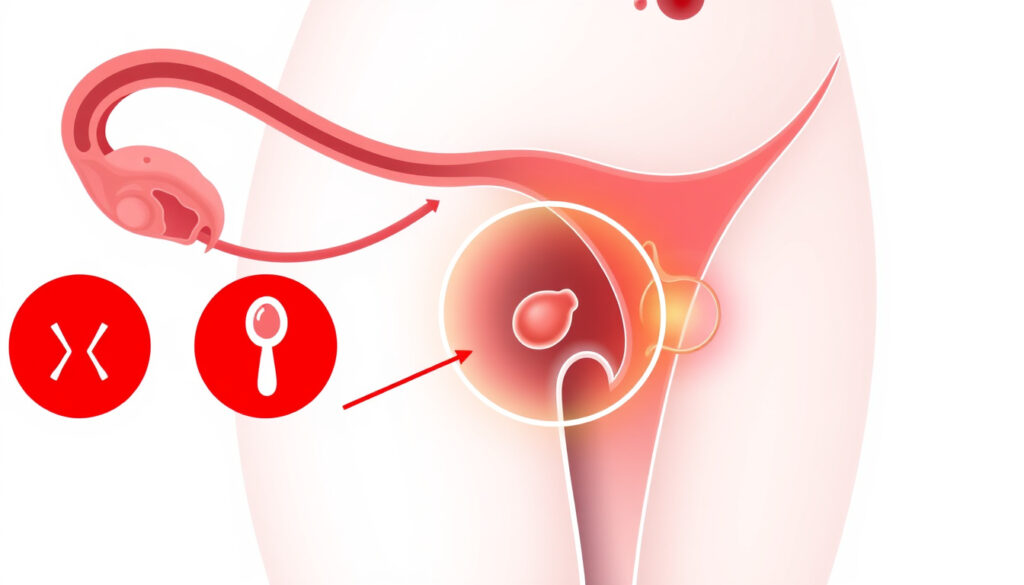
Signs of Ectopic Pregnancy: Early Symptoms, Pain & Bleeding
You’ve just found out you’re pregnant, and the excitement mixes with a thousand questions. Recognizing the early signs of an ectopic pregnancy can mean the difference between routine treatment and a life-threatening emergency.
Incidence: Affects 1 in 80 pregnancies (1-2%) ·
Mortality risk: Accounts for 3% of pregnancy-related deaths if untreated ·
Most common site: Fallopian tube in >95% of cases ·
Key symptom: Vaginal bleeding and pelvic pain are the most frequent early signs ·
Peak rupture time: 6-8 weeks of gestation
Quick snapshot
- An ectopic pregnancy develops outside the uterus, usually in a fallopian tube (Mayo Clinic (leading US medical center))
- Lower abdominal pain and/or vaginal bleeding are the most common symptoms (The Ectopic Pregnancy Trust (UK patient charity))
- Light vaginal bleeding is often one of the first warning signs (Mayo Clinic)
- Pelvic pain is often one of the first warning signs (Mayo Clinic)
- Exact timing of symptom onset varies widely between individuals (NHS (UK national health authority))
- Some women experience only mild or atypical symptoms (HealthPartners (US healthcare provider))
- Some women do not have symptoms at first and only discover the ectopic during an early scan (NHS)
- Weeks 4-6: mild cramping and spotting may begin; pregnancy test positive (NHS)
- Weeks 6-8: pain becomes more localized and persistent; rupture risk increases (Johns Hopkins Medicine (US academic medical center))
- Week 8-12: rupture most common; sharp pain, heavy bleeding, shoulder tip pain (NHS)
- Seek emergency medical help for severe abdominal or pelvic pain (Mayo Clinic)
- Call 999 or go to A&E for sharp sudden intense pain with dizziness or fainting (NHS)
- Early diagnosis reduces risk of rupture and death (The Ectopic Pregnancy Trust)
Six key metrics at a glance, one theme: ectopic pregnancy is a common condition with a narrow window for safe intervention before the risk of rupture rises sharply.
| Fact | Value | Source |
|---|---|---|
| Incidence | 1-2% of all pregnancies | Mayo Clinic |
| Mortality rate | 3% of pregnancy-related deaths | The Ectopic Pregnancy Trust |
| Most common location | Fallopian tube (95%) | Mayo Clinic |
| Peak diagnosis window | 6-8 weeks gestation | Johns Hopkins Medicine |
| Key symptom | Unilateral pelvic pain + vaginal bleeding | NHS |
| Emergency sign | Shoulder tip pain (internal bleeding) | NHS |
What Are the Biggest Signs of an Ectopic Pregnancy?
What does an early ectopic feel like?
- Light vaginal bleeding that is often watery and dark brown, and can start and stop rather than resemble a normal period (NHS).
- Sharp pelvic pain, often on one side, that may come and go or be constant (Johns Hopkins Medicine).
- Shoulder tip pain — a surprisingly common red flag that signals internal bleeding from a ruptured ectopic (NHS).
A woman with mild cramping and spotting should not assume everything is normal. The combination of one-sided pain and any abnormal bleeding in early pregnancy is the strongest signal to get an ultrasound.
Can you still bleed with an ectopic pregnancy?
Yes, absolutely. Light vaginal bleeding is one of the most common early signs, according to Mayo Clinic. The NHS adds that the bleeding may be watery, dark brown, and episodic — different from a regular period. Some women also experience pain during urination or bowel movements (NHS).
What are the most expected signs and symptoms?
- Lower abdominal pain (often one-sided) and vaginal bleeding are the most expected combination (The Ectopic Pregnancy Trust).
- Gastrointestinal symptoms like diarrhea or pressure in the bottom can also occur (NHS).
- Dizziness or fainting, especially when accompanied by sudden severe pain, signals rupture and requires emergency attention (HealthPartners).
The pattern: most women with ectopic pregnancy show at least one of the two classic symptoms — pain or bleeding. But the absence of bleeding does not rule it out; some women have only mild discomfort until rupture occurs.
When Do You Know If You Have an Ectopic Pregnancy?
When does ectopic pregnancy pain start?
Symptoms typically appear between 4 and 12 weeks of pregnancy, with the most common window around 6-8 weeks after the last menstrual period, notes Johns Hopkins Medicine. The pain often begins as mild cramping and worsens over days. Some women have no symptoms until rupture occurs (NHS).
What are the signs at 4, 6, and 8 weeks?
- 4 weeks: Often no symptoms or very mild spotting; a positive pregnancy test (NHS).
- 6 weeks: Pain becomes more localized; light bleeding may appear. Rupture risk begins to climb (Johns Hopkins Medicine).
- 8 weeks: Pain intensifies; shoulder tip pain or dizziness can indicate internal bleeding. Most ruptures occur around this time (Johns Hopkins Medicine).
A woman who experiences any pelvic pain or abnormal bleeding between 4 and 8 weeks should seek an early scan even if her pregnancy test is positive. The rupture window is narrow, and waiting for symptoms to become severe is dangerous.
The implication: timing is the critical variable — recognizing symptoms before rupture is what separates a routine methotrexate injection from emergency surgery.
Can an Ectopic Pregnancy Be Saved?
No. An ectopic pregnancy cannot survive or be moved to the uterus, according to Mayo Clinic. Without treatment, the fallopian tube may rupture, causing life-threatening internal hemorrhage.
Will ectopic pregnancy clear on its own?
In rare, very early cases, an ectopic pregnancy may resolve spontaneously (self-limiting), but medical monitoring is essential. Most require active treatment. The NHS stresses that even if symptoms seem mild, the risk of rapid progression to rupture remains high.
The trade-off: waiting for a self-resolution is not a safe strategy. Early intervention — either with medication or surgery — dramatically reduces the risk of emergency surgery and loss of the fallopian tube.
The catch: no ectopic pregnancy can result in a viable baby. Treatment is always necessary — the only question is whether medication will suffice or surgery is already required.
What Are the Differences Between Normal and Ectopic Pregnancy Symptoms?
The pattern that separates normal from ectopic is asymmetry and sharpness. Below are five symptoms compared across both.
| Symptom | Normal pregnancy | Ectopic pregnancy |
|---|---|---|
| Missed period | Yes | Yes |
| Breast tenderness | Common | Can occur |
| Nausea | Common | Can occur |
| Pelvic pain | Mild, general, often bilateral | Sharp, one-sided, worsening |
| Vaginal bleeding | Sometimes light spotting | Common; watery, dark brown, intermittent |
| Shoulder tip pain | No | Yes (sign of rupture) |
The implication: any woman in early pregnancy who experiences one-sided pelvic pain or abnormal vaginal bleeding should not assume it is a normal pregnancy symptom, even if she has a positive test. The two conditions share early signs but diverge sharply in danger.
What Is the Treatment for Ectopic Pregnancy?
Immediate medical intervention is required to prevent tubal rupture. The two standard approaches are medication (methotrexate) and surgery.
Can an ectopic pregnancy be saved?
- Methotrexate therapy stops cell growth and may avoid surgery in early, unruptured cases (Mayo Clinic).
- Laparoscopic salpingectomy or salpingostomy removes the ectopic tissue while preserving the ovary (Johns Hopkins Medicine).
- Emergency surgery is necessary if rupture has occurred (NHS).
The catch: timing is everything. The earlier the diagnosis, the more likely methotrexate will work and the fallopian tube can be preserved.
Timeline of an Ectopic Pregnancy
- Weeks 4-6: Mild cramping and spotting may begin; pregnancy test positive (NHS).
- Weeks 6-8: Pain becomes more localized and persistent; rupture risk increases (Johns Hopkins Medicine).
- Weeks 8-12: Rupture most common; sharp pain, heavy bleeding, shoulder tip pain (NHS).
- Emergency: Immediate surgery required if rupture occurs; methotrexate may be used before rupture (Johns Hopkins Medicine).
Sources: NHS, Johns Hopkins Medicine.
What We Know and What’s Unclear
Confirmed facts
- Ectopic pregnancy cannot result in a viable baby (Mayo Clinic).
- Vaginal bleeding and pelvic pain are the most common presenting symptoms (The Ectopic Pregnancy Trust).
- Early diagnosis reduces the risk of rupture and death (The Ectopic Pregnancy Trust).
What’s unclear
- Exact timing of symptom onset varies widely between individuals (NHS).
- Some women experience only mild or atypical symptoms (HealthPartners).
Expert Perspectives
Often, the first warning signs of an ectopic pregnancy are light vaginal bleeding and pelvic pain.
— Mayo Clinic
An ectopic pregnancy is when a fertilized egg implants outside your womb, usually in your fallopian tube.
— NHS
You have pain in your lower abdomen that can come on quickly or gradually, and can be widespread or on one side only.
— NHS inform (Scotland’s national health information service)
For anyone on the receiving end of these symptoms, the choice is clear: treat any combination of one-sided pelvic pain and abnormal vaginal bleeding in early pregnancy as a potential ectopic until proven otherwise. Call your OB-GYN or midwife the same day — not next week. For those who experience sudden severe pain or shoulder tip pain, go to the emergency room immediately. The difference between a routine methotrexate shot and a life-saving surgery often comes down to a few hours.
Recognizing the early warning signs of ectopic pregnancy can be life-saving, as the condition requires prompt medical intervention to prevent serious complications.
Frequently asked questions
Can you have an ectopic pregnancy with no symptoms?
Yes, some women have no symptoms at first and only discover an ectopic during an early ultrasound or after more serious symptoms develop (HealthPartners).
Is ectopic pregnancy pain constant or intermittent?
It can be either. Many women report sharp, one-sided pain that comes and goes, while others experience constant dull ache (NHS).
Can an ectopic pregnancy be detected by a home pregnancy test?
Yes, a home pregnancy test will be positive if you have an ectopic pregnancy, but it cannot distinguish from a normal pregnancy (Mayo Clinic).
Does an ectopic pregnancy show up on an ultrasound?
Usually, a transvaginal ultrasound can identify an ectopic pregnancy by showing no gestational sac in the uterus and sometimes a mass in the fallopian tube (Johns Hopkins Medicine).
How quickly does an ectopic pregnancy progress?
Progression varies, but symptoms often worsen over days to a week. The risk of rupture peaks around 6-8 weeks (Johns Hopkins Medicine).
Can an ectopic pregnancy cause shoulder pain?
Yes, shoulder tip pain is a classic sign of internal bleeding from a ruptured ectopic pregnancy (NHS).
What should I do if I suspect an ectopic pregnancy?
Contact your doctor or midwife immediately. If you have sudden severe pain, dizziness, or shoulder pain, go to the emergency room (HealthPartners). For more on dizziness as a symptom, see our guide on why you might feel dizzy.
Does an ectopic pregnancy always require surgery?
Not always. If caught early before rupture, methotrexate medication may be effective. But surgery is needed if rupture has occurred or if methotrexate is not suitable (Mayo Clinic).
Related reading: Boots Morning After Pill – Price, Access, Effectiveness Guide
More related posts
 Ladies Coats: Buying Guide for Women’s Winter Outerwear
 Scott van-der-Sluis: Age, Height, Love Island Career
 How to Deactivate Facebook Account: Complete Guide
 Ja Morant: Why He Stopped Dunking, Salary, Trade, and NBA Wealth
 Katy Wix: Ghosts Exit, Ted Lasso Role, Illness & Net Worth
 Phil Lynott: Death, Family, and Thin Lizzy’s Legacy
 Gene Pitney: Biography, Death, Songs, and Songwriting Legacy
 Abella Danger: Net Worth, Career & Controversy