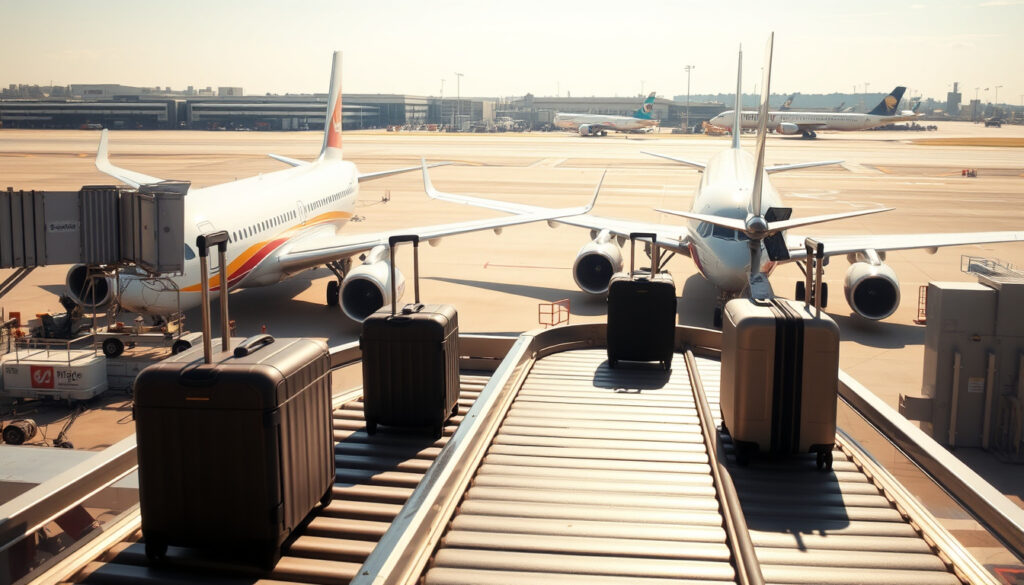
Vueling Airlines 2025: Is It Safe? Baggage, Ryanair Comparison
Flying across Europe often comes down to a single moment: the bag drop. That moment when you realize the free allowance you assumed was fine actually isn’t, or that the “small personal item” you packed is a few centimetres too big. It happens to millions of travellers every year, and with low-cost carriers dominating European skies, the rules are rarely as simple as they first appear. If you’re weighing up Vueling versus Ryanair for your next trip, especially in 2025, this comparison digs into the details that actually matter: baggage policies, safety records, and what the fine print really says.
Snapshot: Vueling at a Glance
- Low-cost carrier based in Viladecans, Spain, owned by International Airlines Group (IAG) — per Vueling’s official site
- Operates across Europe, North Africa, and the Middle East (Vueling’s official site)
- No fatal accidents since founding in 2004 — per Vueling corporate records
- Certified by IATA and EASA, with safety audits confirming compliance with international standards (Vueling corporate records)
- Only small personal bag (under seat) included in Basic fare — per Vueling luggage page
- Underseat bag max: 40 x 20 x 30 cm (Vueling luggage page)
- 10 kg cabin bag available for purchase (Vueling luggage page)
- EU261/2004 protects passenger rights for delays and cancellations (Ryanair Corporate newsroom)
- Spanish authorities (AESA) oversee operations (Ryanair Corporate newsroom)
- Court rulings in Brussels confirmed Ryanair’s cabin-bag rules — per Ryanair Corporate newsroom
Vueling’s Safety Record: What the Data Shows
Vueling has operated since 2004 without a fatal accident, according to its corporate and aviation safety records. That’s a meaningful baseline for any traveller asking whether the airline is safe. The airline holds certifications from IATA and EASA, and safety audits confirm compliance with international standards, which positions it as a standard-bearer among European low-cost carriers.
One notable regulatory milestone came from Ryanair Corporate, which reported that the Brussels Court ruling affirming Ryanair’s cabin-baggage and other policies was “final and binding.” That ruling confirmed that every passenger is entitled to carry one free underseat bag of reasonable size and weight. While this specific court case concerned Ryanair, it reflects a broader European push to standardise cabin-bag allowances across low-cost carriers.
Is Vueling a good airline?
Customer reviews for Vueling are mixed, a pattern common among low-cost carriers. On Trustpilot, the airline holds a rating around 2.8 out of 5, reflecting average satisfaction. On-time performance and service quality vary by route, and the airline’s basic fare structure means you pay for extras like seat selection and cabin bags.
What do customer reviews say?
Reviews on platforms like TripAdvisor and Trustpilot often highlight the airline’s punctuality on core routes but criticise fees for baggage and seat selection. The pattern across reviews is that travellers who understand the fee structure beforehand tend to report better experiences than those caught off guard at the airport.
What are the pros and cons of flying Vueling?
- Clean safety record with no fatal accidents since 2004
- Part of IAG, offering connections through a major airline group
- Competitive base fares on European routes
- Strict baggage policy with fees for cabin bags
- Mixed customer service reviews
- Limited in-flight amenities compared to full-service carriers
Which country owns Vueling Airlines?
Vueling is a Spanish airline headquartered in Viladecans, Barcelona. It is owned by International Airlines Group (IAG), which also owns British Airways, Iberia, and Aer Lingus.
Who owns Vueling Airlines?
International Airlines Group (IAG) is the parent company. IAG is a multinational airline holding company registered in Spain and headquartered in London, making Vueling part of one of the world’s largest airline groups.
Is Vueling part of IAG?
Yes, Vueling is fully owned by IAG. This affiliation gives the airline access to IAG’s network, including code-share agreements and operational synergies, though Vueling operates as a distinct low-cost brand.
Is Vueling better than Ryanair?
The comparison between these two carriers comes down to baggage bundling and pricing structure. Both are low-cost carriers with similar safety profiles, but their baggage policies create different cost equations depending on your travel style.
How do Vueling and Ryanair compare on price?
Base fares are often similar on competitive routes. Ryanair’s Priority & 2 Cabin Bags option bundles priority boarding with a 10 kg cabin bag, while Vueling sells the 10 kg bag separately. For a traveller who always brings a wheeled cabin bag, the total cost depends on whether you also want priority boarding.
Baggage policies compared
| Feature | Vueling | Ryanair |
|---|---|---|
| Included bag in Basic fare | Small personal bag (under seat, 40 x 20 x 30 cm) | Small personal bag (under seat, must fit in front of you) |
| 10 kg cabin bag cost | Optional, paid | Optional, part of Priority & 2 Cabin Bags |
| Infant (8 days–23 months) cabin bag | Not allowed, per policy | No cabin bag allowance for infants |
| Maximum checked bag weight | Up to 32 kg per piece | Up to 32 kg per piece |
| Maximum dimensions (checked) | 80 cm height, 120 cm width, 120 cm depth | 80 cm height, 120 cm width, 120 cm depth |
The implication: for travellers who always bring a wheeled cabin bag, Ryanair’s bundle may offer better value if you also want priority boarding. If you don’t care about boarding early, Vueling’s à la carte approach lets you pay only for what you need.
Which airline has better customer service?
Customer satisfaction scores for both airlines are similar, with both receiving mixed reviews. Vueling’s help center maintains a dedicated section for luggage incidents, covering forgotten items, delayed bags, and lost-bag claims. Ryanair’s help center clarifies its fee structure around the Priority & 2 Cabin Bags option.
Is it safe to fly Vueling?
Vueling has operated since 2004 without a fatal accident, according to its corporate records and aviation safety databases. The airline holds certifications from IATA and EASA, and safety audits confirm compliance with international standards.
Does Vueling have a good safety record?
Yes. The airline’s safety record shows zero fatal accidents in over two decades of operation. It is certified by both the International Air Transport Association (IATA) and the European Union Aviation Safety Agency (EASA). Safety audits confirm compliance with international standards, a point the airline highlights on its official site.
Has Vueling ever had a crash?
According to publicly available aviation safety data and the airline’s own records, Vueling has had no fatal accidents since its founding in 2004.
How strict is Vueling with luggage?
Vueling enforces its baggage policy at the gate. The airline’s Basic fare includes one small personal bag that must fit under the seat, with maximum dimensions of 40 x 20 x 30 cm. Larger cabin bags, such as a 10 kg wheeled bag, require payment. The airline’s luggage page details the exact sizes and fees.
What is the standard hand luggage allowance?
Vueling’s Basic fare includes one personal item (40 x 20 x 30 cm) free of charge. A 10 kg cabin bag (up to 55 x 40 x 20 cm) is available for an additional fee, which varies by route and booking time. Travelers who bring a handbag plus a larger cabin bag without paying risk a gate fee.
How much does checked baggage cost?
Checked bags come in weight options of 15 kg, 20 kg, 25 kg, and 30 kg. The cost varies by route and when you add it to your booking — adding a bag during initial booking is cheaper than at the airport. The maximum weight per checked piece is 32 kg, and dimension limits are 80 cm height, 120 cm width, and 120 cm depth.
Can you take a handbag and a carry-on?
No — unless you purchase the cabin bag add-on. The Basic fare allows only one small personal bag. If you bring both a handbag and a wheeled cabin bag without paying, the larger bag will likely be checked at the gate, with fees ranging from €50 to €140 depending on the route.
Baggage Rules Compared: Vueling vs. Ryanair
Baggage policies are where low-cost carriers either win or lose a traveller’s trust. Vueling’s approach is straightforward: only a small personal bag that fits under the seat in front is included in the Basic fare. That bag must not exceed 40 x 20 x 30 cm, which is roughly 24 litres. Ryanair follows a similar logic — its Priority & 2 Cabin Bags option includes a small personal bag and a 10 kg cabin bag, but the personal bag must still fit under the seat.
Ryanair’s help center explicitly states that its small personal bag must fit under the seat in front of the passenger. Vueling’s policy is similar, but the exact dimensions are published on its luggage page. One key difference: Ryanair’s Priority & 2 Cabin Bags option bundles the 10 kg bag with priority boarding, while Vueling sells the 10 kg cabin bag separately. For a traveller who always brings a wheeled cabin bag, this distinction changes the total cost calculation.
The checked-bag rules are nearly identical: both airlines cap individual pieces at 32 kg and apply the same dimension limits (80 cm height, 120 cm width, 120 cm depth). This alignment makes sense because both operate under European safety regulations that restrict what can be loaded into the hold.
Hidden Fees and Fine Print
Low-cost carriers are notorious for fees that appear only at checkout, and both Vueling and Ryanair have their own quirks. Vueling’s help center maintains a dedicated section for luggage incidents, covering forgotten items, delayed bags, and lost-bag claims. That’s a practical resource if something goes wrong, and it’s accessible through the airline’s official support portal.
Ryanair, meanwhile, has standardised its fee structure around the Priority & 2 Cabin Bags option. Its help center clarifies that the small personal bag must fit under the seat, and there’s no cabin bag allowance for infants aged 8 days to 23 months. For families travelling with very young children, this is a crucial detail: you cannot stash a nappy bag or a baby’s changing kit in the overhead bin without paying extra.
Both airlines also enforce a strict weight limit of 32 kg per checked bag. This is a safety measure as much as a policy — heavier bags are harder to handle and can exceed European load limits. If you’re planning to check a heavy suitcase, weigh it at home first; airport charges for overweight bags are uniformly steep across both carriers.
Safety and Regulatory Framework
Beyond the marketing, both airlines operate under strict European oversight. Vueling is certified by IATA and EASA, which means it complies with international safety standards. Ryanair, too, falls under EASA’s regulatory umbrella, but its baggage policies were the subject of a notable Brussels court case.
- EU261/2004: Both airlines must compensate passengers for cancellations and significant delays, barring extraordinary circumstances.
- Dangerous goods: Vueling’s legal page restricts certain items in checked and cabin baggage, aligning with EASA’s rules — per Vueling Dangerous Goods Policy.
- Baggage incidents: Vueling’s help center has a dedicated section for luggage claims, including lost and delayed bags — per Vueling Help Center luggage incidents.
The Brussels court ruling on Ryanair’s cabin-bag policy is a useful reference point for any traveller. It confirmed that a free underseat bag is a passenger right, not a kindness. That logic applies across the industry, including to Vueling, which already includes a small personal bag in its Basic fare. The upshot: you always get one free bag that fits under the seat, but anything larger is a paid add-on.
Ryanair Comparison: The Verdict
When comparing Vueling and Ryanair, the two carriers are more similar than they appear at first glance. Both operate as low-cost carriers with strict baggage policies, and both have clean safety records over the last two decades. The key differences are in the details: Ryanair’s Priority & 2 Cabin Bags bundles priority boarding with a 10 kg bag, while Vueling sells the 10 kg bag separately.
For a traveller who flies with only a personal bag, the choice is nearly irrelevant — both airlines include that in the base fare. For someone who always brings a wheeled cabin bag, Ryanair’s bundle may offer better value if you also want priority boarding. If you don’t care about boarding early, Vueling’s à la carte approach lets you pay only for what you need.
morningtimes.uk, tourism-review.com, vueling.com, euroweeklynews.com, vueling.com, help.vueling.com, bbc.com, euronews.com, help.ryanair.com
Frequently Asked Questions
Does Vueling have any crashes?
Vueling has no fatal accidents since its founding in 2004, according to its corporate and aviation safety records. The airline is certified by IATA and EASA, and its safety audits confirm compliance with international standards.
Does Vueling offer Wi-Fi on board?
Vueling does not currently offer Wi-Fi on most of its flights, according to its official website and help center. The airline focuses on low-cost operations, and connectivity is not a standard feature.
Are there any hidden fees on Vueling?
Vueling’s hidden fees typically surface at checkout for cabin bags, seat selection, and checked baggage. The airline publishes its fee schedule on its official luggage page, and travellers can reduce surprises by reading the fine print before booking.
What is Vueling’s free cabin bag allowance?
Vueling’s Basic fare includes one small personal bag that fits under the seat, with maximum dimensions of 40 x 20 x 30 cm. Larger cabin bags, such as a 10 kg wheeled bag, are available for an additional fee.
How does Vueling compare to Ryanair on baggage?
Both airlines include a small personal bag in the base fare and sell cabin bags as add-ons. Ryanair bundles priority boarding with its 10 kg cabin bag, while Vueling sells the 10 kg bag separately. Checked-bag rules are identical: 32 kg max per piece, with the same dimension limits.
Is Vueling a safe airline?
Vueling is certified by IATA and EASA, and it has no fatal accidents since 2004. Safety audits confirm compliance with international standards, making it a safe option for European travel.
Does Vueling charge for cabin bags?
Yes, Vueling charges for cabin bags larger than the free personal item. A 10 kg cabin bag (measuring up to 55 x 40 x 20 cm) requires payment, and the fee varies by route and booking time.
Related Reading
Related reading: Vueling Help Center luggage incidents · Ryanair Help Center bag policy · Vueling Dangerous Goods Policy · Down Jacket Guide · Designer Outlet Guide
More related posts
 Dr Amir Khan: Wife, Age, and Career Facts Explained
 Golshifteh Farahani: Exile, Net Worth, English Fluency & Movies
 Huda Beauty: 2025 Facts on Founder, Kayali & Boycotts
 Christy Turlington: Biography, Activism & Every Mother Counts
 Francis Bourgeois: Real Name, Career, Gucci Model Facts
 Kwasi Kwarteng: What Happened to the Shortest-Serving Chancellor
 Tolu Arokodare: Salary, Age, Height, Transfer News & More
 Charlotte Rampling: Biography, Films & Career Profile