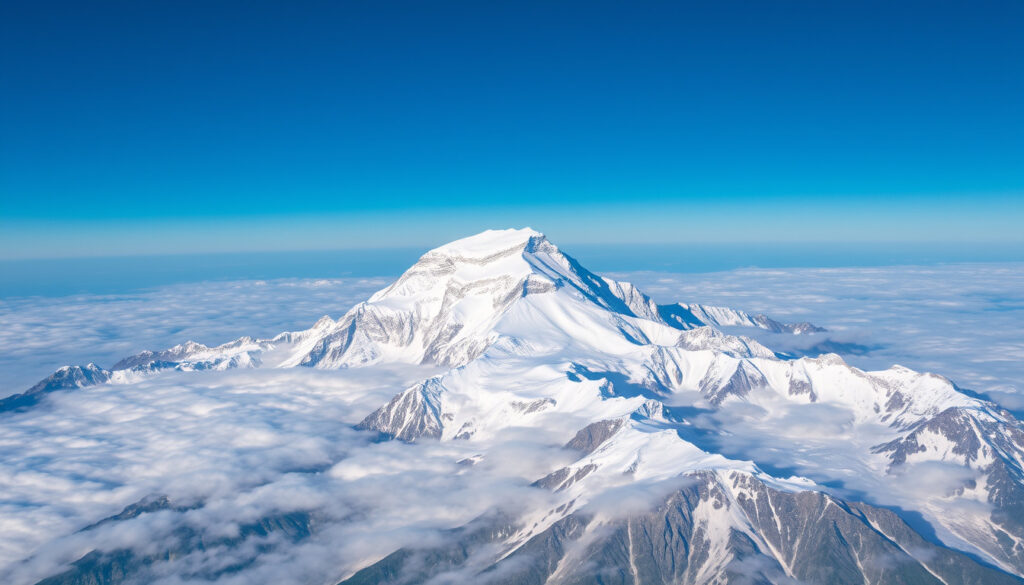
Mount Everest Facts: Height, Deaths, Cost, and Climbing Guide
Look up at any mountain, and you’ve likely wondered what it takes to stand on top of the world. Mount Everest, the tallest peak on Earth, draws hundreds of climbers each year, but behind the summit photos lies a brutal reality of risk, staggering cost, and life-or-death decisions.
Height: 8,848.86 m (29,031.7 ft) ·
Spring Permit Fee: US$15,000 (from 2025) ·
First Ascent: 29 May 1953 ·
2026 Season Deaths: 5 ·
Best Climbing Window: April–May ·
Location: Nepal–China border
Quick snapshot
- Height confirmed at 8,848.86 m in 2020 survey (Wikipedia)
- First ascent 29 May 1953 by Hillary & Norgay (Britannica)
- Spring permit fee increased to US$15,000 for 2026 (Kathmandu Post)
- Exact identity of the oldest body remains disputed (National Geographic)
- Annual death toll varies widely by season (Alan Arnette)
- Actual expedition cost depends on route and logistics (National Geographic)
- 2026 spring season ended with 5 fatalities and 1 missing Sherpa (Reuters)
- Historical average since 2010 is 7 deaths per year (Alan Arnette)
- Nepal’s 1:2 guide-to-climber rule takes effect for all 8,000 m peaks (Kathmandu Post)
- Permit revenue for 2026 Everest reached US$7.2 million (Alan Arnette)
The key facts below reveal a mountain of hard numbers and human stories.
| Attribute | Value |
|---|---|
| Height | 8,848.86 m (29,031.7 ft) – 2020 survey (Wikipedia) |
| First Ascent | 29 May 1953 by Edmund Hillary & Tenzing Norgay (Britannica) |
| Total Summits | Over 6,000 as of 2024 (Alan Arnette) |
| Death Rate | ~1% of climbers (National Geographic) |
| Cost (full expedition) | $35,000–$45,000 (Kathmandu Post) |
| Countries | Nepal and China (Tibet) (Wikipedia) |
The pattern: each number on this table represents a climber’s financial commitment and a sobering statistical risk.
Which country does Mount Everest belong to?
Mount Everest lies on the border between Nepal and the Tibet Autonomous Region of China. The summit itself marks the boundary, and both countries have jurisdiction over their respective sides. The exact coordinates are 27°59′17″N 86°55′31″E (Wikipedia).
Where is Mount Everest located?
- The peak straddles the Mahalangur Himal sub-range of the Himalayas.
- Nepal’s side is accessed via the Khumbu region; the Tibetan side via the Rongbuk glacier.
How tall is Mount Everest?
The officially recognized height is 8,848.86 m (29,031.7 ft), determined by a joint Nepal–China survey in 2020 (Wikipedia). This is about 1.6 km higher than commercial jet cruising altitude.
The implication: no single country controls the world’s highest point, creating a dual-jurisdiction system for climbers.
How many climbers died on Everest per year?
Over 340 climbers have died on Everest since 1922 (Wikipedia). The historical average since 2010 runs at about seven fatalities per year (Alan Arnette), but seasons can spike: 2023 saw 18 deaths, a record fatality year (Alan Arnette).
What are the main causes of death on Everest?
- Falls – the leading cause, especially in the Khumbu Icefall and on the Hillary Step.
- Avalanches – the 2014 Icefall avalanche killed 16 Sherpas.
- Altitude sickness (cerebral/pulmonary edema).
- Exposure and exhaustion in the Death Zone (above 8,000 m).
A 1% death rate sounds low until you multiply it by the 495 permits issued in 2026 (Reuters). That means roughly five expected fatalities per season – and 2026 hit that number exactly.
What is the oldest body on Everest?
The identity of the oldest corpse is disputed. George Mallory, who died in 1924, was found in 1999, but older bodies from the 1920s and 1930s may still be buried in the ice (National Geographic). Most remains are never recovered.
The pattern: a climber who ignores the 2pm rule greatly increases their chance of becoming a statistic.
Why does it cost $40,000 to climb Mount Everest?
A full guided expedition typically runs $35,000–$45,000, with the largest single item being the permit fee. Nepal raised the spring permit to US$15,000 effective 1 September 2025 (Kathmandu Post).
What does the price include?
- Permit: $15,000 (spring, foreign climber).
- Sherpa support & guide: $5,000–$10,000.
- Oxygen and masks: $3,000–$5,000.
- Logistics (base camp, food, fuel, porters): $10,000+.
- Travel, insurance, gear: $5,000+.
What is the 2pm rule on Everest?
The 2pm rule is a widely adopted safety guideline: climbers must turn around and descend if they have not reached the summit by 2:00 pm (Alan Arnette). Ignoring it is a leading cause of deaths from exhaustion and night falls.
For the price of a luxury car, you buy a support infrastructure that covers permits, oxygen, and Sherpa expertise. But cut-rate operators sometimes skip safety and push climbers past the 2pm window.
The catch: a cheaper expedition may save thousands but cost a life.
Do planes fly over Everest?
Yes, commercial aircraft regularly fly over the Everest region. Typical cruising altitudes of 35,000–40,000 ft are well above the peak, so overflights are safe, though pilots avoid the immediate summit due to turbulence and weather (Britannica).
Can planes fly directly over the summit?
Most commercial routes pass to the south or north, not directly over the summit, because the mountain’s height can cause wind shear and downdrafts. Helicopters have landed on the summit, but fixed-wing aircraft do not.
The implication: the mountain’s height shapes even the aviation routes above it.
Why can’t you climb Everest in July?
July sits in the middle of the monsoon season. Heavy snow, high avalanche risk, and poor visibility make climbing extremely dangerous. The safest windows are pre-monsoon (April–May) and post-monsoon (September–October) (Wikipedia).
What is the best time to climb Everest?
- Spring (April–May) – most popular; stable weather, long daylight, but crowded.
- Autumn (September–October) – cooler, fewer climbers, but shorter window.
Is summer ever used?
Some high-budget teams attempt ascents in June or July, but the success rate drops sharply. Nepal does not restrict summer permits; the market itself avoids the season.
Aspiring climbers who book a July expedition may pay half the spring price, but they trade cost for a much higher chance of being turned back by weather.
The pattern: choosing the wrong season can turn a dream climb into a failed, expensive trip.
“It is not the mountain we conquer but ourselves.”
– Sir Edmund Hillary, first confirmed summit climber
“I felt like a child.”
– Sherpa Tenzing Norgay, on reaching the summit in 1953
“The 2pm rule is a life-saving rule that many ignore.”
– Alan Arnette, mountaineer and Everest commentator
For expedition operators and independent climbers, the calculus is getting sharper. Permit fees are climbing, regulations are tightening, and the financial incentives for Nepal are enormous – US$7.2 million in Everest permit revenue alone in 2026 (Alan Arnette). The message is clear: if you want to stand on top of the world, you’ll need deep pockets, sharp judgment, and the discipline to turn around when the clock says 2:00 pm. For the Nepali guides and rescue teams, the risk is higher and the reward smaller. The pattern: Everest is a business, a challenge, and a graveyard – and those three realities are becoming harder to reconcile. The mountain will always demand more than a permit fee.
travelhimalayanepal.com, globalsummitguide.com, breezeadventure.com, alanarnette.com, alliancetreks.com, youtube.com, youtube.com, alanarnette.com, travelhimalayanepal.com
Frequently asked questions
How long does it take to climb Mount Everest?
Most expeditions take about two months, including three weeks of acclimatization and a summit window of a few days.
What is the death zone on Everest?
Above 8,000 m (26,247 ft), the atmospheric pressure is so low that the body cannot survive long without supplementary oxygen. Most deaths occur in this zone.
How much does an Everest permit cost?
Starting from 2025, the spring permit for foreign climbers is US$15,000 (Kathmandu Post). Autumn permits cost $7,500; winter/monsoon permits cost $3,750.
Can you climb Everest without oxygen?
Yes, but very few succeed. The risk of severe altitude sickness increases dramatically. Only about 200 people have summited without bottled oxygen.
What gear is needed for an Everest expedition?
Essential gear includes a down suit, climbing boots, crampons, ice axe, harness, oxygen masks, and high-altitude tent systems. Rentals are available in Kathmandu.
How many people have climbed Everest?
Over 6,000 different climbers have reached the summit as of 2024, with many making multiple ascents.
What is the success rate of summit attempts?
Historically about 40% for climbers on the South Col route from Nepal, though fit, guided climbers succeed at a higher rate.
More related posts
 Jackets Women: The Complete Guide to Women’s Jackets
 Aristotle Onassis: Wealth, Love, and the Man Behind the Myth
 Bar Bar Stools Buying Guide – Heights, Materials & Top Picks
 Meghann Fahy: Biography, White Lotus Role, and Leo Woodall
 Gerry Adams: Allegations, IRA Claims, and ‘Say Nothing’ Explained
 Simply Red Tour 2025: UK Dates, Tickets & Schedule
 Jamie Borthwick Axed from EastEnders: What We Know
 Winston Churchill: Life, Leadership, and Controversies Explained